 Federal Highway Administration, National Scenic Byways Program / public domain via National Archives
The Story
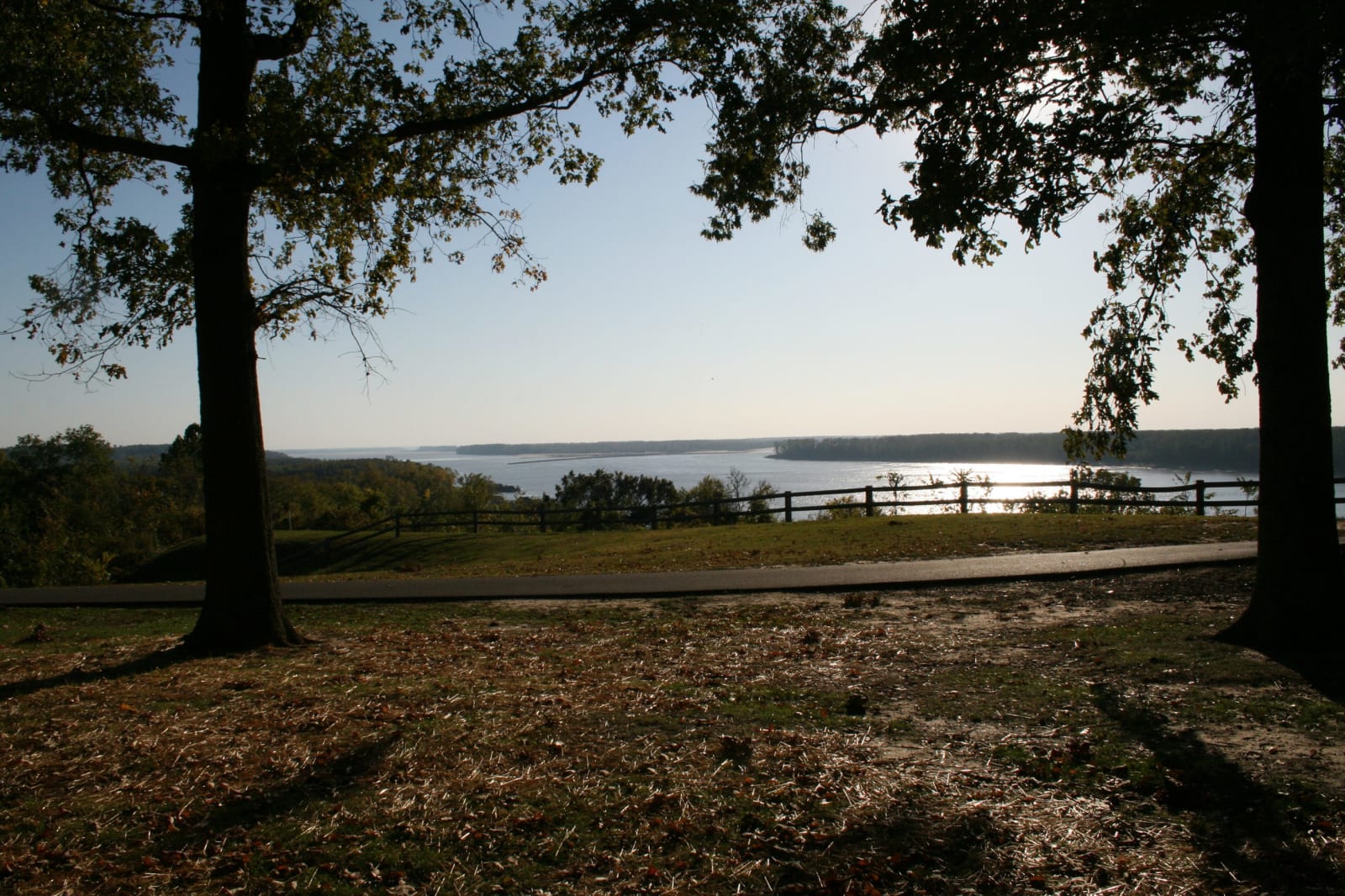
The first settlement on this bluff was called Iron Banks, from the French les rivages de fer, and it became Columbus in 1820. In early September 1861 Confederate Gen. Leonidas Polk seized it and began fortifying, breaking Kentucky's declared neutrality. Ulysses S. Grant answered by occupying Paducah, and Kentucky came down on the Union side. Polk called his works the Gibraltar of the West: more than 140 guns and a chain stretched across the river to Belmont, Missouri, to stop Union boats, with links eleven inches long and an anchor of four to six tons.
On November 7, 1861, Grant attacked the Confederate camp at Belmont across the river, his first battle of the war, and guns on this bluff fired on his men. After Fort Donelson fell in February 1862, the Confederates gave up Columbus and Union troops held it. In the summer and fall of 1863 Black men enlisted here in the 2nd Tennessee Heavy Artillery (African Descent), later the 4th U.S. Colored Heavy Artillery, and by January 1864 that regiment was part of the town's garrison.
The 1927 flood drowned the old riverfront town, and the Red Cross moved Columbus about 200 feet up to the bluff, the first entire Kentucky town moved from one site to another. Flooding in the 1920s also ate into the bluff and exposed the chain. The state bought the park in 1934, and the Civilian Conservation Corps built a stone mount for the chain and anchor. A farmhouse once used as a Confederate hospital is now the museum.
Visitor Info
On the Map
Nearby
The closest stops worth working into your route
Historical markers nearby
Roadside plaques and monuments within a short detour