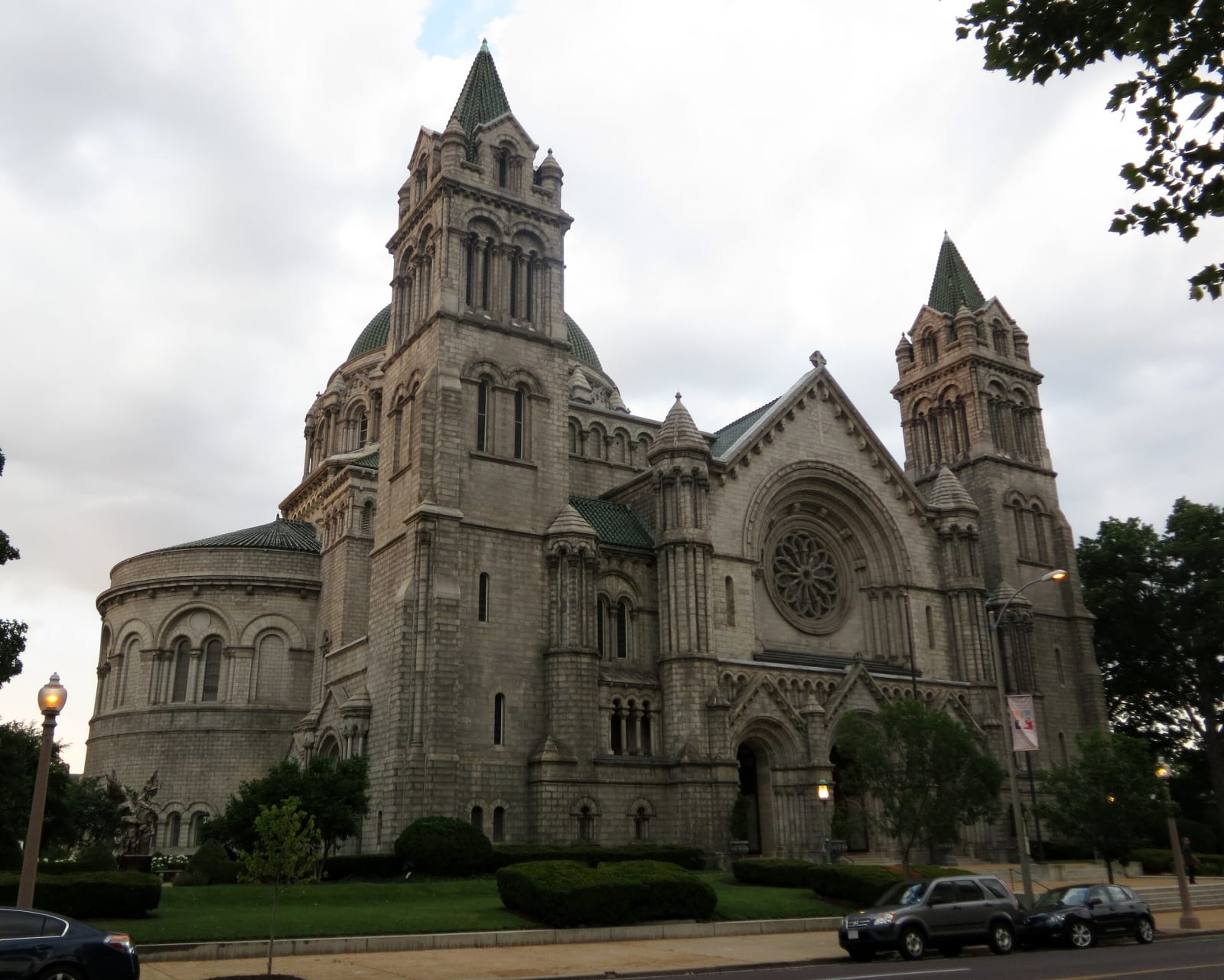
 Nheyob / CC BY-SA 3.0 via Wikimedia Commons
The Story
Archbishop John J. Kain bought the corner of Lindell and Newstead for a new cathedral, but a tornado drained the treasury and his health failed; when he died he left his whole estate to the building fund. His successor, Archbishop John J. Glennon, announced the project in February 1905. A committee chose a design blending Byzantine and Romanesque styles by the St. Louis firm of Barnett, Haynes and Barnett, ground was broken on May 1, 1907, and the cornerstone was laid on October 18, 1908. The first Mass was said in 1914, six years to the day later, and the cathedral was consecrated on June 29, 1926, the centennial of the diocese, with more than 100,000 people lining Lindell Boulevard.
The mosaics took most of the century. The German firm of August Wagner set up shop in St. Louis as the Ravenna Mosaic Company, and Paul Heuduck laid the red and gold of the transept galleries and the arches. Tiffany and Company worked on the two chapels on the west side. The narthex scenes from the life of Saint Louis IX were finished in 1930 and the last two areas, the east and west transepts, in 1988. The work covers 83,000 square feet with 41.5 million tesserae.
Pope John Paul II made it a basilica on April 4, 1997, and prayed here in January 1999. Downstairs, the Mosaic Museum explains how the mosaics were designed and set, and holds the original Kilgen organ console and the crypt where Cardinal Glennon and three later archbishops lie.
Visitor Info
On the Map
Nearby
The closest stops worth working into your route
Historical markers nearby
Roadside plaques and monuments within a short detour