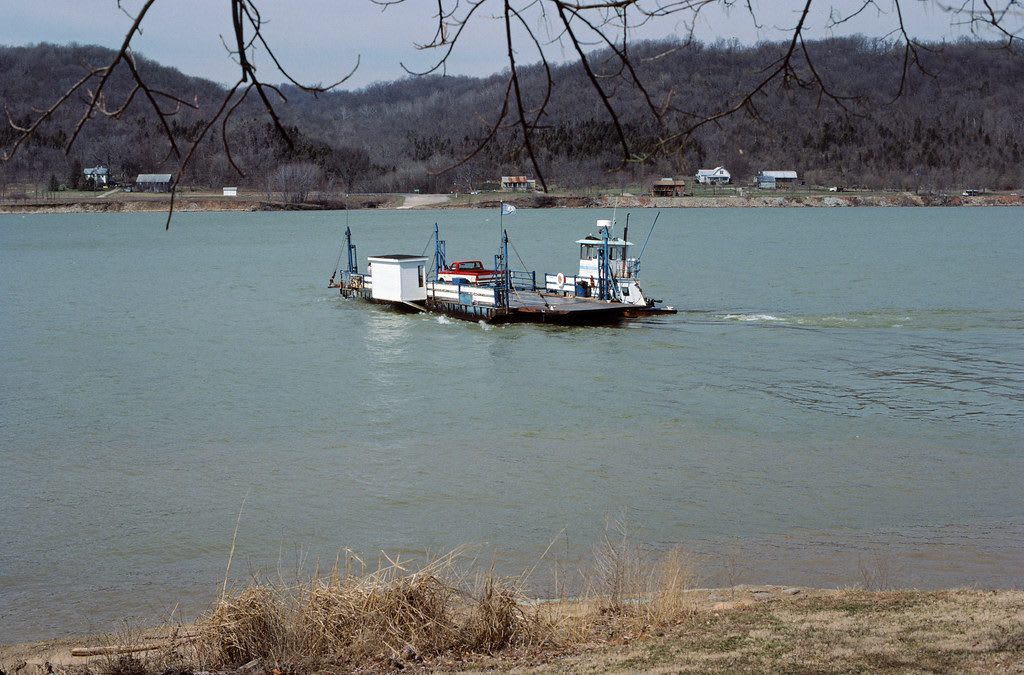
 Bill Alden / CC BY-SA 2.0 via Flickr
The Story
Philip Buckner laid out Augusta as a river trading post in 1786, on a long, low bank of the Ohio with Brown County, Ohio, on the far side. From 1822 to 1849 it was home to Augusta College, which Methodists of Ohio and Kentucky formed with the local academy, the third Methodist college in the country. Its best known student was John Gregg Fee, born in Bracken County in 1816 to a father who held thirteen people in slavery. Fee became an abolitionist, was driven out of Bracken and Lewis counties for his preaching, and founded Berea.
The river here was a road out. In the fall of 1852 more than thirty people escaped together from Augusta and from Dover, a few miles upriver, crossed to Ripley and hid at Thomas McCague's mill with John Parker's help. Slaveholders caught three of a smaller party that pushed north, and Ripley's Black community armed itself against the searchers. Bracken County also tried its helpers: a 70-year-old Black man known as Dr. Perkins was sent to the penitentiary for three years in 1852 for aiding an escape. In 1862 Confederate Colonel Basil Duke attacked the town, drove off two Union gunboats and beat the local militia, but lost so many men he gave up crossing into Ohio.
Today Augusta is a small place of brick houses along Riverside Drive, facing the water. Rosemary Clooney kept a river home here from 1980. The Augusta Ferry still carries cars across to the Ohio shore near Higginsport, a short, slow crossing worth making for its own sake.
Visitor Info
On the Map
Nearby
The closest stops worth working into your route
Historical markers nearby
Roadside plaques and monuments within a short detour