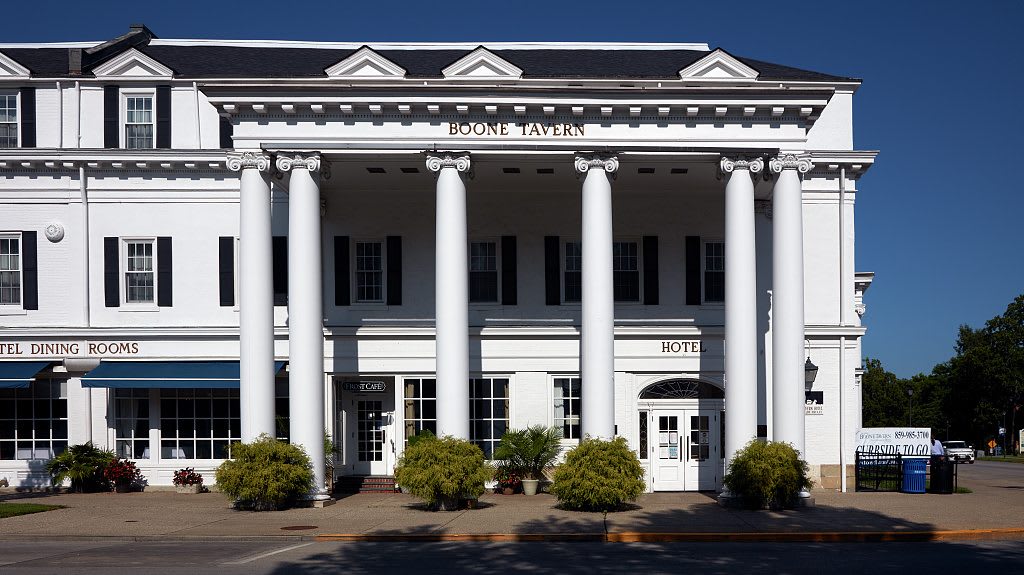
 Carol M. Highsmith / public domain via Library of Congress
The Story
John Gregg Fee, an abolitionist preacher, opened a one-room school here in 1855 on land given by the emancipationist Cassius M. Clay, and named the settlement after the biblical Berea. The schoolhouse served as a church on Sundays. Supporters of slavery drove Fee and his teachers out in 1859, the year the school adopted its first articles of incorporation, and he spent much of the war at Camp Nelson, working with the families of Colored Troops soldiers, before he came back to reopen it.
In 1866, its first full year after the war, Berea enrolled 187 students, 96 Black and 91 white, taught together, and it became the first integrated, coeducational college in the South. In 1904 the legislature passed the Day Law, which forbade teaching Black and white students in the same school, and Berea, the only such college in the state, was its plain target. The college took the case to the U.S. Supreme Court, lost in Berea College v. Kentucky in 1908 over a dissent by Justice John Marshall Harlan, and had to turn its Black students away. It raised money to open the Lincoln Institute near Simpsonville for them in 1912, and it returned to integrated classes when the law was amended in 1950.
Berea is a work college: every student works at least ten hours a week, in jobs that run from the college-owned Boone Tavern Hotel to the craft studios making brooms, ceramics and weaving. Most students come from southern Appalachia, and the Hutchins Library keeps a deep archive of the region's history and music.
Visitor Info
On the Map
Nearby
The closest stops worth working into your route
Historical markers nearby
Roadside plaques and monuments within a short detour