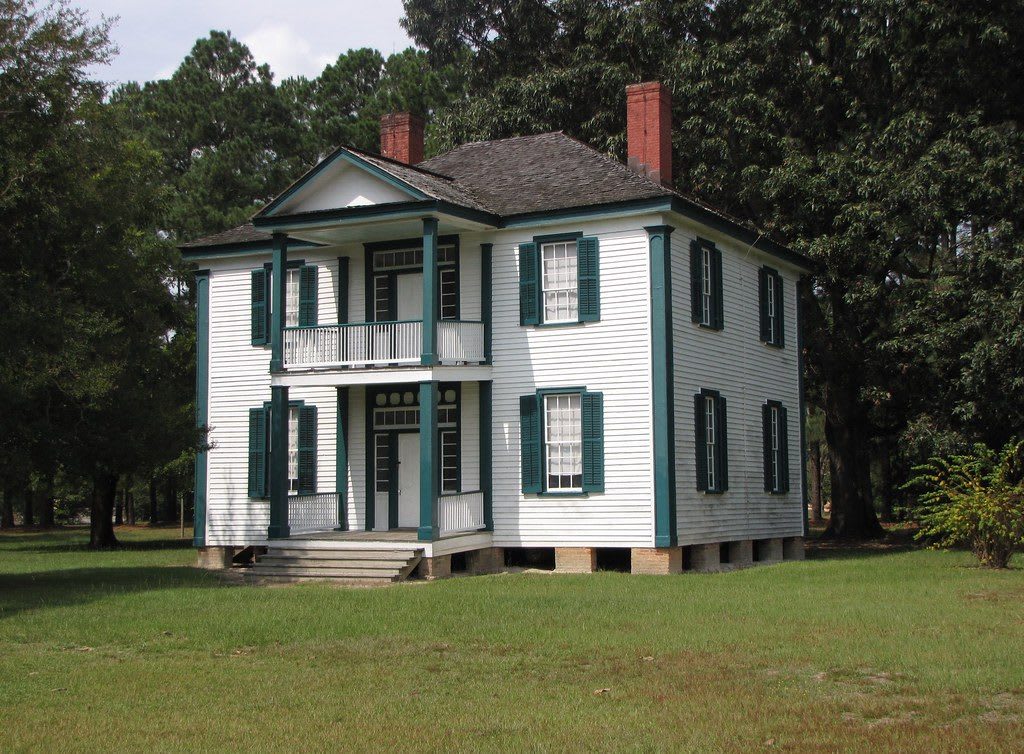
 Gerry Dincher / CC BY-SA 2.0 via Flickr
The Story
On March 19, 1865, Joseph E. Johnston set a hook-shaped line across the Goldsboro Road and caught the left wing of William T. Sherman's army strung out on the march. The Confederate assault drove one Union division from the field before the XX Corps held at the Morris farm. By the next day Sherman's right wing had come up, putting nearly 60,000 Union troops against about 20,000, and after a Union push on March 21 came close to the only bridge over Mill Creek, Johnston pulled out that night toward Smithfield. It was the largest battle fought in the state and the last in which a Confederate army could mount a real attack; five weeks later Johnston surrendered near Durham.
John and Amy Harper's house became a field hospital for the Union XIV Corps; it is furnished that way now, and beside it stand a rebuilt kitchen and a reconstructed dwelling for the people the Harpers enslaved. The monuments on the field were raised by Confederate veterans and their descendants: a marble shaft of 1895 over a common grave of 360 Confederate dead, and a 1927 stone of the United Daughters of the Confederacy. They honor one side of a war fought to keep people in bondage.
The roads are much as they were, unpaved until after World War II, and long lines of trenches and rifle pits survive in the pines. A ten-mile driving tour and six miles of trails start at the visitor center, which has a short film and battlefield maps.
Visitor Info
On the Map
Nearby
The closest stops worth working into your route
Historical markers nearby
Roadside plaques and monuments within a short detour