 Jameslwoodward / CC BY-SA 3.0 via Wikimedia Commons
The Story
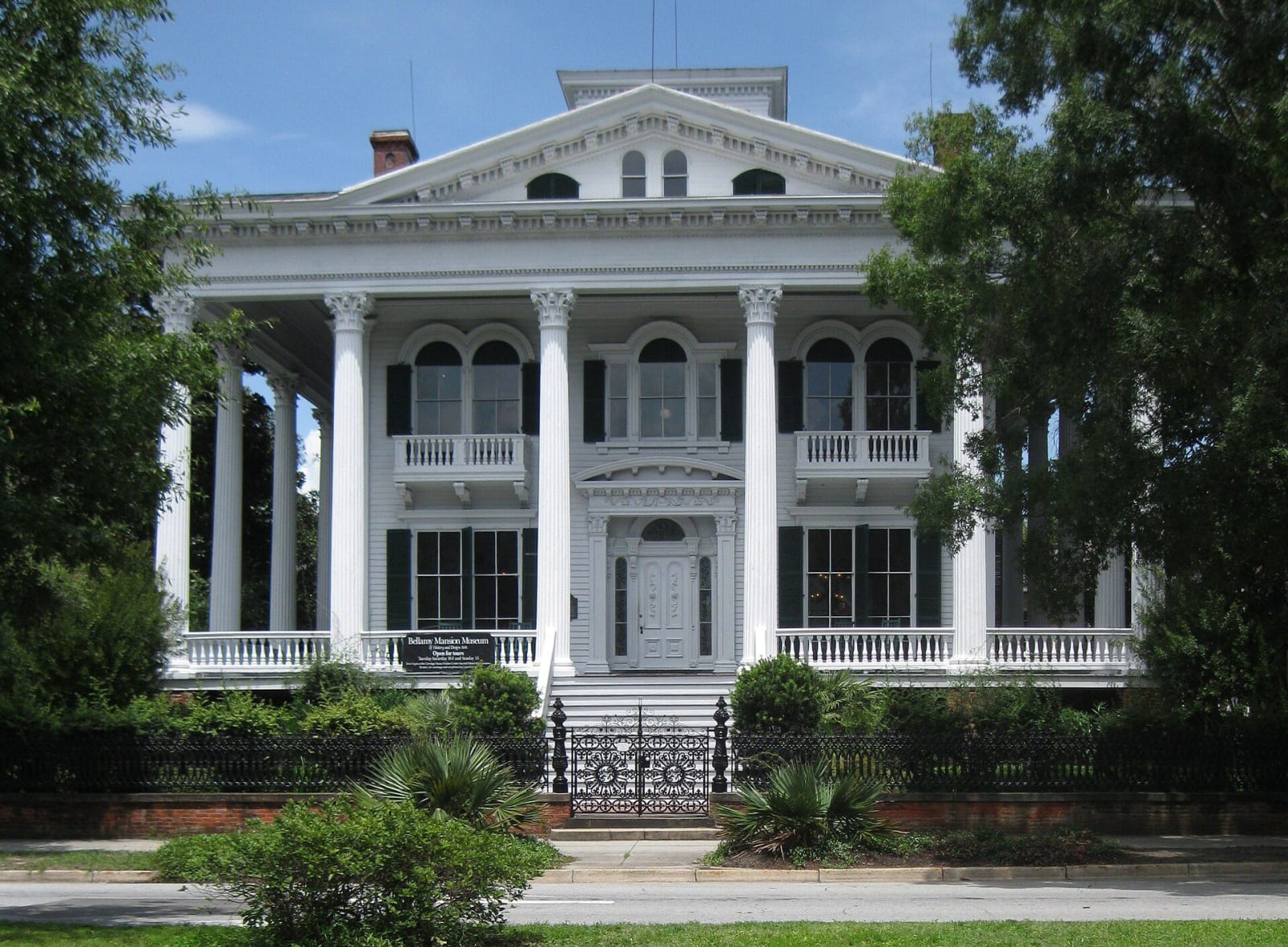
The Bellamy Mansion was built between late 1859 and early 1861 by enslaved craftsmen whom Dr. John D. Bellamy contracted from their owners and by free Black artisans he hired, working to plans by architect James F. Post and his assistant Rufus Bunnell. They raised the brick slave quarters and carriage house first, then the 22-room, 10,000-square-foot house with its 25-foot Corinthian columns. Bellamy, physician, merchant and planter, held 115 enslaved men, women and children in three counties in 1860: 82 at Grovely, his produce plantation in Brunswick County, 26 men at Grist, his tar and turpentine camp in Columbus County, and about nine in this household.
The quarters still stand at the northeast corner of the lot, two stories of limewashed brick, one room deep and three rooms wide, with a windowless back wall on the property line, four sleeping chambers, a laundry and privies. They are among the best-preserved urban slave quarters in the country, and some of the people who lived here have names: Sarah Miller Sampson, given to the Bellamys at their marriage in 1839; Joan, the children's nurse, and her daughter Caroline; Rosella; Mary Ann, fourteen in 1860; and Guy Nixon, butler and carriage driver.
The family's story runs on into 1898. John D. Bellamy Jr. was elected to Congress that year and was among the men who forced Wilmington's elected government out at gunpoint on November 10, and the museum tells that part too. Federal troops occupied the house during the war, it survived a disastrous fire in 1972, and Preservation North Carolina finished restoring it in 2014.
Visitor Info
On the Map
Nearby
The closest stops worth working into your route
Historical markers nearby
Roadside plaques and monuments within a short detour