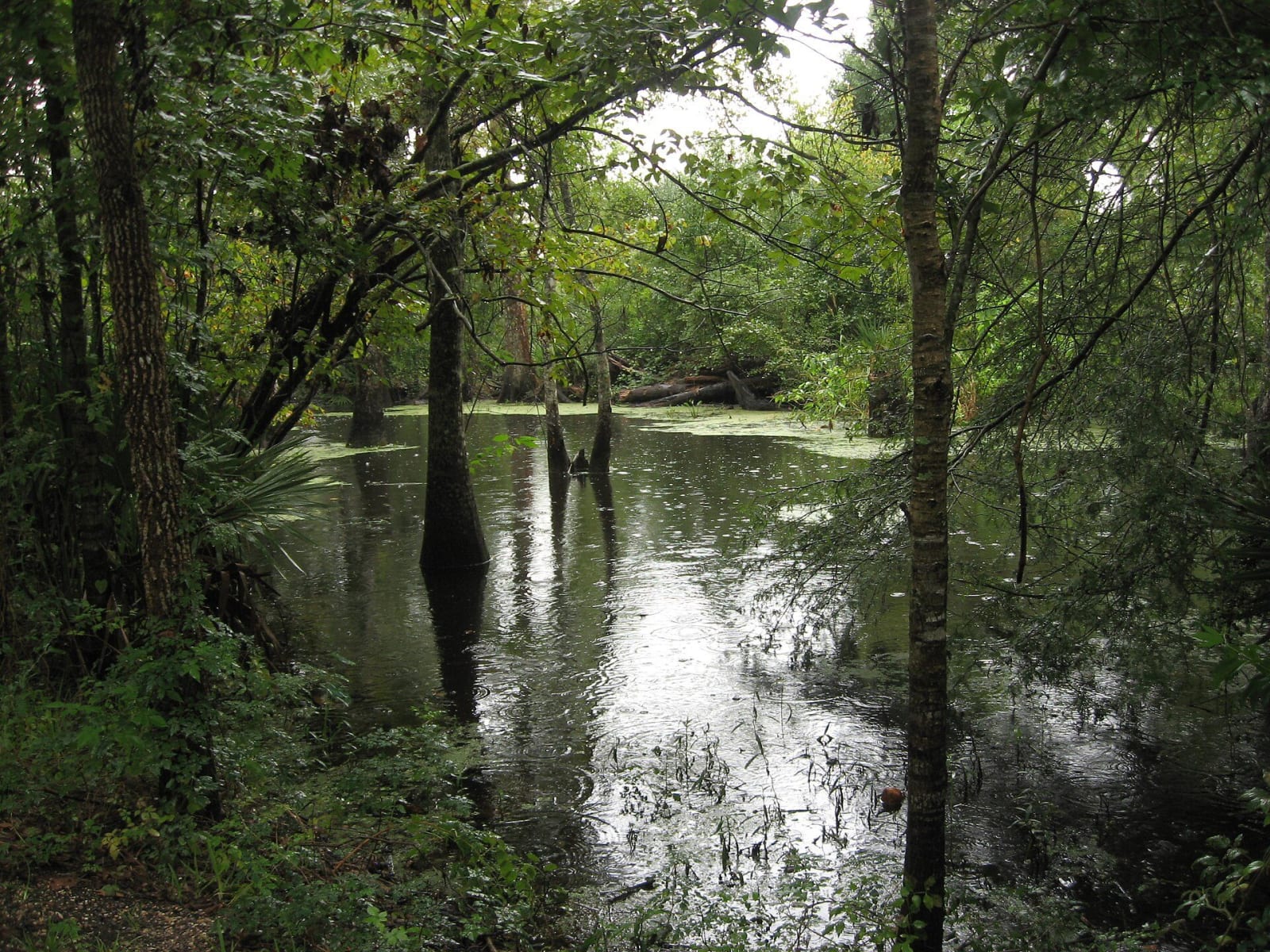
 Ken Lund / CC BY-SA 2.0 via Wikimedia Commons
The Story
Barataria Preserve, part of Jean Lafitte National Historical Park and Preserve, sits on land people have used for a very long time. The Park Service says that nearly 2,500 years ago Chitimacha, Houma and other tribes lived in the Mississippi Delta, and its Bayou Coquille Trail starts at the site of a prehistoric village. The National Register nomination lists about 70 prehistoric sites here, from the Tchefuncte through the Plaquemine period, as middens, mounds and shell beaches, and names Bayou Coquilles as a social center with a large midden and mound.
French settlers received land grants in 1726 and named the bayou for a mound of clam shells. Later, hundreds of immigrants from Spain's Canary Islands settled in the former Indian village. People along the bayous made their living by fishing, hunting and trapping in the swamps, marshes and coastal waters. Today the preserve is bayous, swamps, marshes and forests, with alligators and more than 200 bird species.
Access has changed. The Park Service says the visitor center and most trails closed on February 2, 2026 for Hurricane Ida repairs, work expected to take two years. The Twin Canals parking lot, trail and canoe launch stay open for day use, with no restrooms and no camping. The Wetland Trace Boardwalk is at the Louisiana Wetlands Education Center, 4917 City Park Drive in Jean Lafitte, about six miles away, and is open daily. The Barataria address is 6588 Barataria Boulevard in Marrero.
Visitor Info
On the Map
Nearby
The closest stops worth working into your route
Historical markers nearby
Roadside plaques and monuments within a short detour