 Glennfcowan / CC BY 3.0
The Story
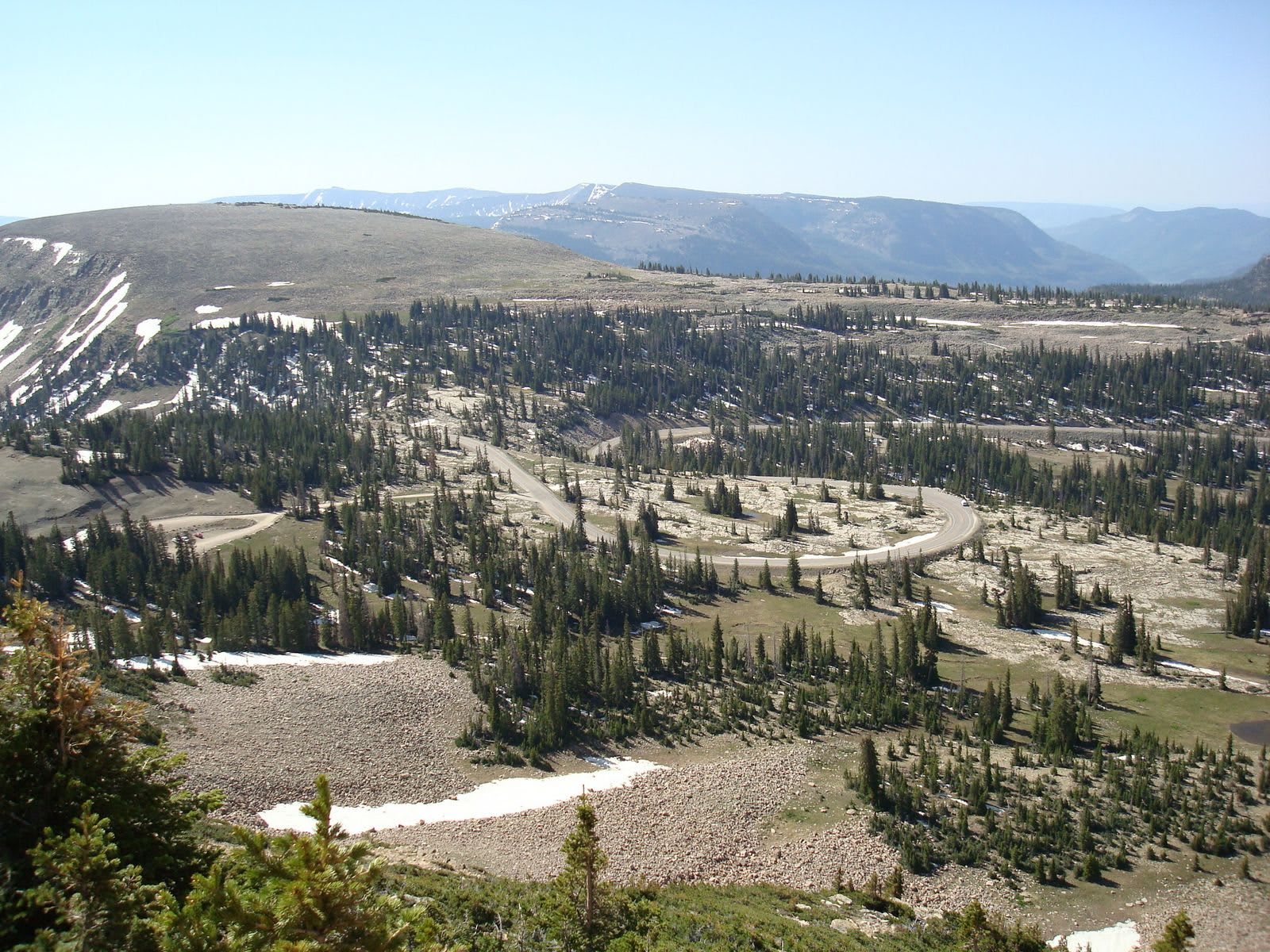
Bald Mountain Pass is the roof of the Mirror Lake Highway — 10,715 feet above sea level, the highest point on any paved road in Utah, and the spot where the windshield becomes a window into the high alpine world of the Uinta Mountains. The pass sits at the boundary between the western and eastern drainages of the range, and on a clear day the views extend across a landscape of granite peaks, snowfields, alpine meadows, and dark conifer forest that looks more like the Sierra Nevada than anything most people associate with Utah.
The pass is a trailhead as well as a viewpoint. The Bald Mountain Trail climbs two miles from the parking area to the 11,943-foot summit of Bald Mountain — one of the highest points reachable by a maintained trail in Utah. The hike gains roughly 1,200 feet over rocky, exposed terrain above treeline, and the summit panorama encompasses dozens of alpine lakes, the entire Uinta crest, and on exceptional days, a horizon that stretches from the Wasatch Range to the west to the distant peaks of Colorado to the east. The air at the summit is thin enough to notice — roughly 35 percent less oxygen than sea level — and the wind can be fierce, so layers are essential even on warm summer days.
The pass is typically accessible from late June through October, depending on snowpack. The road is closed by snow for more than half the year, and the opening date varies significantly from year to year. When the road does open, the pass becomes one of the most accessible alpine environments in Utah — you can drive to 10,715 feet, step out of your car, and stand in a landscape that would require days of backpacking to reach in most mountain ranges.
The Uinta Mountains are geologically unique — the only major east-west trending range in the contiguous United States, composed primarily of billion-year-old Precambrian quartzite rather than the sedimentary layers that define most of Utah. The rock at Bald Mountain Pass is among the oldest exposed rock in the state, and the glacially carved terrain — cirques, moraines, and U-shaped valleys — records the ice ages that shaped the modern landscape. Standing at the pass, you are standing on rock that was ancient before the first multi-cellular life appeared on Earth, sculpted by ice that retreated barely 10,000 years ago. The timescale is staggering, and the altitude makes it feel appropriately close to the sky.
Visitor Info
On the Map
Nearby
The closest stops worth working into your route
Historical markers nearby
Roadside plaques and monuments within a short detour