The Story
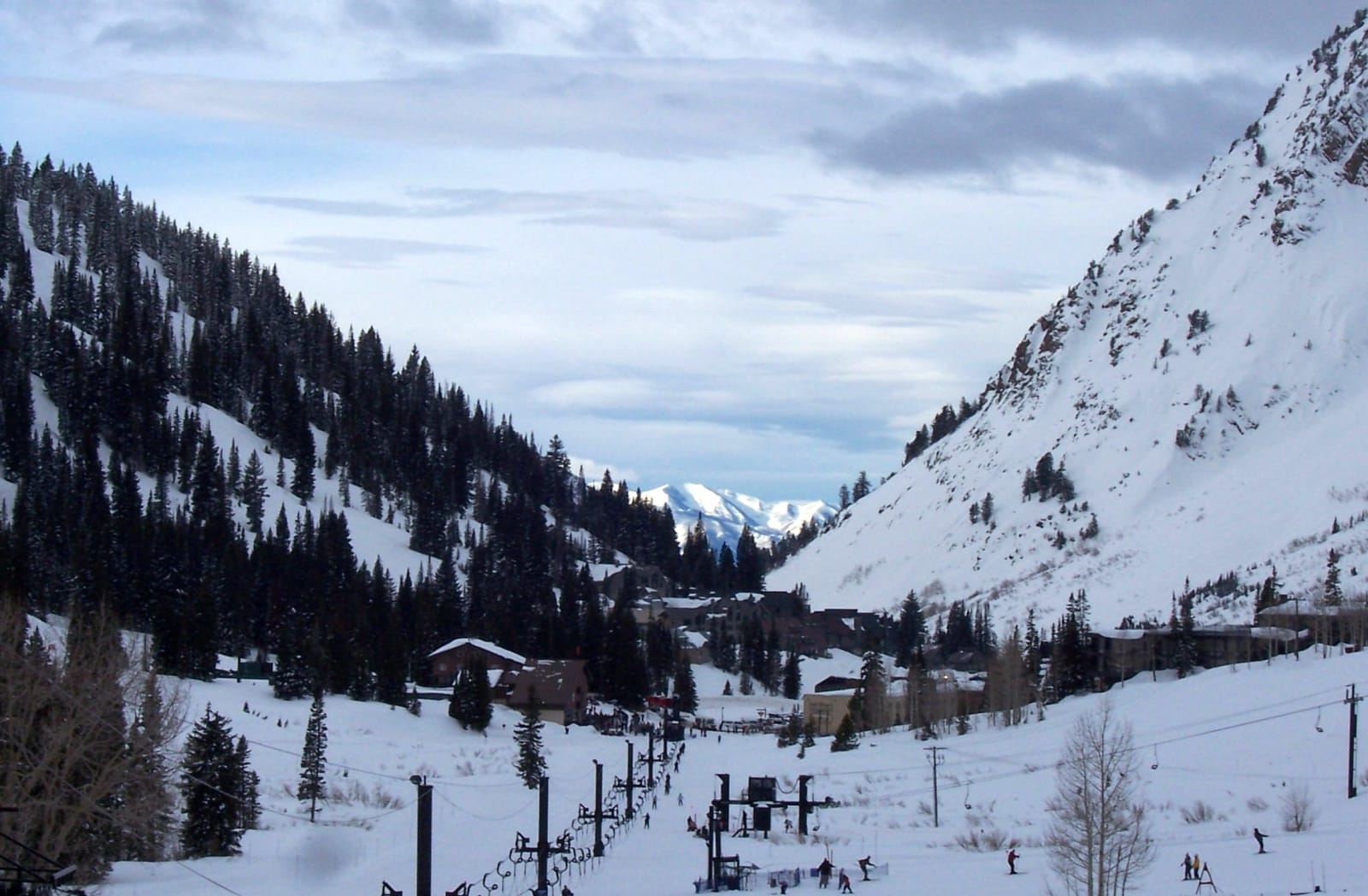
Alta is one of the oldest ski areas in the country and, to a certain kind of skier, something close to holy ground. It sits at the head of Little Cottonwood Canyon, a roughly 30-minute drive up State Route 210 from the valley floor southeast of Salt Lake City, where a narrow, avalanche-prone road dead-ends at a bowl of legendarily deep, dry powder. Alta averages around 545 inches of snow a year — the light, low-moisture kind that gave Utah its "Greatest Snow on Earth" license plates — and it is one of only three lift-served resorts left in the United States that still ban snowboarding, alongside Deer Valley and Vermont's Mad River Glen.
Like much of the Wasatch, the place began with silver. The town of Alta boomed in the 1870s into a rowdy mining camp of more than a thousand people, with smelters, breweries, and saloons strung along the canyon, before the ore played out and it faded toward ghost town. In the 1930s the Forest Service and a group of Salt Lake skiers, guided by the Norwegian ski pioneer Alf Engen, repurposed the slopes for skiing; they scraped together enough money to rebuild an old silver-mine ore tram into a single-seat chairlift, and on January 15, 1939, the Collins lift carried its first paying skiers for twenty-five cents a ride — only the second chairlift in the western United States. Alta later became the birthplace of organized avalanche control in North America, a discipline the canyon's steep, slide-prone walls demanded.
Alta still wears its independence plainly. The Forest Service owns the land, a local company runs the lifts, and the five base lodges are each owned by separate families — there is no big corporate village, and the mood skews toward serious skiing over spectacle. The terrain leans expert, with chutes and high bowls off Mount Baldy, but more than half of it suits beginners and intermediates. Just down the canyon, Snowbird shares the same snow and connects to Alta over the ridge through Mineral Basin, so a single ticket can link the two into one very large day. Alta rides on the Ikon Pass, and the season, fed by that altitude and snowfall, often runs deep into spring.
Visitor Info
On the Map
Stories featuring this place
Go deeper into the history and character of this stop
Nearby
The closest stops worth working into your route
Historical markers nearby
Roadside plaques and monuments within a short detour