County guide · Oregon
Multnomah County
4 places to stop and 6 historical markers in Multnomah County, Oregon.
Towns: Corbett (2), Cascade Locks (1), Portland (1)
Places to stop
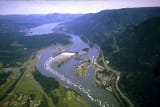
industrial · Cascade Locks
Bonneville Dam
The first federal dam on the Columbia, where someone has counted the fish climbing its ladders every year since 1938, beside an island the Corps used as a dump for forty years.
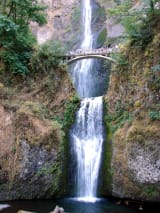
natural · Corbett
Multnomah Falls
A 620-foot double waterfall whose 1925 stone lodge survived because firefighters kept it soaked while the forest burned around it in September 2017.
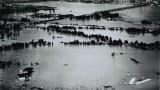
historical · Portland
Vanport
Briefly Oregon's second-largest city, built in about 110 days for Kaiser's shipyard workers, washed away in an afternoon in 1948, and later renamed out of existence.
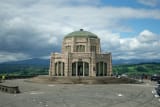
architectural · Corbett
Vista House at Crown Point
A rest stop on a basalt point 733 feet above the Columbia, budgeted at $12,000, finished for about $100,000, and mocked for years as Oregon's most expensive outhouse.
Historical markers
Historical marker
Beacon Rock
The rock stands across the river in Washington; this board is on the Oregon bank at the Bonneville Fish Hatchery. Lewis and Clark named it in 1805.
Historical marker
River Highway
The board here was rewritten. Until at least 2016 it told of Broughton's Expedition: Lieutenant William Broughton reaching his farthest point up the Columbia on October…
Historical marker
Sandy River Bridge
The board gives the river three names. Broughton's boat crew called it Barings River in October 1792, for the London banker Francis Baring.
Historical marker
The Willamette Stone
The survey of two states hangs from a point at the end of this trail. John Preston's crew drove a cedar stake here on June 4, 1851, and in 1885 the Interior Department…
Historical marker
Troutdale
Troutdale grew at the mouth of the Sandy as a river and railroad town, named for the fish ponds its founder, Captain John Harlow, kept here.
Historical marker
Vanport
This panel stands in West Delta Park, on ground Vanport covered until the afternoon of May 30, 1948, when a railroad fill on the city's western edge gave way.