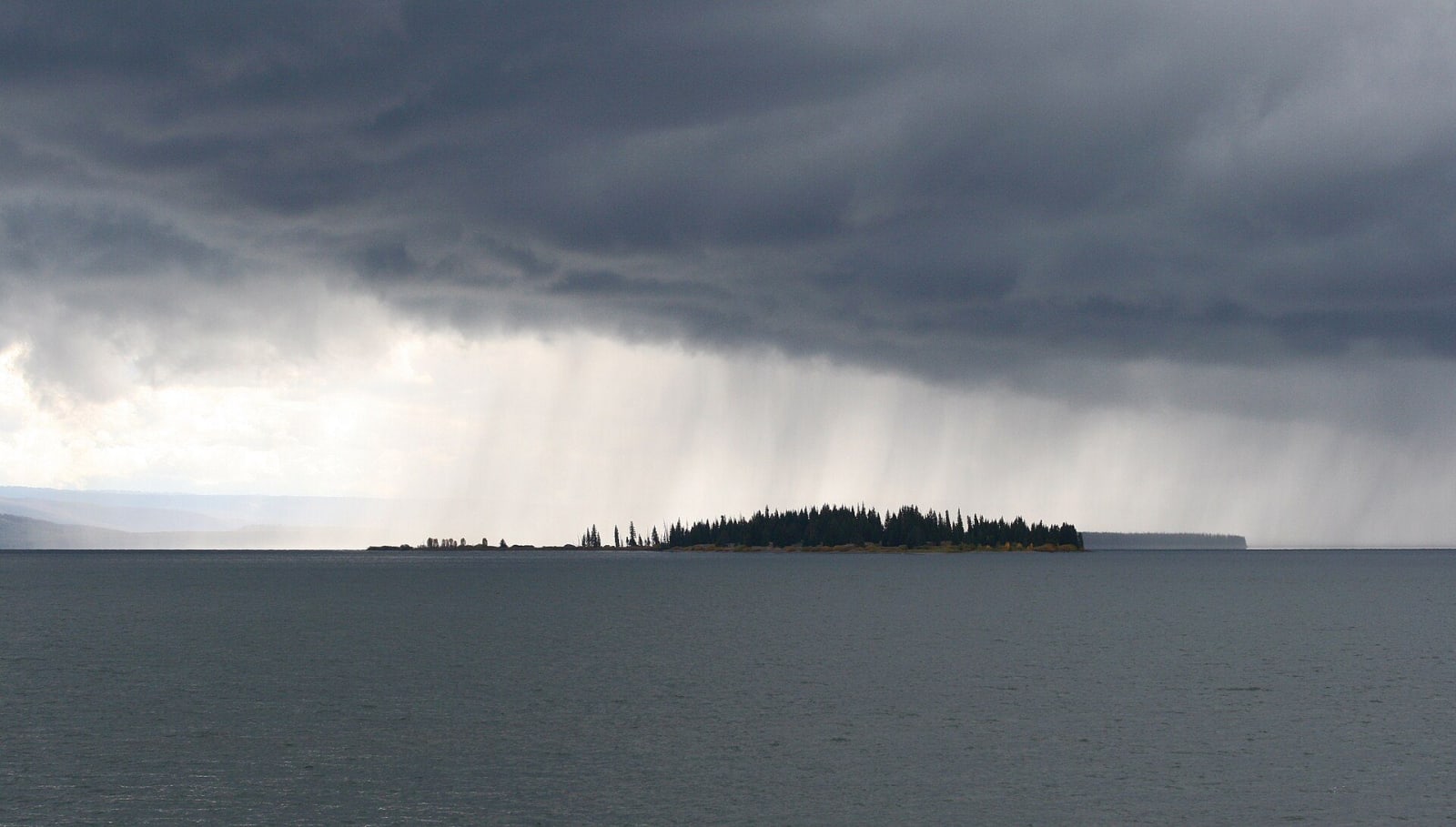
Yellowstone
Tukudika country and a quarry whose obsidian reached Ontario, the first national park, the Nimiipuu crossing of 1877, the Army years at Mammoth, and the summer of 1988.
Before it was a park, Yellowstone was a homeland and a quarry. Most nations came up onto the plateau in summer and left before the snow, but some of the Tukudika, the Sheepeaters, a Shoshone people who followed the bighorn, stayed through the winter and are counted its only known year-round residents. They softened sheep horn in the hot springs, shaped it into bows, and traded the bows to other tribes. For more than eleven thousand years people quarried black volcanic glass at Obsidian Cliff, north of Norris, and points made from that one lava flow, which geochemists can fingerprint, have turned up as far east as Ohio and Ontario.
On March 1, 1872, President Grant signed the act that made it the first national park. On August 23, 1877, about seven hundred Nimiipuu, non-treaty Nez Perce in flight from Idaho, came in from the west with General Howard's troops days behind them. Their scouts took tourists captive in the geyser basins, among them George and Emma Cowan; George was shot and left for dead and lived, and Emma and the others were let go. The Nimiipuu crossed the Yellowstone River and were out of the park by early September. From 1886 the Army ran Yellowstone, and the stone buildings of Fort Yellowstone at Mammoth Hot Springs date from those years. The last soldiers left on October 31, 1918, two years after the National Park Service was created.
In the dry summer of 1988, dozens of fires, most of them started by lightning, ran together across 793,880 acres, about 36 percent of the park, and on September 8 the whole park was closed to everyone but emergency crews for the first time in its history. Between 1995 and 1997, 41 wolves trapped in Canada were released here, in a park where the last packs had been killed off in the 1920s.
What to See in Yellowstone
5 places across the region, grouped by what they are.
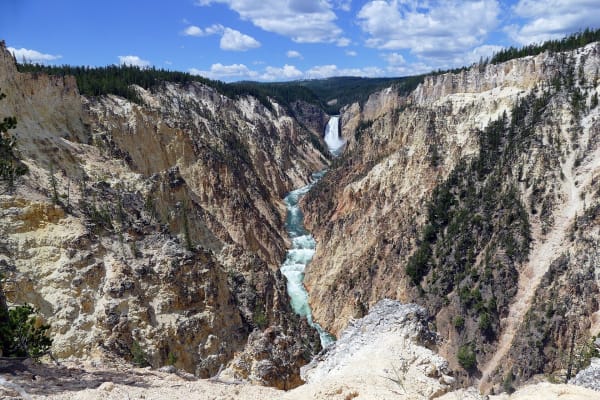
Geology & Rock Formations
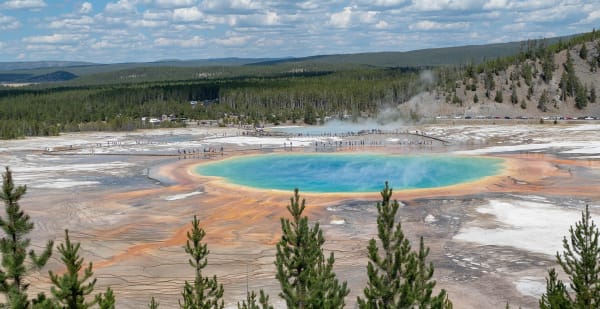
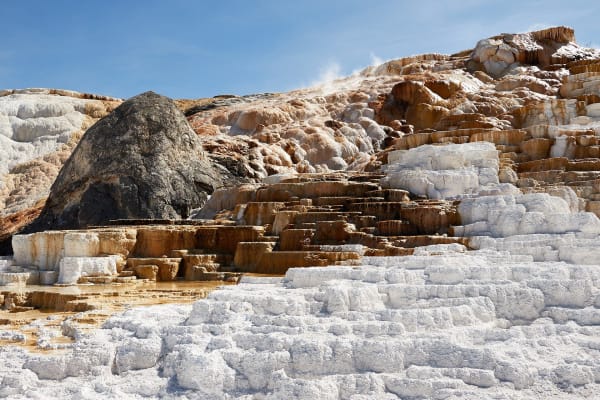
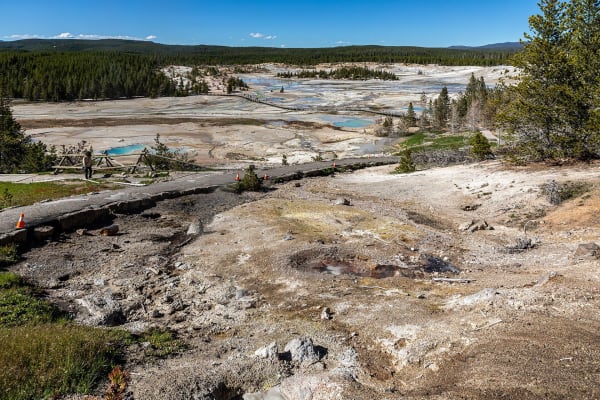
Natural Areas
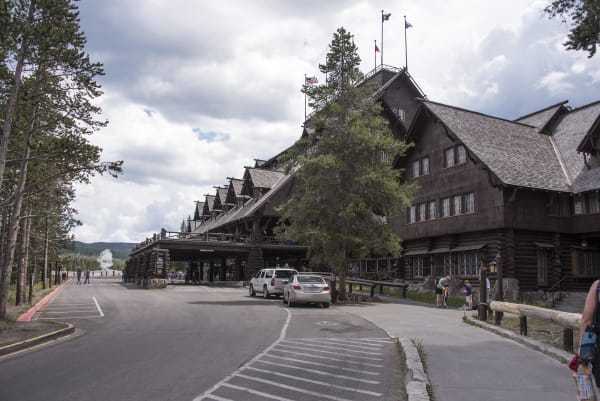
Architecture
Stories from Yellowstone
The Real Colter's Hell
Most people think Colter's Hell is Yellowstone. The trappers' Colter's Hell is a warm, sulfurous stretch of the Shoshone River just west of Cody, and it was never the geyser field its own marker describes.
The Fish in the Wrong Lake
Someone moved lake trout into Yellowstone Lake in the 1980s, and they nearly ate out the native cutthroat that bears, ospreys and otters depended on. Three decades of gillnetting are bringing the cutthroat back.
Yellowstone rewards the unhurried. Pick a base, fan out, and let the country between the headline stops surprise you.
← Explore more of Open Road Guide