In 1994 an angler out on Yellowstone Lake with a guide caught a lake trout. That one fish was bad news. Lake trout are not native to the lake, and for the cutthroat trout that had filled it since the end of the ice age, they were close to the worst neighbor possible.
The native fish
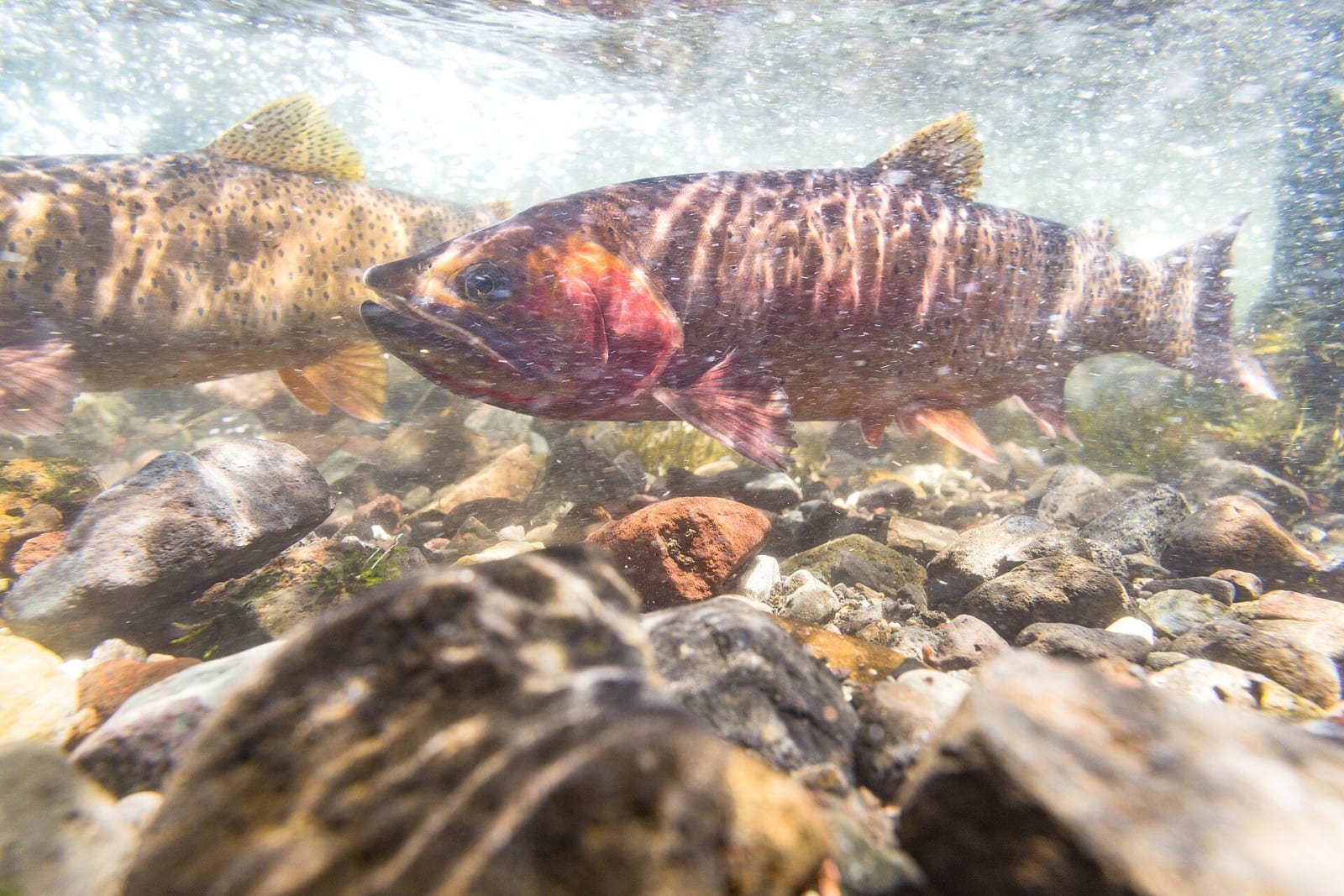
Yellowstone Lake, at more than 7,700 feet, is the largest lake above 7,000 feet in North America, and its Yellowstone cutthroat trout were the largest remaining population of inland cutthroat anywhere. Each spring, as the snowmelt eased, they ran up some sixty tributary streams to spawn, into shallow water where everything that eats fish could reach them. Grizzly and black bears fished the spawning creeks, and ospreys, eagles, pelicans and otters lived on them; biologists count sixteen kinds of birds and four mammals that eat the lake's cutthroat. At a fish trap on Clear Creek, on the east shore, the count of spawners peaked in 1978 at more than 70,000.
The fish from next door
The lake trout came from inside the park. In 1890, in the early years of stocking Yellowstone's waters for anglers, lake trout from Lake Michigan were put into Lewis and Shoshone lakes, which had held no fish at all, on the Snake River side of the divide. Nearly a century later someone moved some of them over the divide into Yellowstone Lake. Chemical analysis of the ear bones of large lake trout caught there traced them to Lewis Lake, and the best estimate is that they arrived in the 1980s, carried in by a person rather than by any natural route.
Lake trout grow large, live long and spend their lives in deep, cold water eating other fish; a big one eats dozens of cutthroat a year. Unlike the cutthroat they spawn in the lake, not the streams, and they stay too deep for a bear or an osprey to catch. As the lake trout multiplied, the cutthroat collapsed. The Clear Creek count fell to about 500 by 2007. Ospreys, which had taken cutthroat for nearly all their food, all but disappeared from the lake: researchers counted an average of thirty-eight nests there in the late 1980s and three in 2013 to 2017. Grizzlies that once fished the spawning streams turned more to elk.
Netting the lake
The Park Service began gillnetting soon after the discovery, and the effort grew into one of the largest campaigns against an invasive fish anywhere. Contract crews from the Great Lakes commercial fishery set miles of gillnet through the open-water season, and biologists track tagged lake trout to find their spawning beds and test ways to kill the eggs there. By the end of 2019 more than 3.4 million lake trout had been taken out of Yellowstone Lake. The catch per net has been falling, the biggest and most fertile lake trout have grown scarce, and surveys show cutthroat numbers climbing again in the lake and its spawning streams.
The park says plainly it will never get every lake trout out; the aim is to hold them down for good. Anglers are required to kill any lake trout they catch in the lake. Every cutthroat they release goes back to whatever is waiting at the mouth of a creek.