Tennessee · Region

Nashville & the Cumberland

Dunbar Cave and Castalian Springs, the Hermitage, Carnton and the Capitol told through the enslaved, Fort Negley, Fisk and the sit-ins, and the Ryman.

12 places to explore

Native people marked this country long before Nashville. Mississippian artists decorated Dunbar Cave at Clarksville about 800 years ago, and the cave is still treated as sacred. A mound center on Lick Creek at Castalian Springs, built up between about 1250 and 1350, is closed to visitors, though the springs at Wynnewood are not. The Nashville Pike at Stones River was a route of the Trail of Tears, along which Cherokee (Tsalagi) families were forcibly removed to Indian Territory.

Cotton and slavery built the Cumberland's big houses. The Hermitage and Carnton are told here through the people enslaved on them, and fifteen enslaved men hired out by a stone mason cut the cellar of the State Capitol, twelve of their names surviving on a payroll. Black laborers were conscripted to build Fort Negley in 1862, and Fort Defiance in Clarksville became a refuge and a recruiting station for Black soldiers.

Freedom's institutions rose in the same valley. Fisk opened in 1866 in army barracks, its Jubilee Singers paid for Jubilee Hall, and its students joined the 1960 sit-ins recalled in the Civil Rights Room. The Ryman and the National Museum of African American Music carry the music a few blocks apart on Rep. John Lewis Way, once Fifth Avenue.

What to See in Nashville & the Cumberland

12 places across the region, grouped by what they are.

Natural Areas

Dunbar Cave State Park

Clarksville

A Clarksville cave with 800-year-old Mississippian artwork, later a resort and Roy Acuff's dance stage, now a state park with seasonal guided tours.

View details →

Historic Sites

Andrew Jackson's Hermitage

Nashville

Andrew Jackson's cotton plantation east of Nashville, where visitors can walk to the quarters, Alfred's Cabin and the Enslaved Cemetery as well as the mansion.

View details →
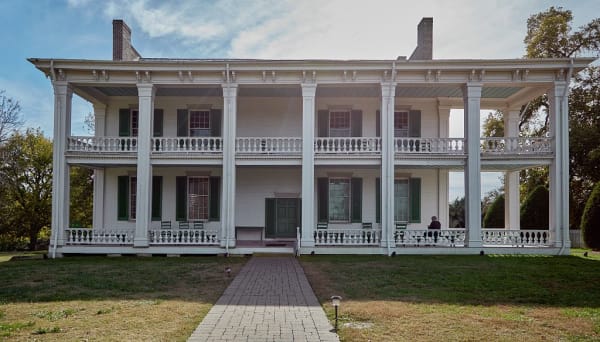
The two-story brick house at Carnton with white columns and double porches, seen from the front walk.

Carnton

Franklin

The McGavock farm in Franklin, worked by 44 enslaved people in 1860, that became the largest field hospital of the Battle of Franklin.

View details →

Civil Rights Room at the Nashville Public Library

Nashville

A room in the downtown library with a circular lunch counter, a timeline and oral histories of the 1960 Nashville sit-ins, a few blocks from the stores where they began.

View details →

Fisk University and Jubilee Hall

Nashville

The 1866 school for freed people whose Jubilee Singers paid for Jubilee Hall, a National Historic Landmark, and whose students helped start Nashville's sit-ins.

View details →

Fort Defiance Civil War Park and Interpretive Center

Clarksville

An intact earthwork fort above the Cumberland and Red Rivers in Clarksville, begun with forced Black labor and later a contraband camp and recruiting center for Black soldiers.

View details →

Fort Negley

Nashville

The largest inland stone fort of the Civil War, built in 1862 on St. Cloud Hill by more than 2,700 conscripted Black laborers, hundreds of whom died.

View details →
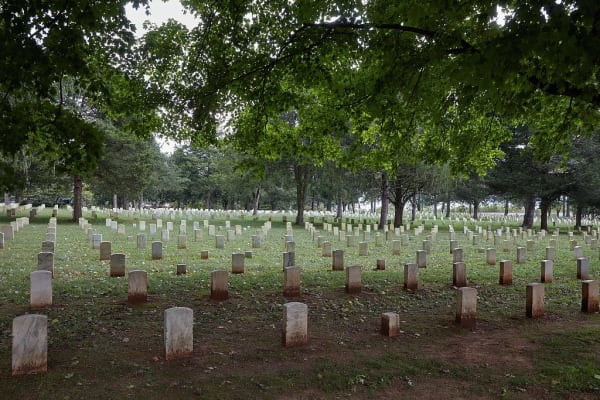
Rows of white headstones under shade trees in Stones River National Cemetery.

Stones River National Battlefield

Murfreesboro

The Murfreesboro battlefield of December 1862, with a national cemetery built by Black soldiers, a Trail of Tears route and the story of the freedmen's settlement called Cemetery.

View details →

Wynnewood State Historic Site

Castalian Springs

A National Historic Landmark log inn at the Bledsoe's Lick springs, beside a Mississippian mound center and tied to the domestic slave trade.

View details →

Towns & Gateways

National Museum of African American Music

Nashville

A downtown Nashville museum, opened in 2021, tracing gospel, blues, jazz, rhythm and blues and hip-hop through Black history from 1619 to 2016.

View details →
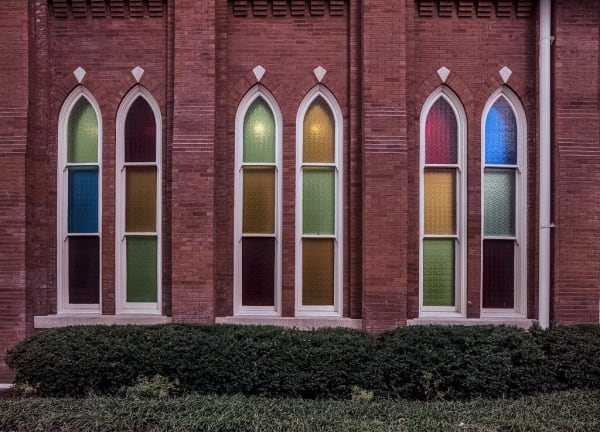
Tall arched stained-glass windows set in the red brick side wall of the Ryman Auditorium.

Ryman Auditorium

Nashville

The 1892 brick tabernacle in downtown Nashville that was the Grand Ole Opry's home from 1943 to 1974, now a National Historic Landmark and working concert hall.

View details →

Architecture

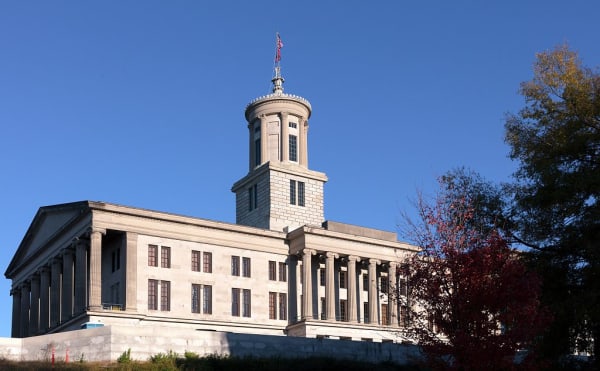
The limestone Tennessee State Capitol and its tower seen from below on its hilltop under a clear sky.

Tennessee State Capitol

Nashville

William Strickland's Greek Revival capitol on Nashville's Capitol Hill, finished in 1859 and built from the bottom up with the labor of enslaved men.

View details →

Nashville & the Cumberland rewards the unhurried. Pick a base, fan out, and let the country between the headline stops surprise you.

← Explore more of Open Road Guide