 Carol M. Highsmith / public domain via Library of Congress
The Story
Stones River was fought on a political deadline. President Lincoln needed a Union victory before the Emancipation Proclamation took effect on January 1, 1863, and the armies met outside Murfreesboro from December 31 to January 2. Estimated casualties on both sides reached 24,645. The Union line held at a cedar thicket called the Round Forest, where Hazen's brigade later raised a monument that is the oldest Civil War monument still in its original place.
The Nashville Pike that carried the armies had carried the Cherokee before them. It was one of the main routes of the Trail of Tears through Murfreesboro and Middle Tennessee, and a captain's journal for October 25, 1837 records a party marching through town that day. In the removal that began in 1838, troops and militia forced more than 16,000 Cherokee from their homes in four states, and an estimated 4,000 died.
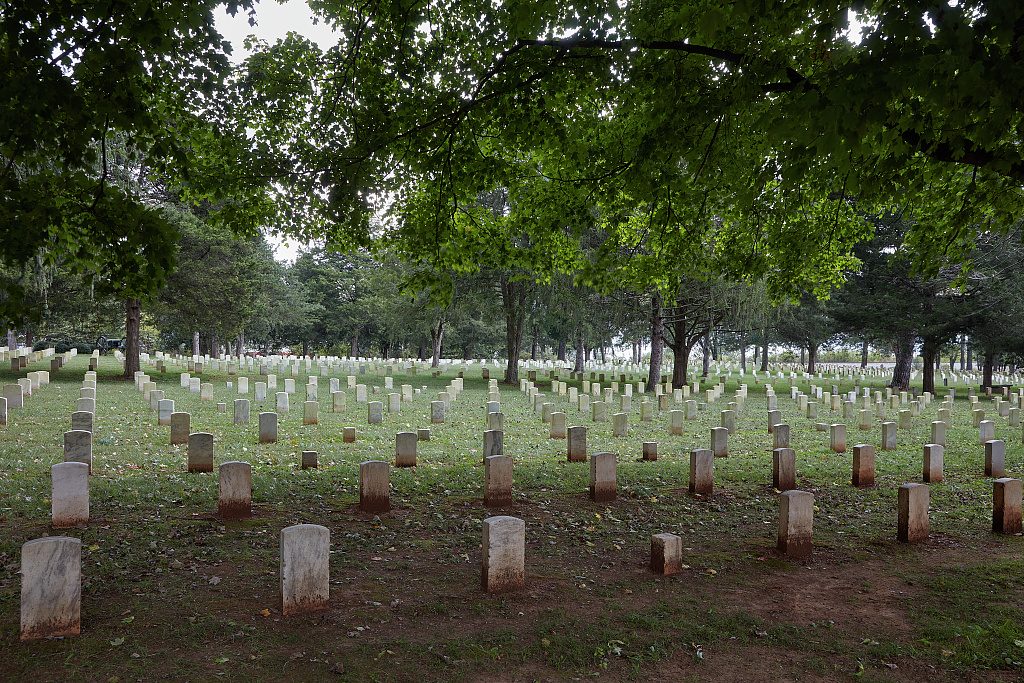
After the battle the 111th United States Colored Infantry built Stones River National Cemetery, reburying thousands of Union dead. Soldiers and formerly enslaved people founded a settlement beside it called Cemetery, with a school that taught children from 1874 to 1962. William Holland, born enslaved in Kentucky and a sergeant in the 111th, bought land near the Hazen monument in 1867. When Congress created the park in 1927, Black landowners who held more than half the land were forced to sell.
Visitor Info
On the Map
Nearby
The closest stops worth working into your route
Historical markers nearby
Roadside plaques and monuments within a short detour