 Carol M. Highsmith / public domain via Library of Congress
The Story
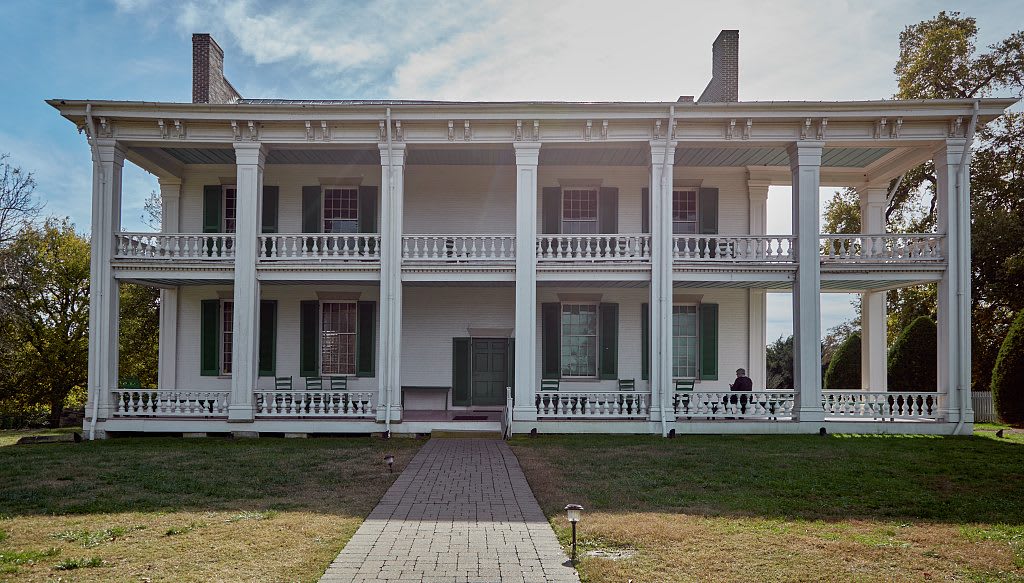
Carnton was a working farm before it was a battlefield hospital. Randal McGavock built the house in 1826, and by 1860 John and Carrie McGavock held 44 people in slavery on about 700 acres. One of them was Mariah, given to Carrie as a wedding present in December 1848. She became head of the household staff and the family's midwife. During the war she was sent to Alabama, pregnant, away from her husband and children and out of reach of the Union army, and in 1866 she married Bollen Reddick, in her own words "by choice and as a free woman." A bronze bust of Mariah Reddick and life-size silhouettes of enslaved people now stand in the house.
On November 30, 1864, the Confederate Army of Tennessee attacked the Union line at Franklin for about five hours. Some 9,500 men were killed, wounded, captured or missing, nearly 7,000 of them Confederate. Carnton became the largest field hospital nearby, and the bodies of four Confederate generals lay on its back porch the next morning. In 1866 the McGavocks set aside two acres beside the family cemetery for nearly 1,500 Confederate dead.
Take the guided house tour, then drive about three miles up the Harpeth River to Toussaint L'Ouverture Cemetery, where Reddick is buried. Forty-four Black Franklin residents bought its four acres in 1884. The Carter House, in town, interprets the 28 people enslaved on the Carter farm.
Visitor Info
On the Map
Nearby
The closest stops worth working into your route
Historical markers nearby
Roadside plaques and monuments within a short detour