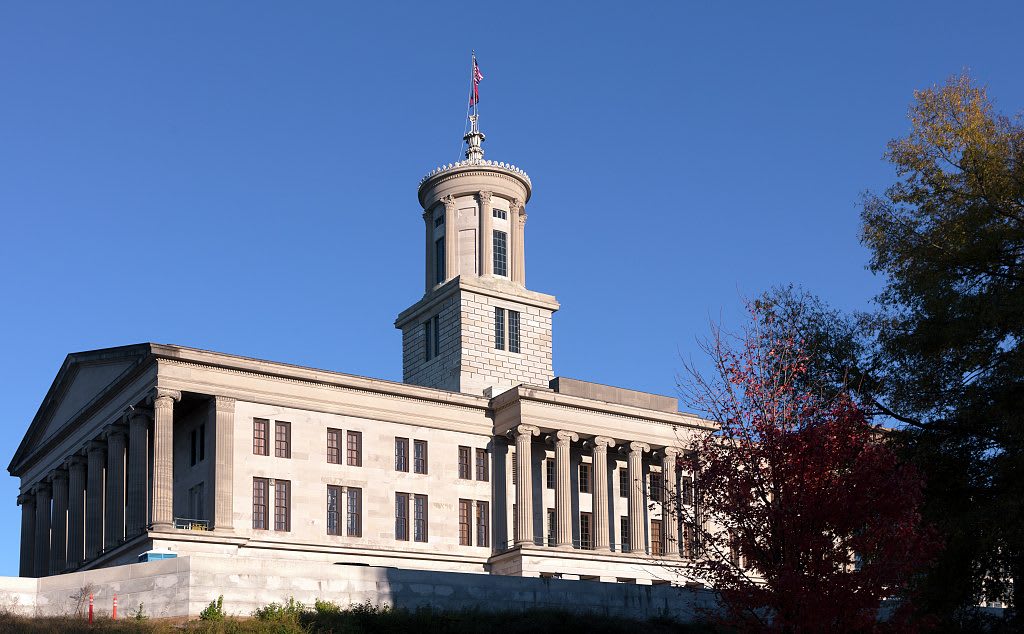
 Carol M. Highsmith / public domain via Library of Congress
The Story
William Strickland designed the Capitol, the cornerstone was laid on July 4, 1845, and he died in 1854 before it was done. The last stone of the tower was set in 1855, and the building was declared complete in 1859. It is the only active state capitol in the South finished before the Civil War, and its State Library, with cast-iron stacks, galleries and a spiral iron stair, is considered the finest room in the building.
The first work, cutting the cellar out of the limestone hill, was done by enslaved men. The legislature had first approved prison convicts, but Secretary of State John Young warned that few could be worked outside the prison walls. In the spring of 1846 the building committee instead hired fifteen enslaved men from a Nashville stone mason, A. G. Payne, at $18 a month each, plus an overseer. A 2008 Vanderbilt student paper found twelve entries on the payroll: Lewis, Daniel, Robert, Nelson, Parker, Dang, Bill, Andrew, Jim and three men named John. The state paid nearly twice as much for their labor as for unskilled free workers, and the money went to Payne.
The last payment came in January 1847, and the men went back to Payne's farm and brick yard. After emancipation the records on all but three of them stop. The cellar of the building where the legislature still meets was cut by their hands.
Visitor Info
On the Map
Nearby
The closest stops worth working into your route
Historical markers nearby
Roadside plaques and monuments within a short detour