On the afternoon of December 10, 1946, six Marine Corps transports were flying north through a winter storm, bound from El Toro, near San Diego, for the Naval Air Station at Sand Point on Lake Washington. Between them they carried more than two hundred Marines, many of them privates on their way to a new posting. Over southwestern Washington the weather closed in. Four of the planes turned back and landed at Portland. One made Seattle a little after five. At 4:13 p.m. the pilot of the sixth, Major Robert Reilly, radioed the range station at Toledo that he was flying on instruments at nine thousand feet with ice forming on his wings, and asked to climb above the clouds. Nothing more was heard from him.
At Longmire, on the southwest side of Mount Rainier, the park superintendent and his rangers heard a plane pass overhead at about a quarter past four.
The wind no one knew about
Storms kept the search planes on the ground for nearly a week, and more than five feet of snow fell on the mountain. When the sky cleared on December 16, twenty-five military aircraft flew the slopes and found nothing, and by the end of the month the search was called off. The Navy's investigators worked out what had happened. Reilly had been flying a course corrected for a wind from the southeast, but south of Portland the wind had swung round to blow from the west at seventy miles an hour. It pushed the transport some twenty-five degrees east of its course, onto a line that ran straight into Rainier. The plane, a twin-engine Curtiss Commando, was painted black, and the mountain had buried it.
Bill Butler's day off
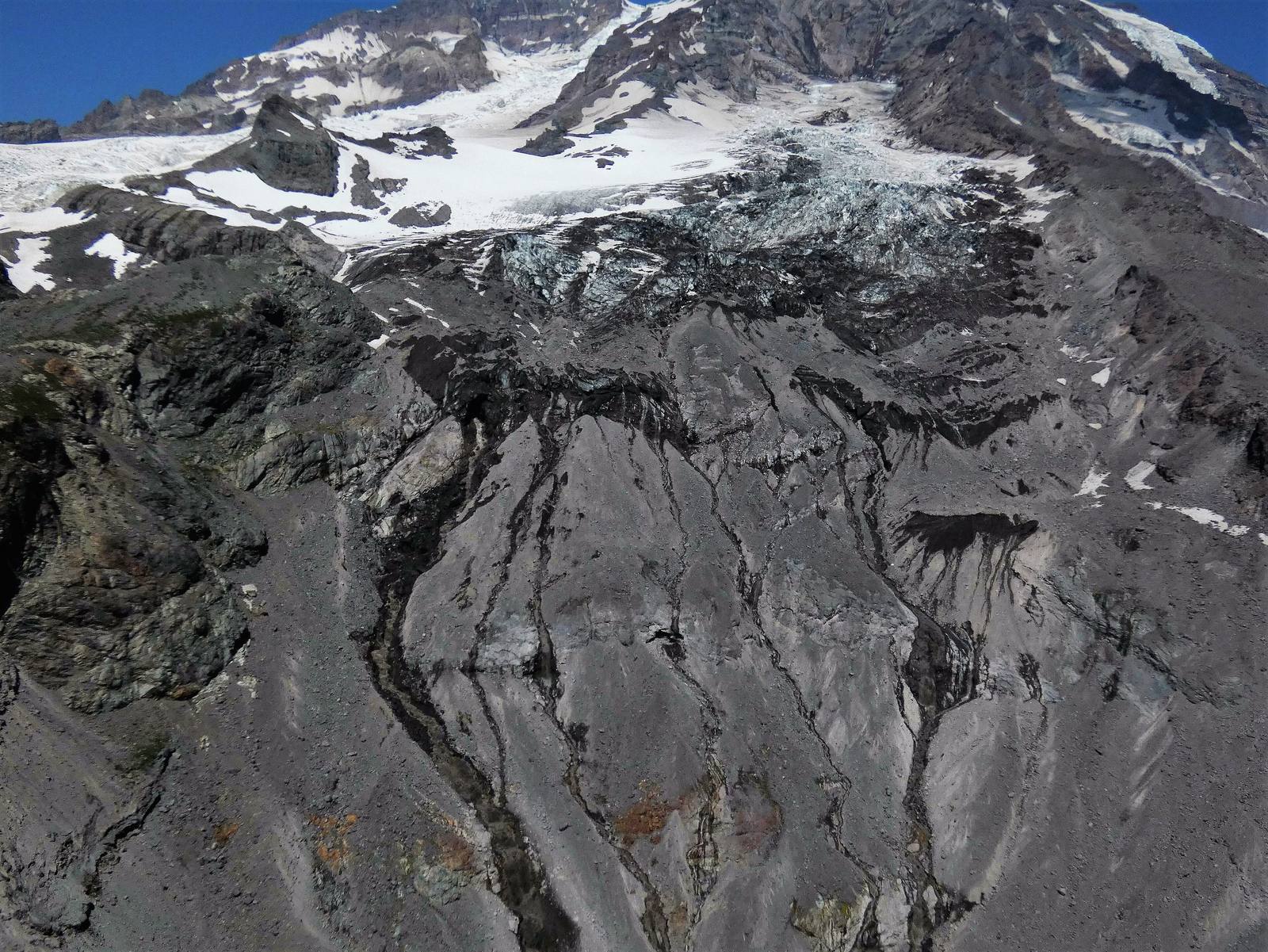
On July 21, 1947, the park's assistant chief ranger, Bill Butler, was hiking up Success Cleaver on his day off when he saw wreckage, a bucket seat among it, high on the South Tahoma Glacier. Climbers working from a camp at Indian Henry's Hunting Ground reached debris strewn a quarter mile across the ice at about 9,500 feet and brought down a Marine's health record that identified the plane. A month later, scouting again, Butler found the crushed nose at 10,500 feet, melted out of the snow, with eleven men inside it. On a further climb fourteen more were seen, most of them locked in ice in a crevasse, while rocks fell from the headwall above.
The question was whether to bring them down. The glacier had changed so much that it took four hours to reach the first wreckage and four more to climb the last half mile. A recovery, by the reckoning of the men who had been up there, would take twenty experienced climbers about two weeks, at real risk to their lives. Army mountain troops came to look. The parents of six of the Marines wrote that enough had been done and asked that the place be posted and left alone, their sons in the care of their Creator. On August 27, 1947, the Navy called off the recovery. The thirty-two would stay where they were.
Round Pass
A memorial service had already been held, on August 24, on a knoll at Round Pass looking across to the glacier, with the families of fourteen of the men. The Marine Corps League asked the Secretary of the Interior to rename the glacier for the Marines. Instead the Park Service set a bronze plaque bearing their names on a granite boulder at Round Pass, and families gathered there every August for decades. Butler was offered the families' $5,000 reward for finding the plane and turned it down. It had been his job.
In the mid-1990s the Westside Road washed out, and the boulder can now be reached only on foot or by bike, 3.8 miles beyond the end of the drivable road at Dry Creek. A replica stands in Veterans Memorial Park in Enumclaw. The glacier still carries the mountain's older name. In 1946 the crash was the deadliest of any single aircraft in American history, and it remains the worst loss of life Mount Rainier National Park has known.