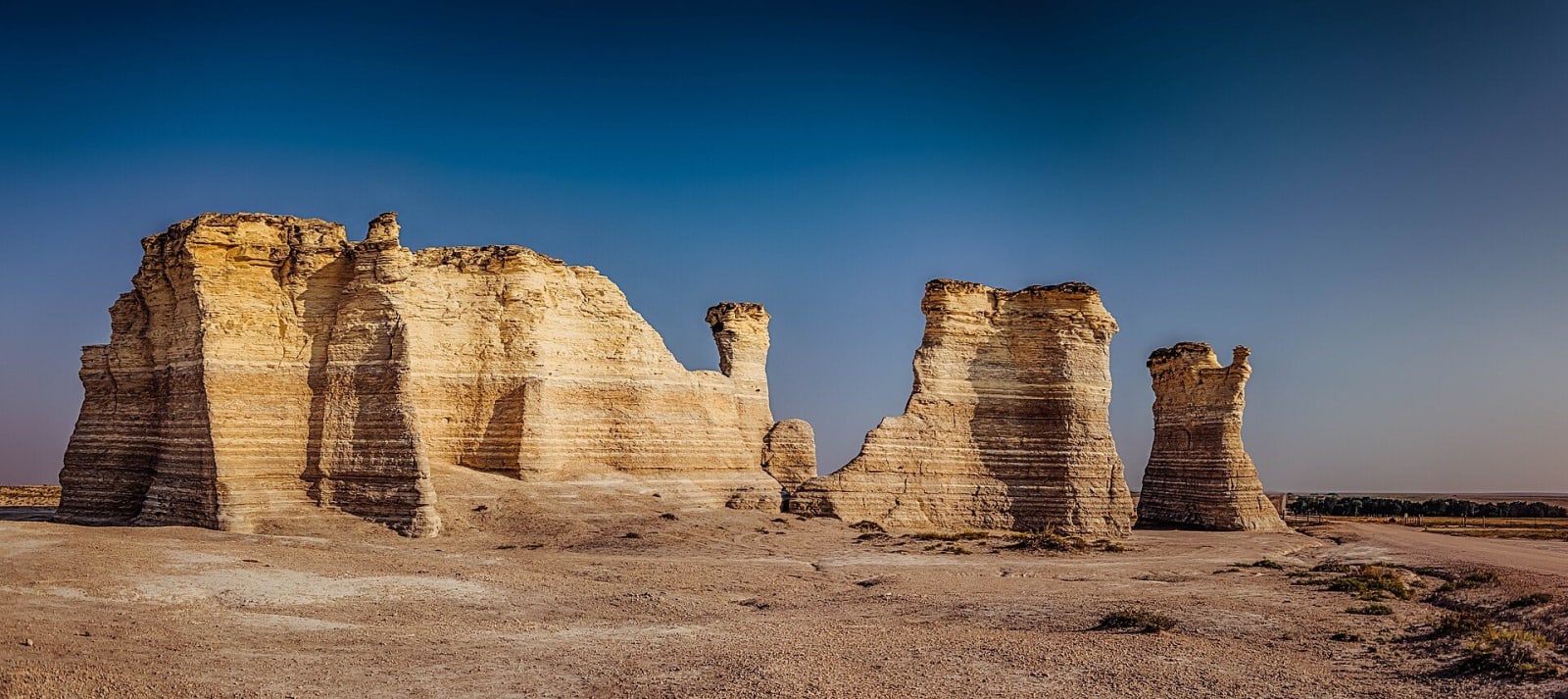
Monument Rocks & the High Plains
Monument Rocks and the chalk badlands, the spring canyon at Lake Scott, Black homesteaders' Nicodemus, the Arikaree Breaks and Mount Sunflower on the Colorado line.
West of Hays the land climbs onto the High Plains, a wedge of sand and gravel washed off the Rockies, and keeps rising to 4,039 feet at Mount Sunflower on the Colorado line. Where the Smoky Hill and its creeks cut down through that cover they expose the Niobrara chalk beneath it, the floor of an inland sea about 80 million years ago. U.S. 83 south of Oakley runs through the best of it: Monument Rocks, the Little Jerusalem badlands, and the spring-fed canyon at Lake Scott.
The northern tier along U.S. 36 and U.S. 24 is different country. There are the loess canyons of the Arikaree Breaks above St. Francis, wheat towns on the creeks that feed the Republican and the Solomon, and Nicodemus, settled in 1877 by Black families from Kentucky and still home to their descendants.
This was Cheyenne and Arapaho hunting country, and their warriors fought the stage road and the forts pushed up the Smoky Hill in the 1860s. In April 1875 soldiers destroyed a small Cheyenne camp on Sappa Creek. In September 1878 Northern Cheyenne families walking home from Indian Territory fought the army at Punished Woman's Fork, and small parties among them killed about 41 settlers along Sappa and Beaver creeks. Long before, Plains Apache and Pueblo people who had fled Spanish New Mexico farmed beside the springs at Lake Scott.
What to See in Monument Rocks & the High Plains
8 places across the region, grouped by what they are.
Geology & Rock Formations
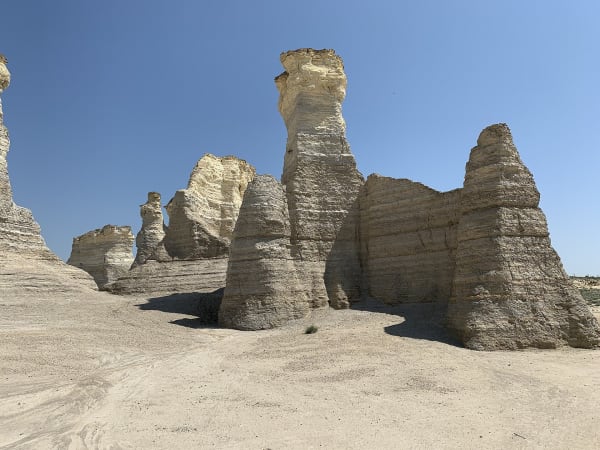
Natural Areas
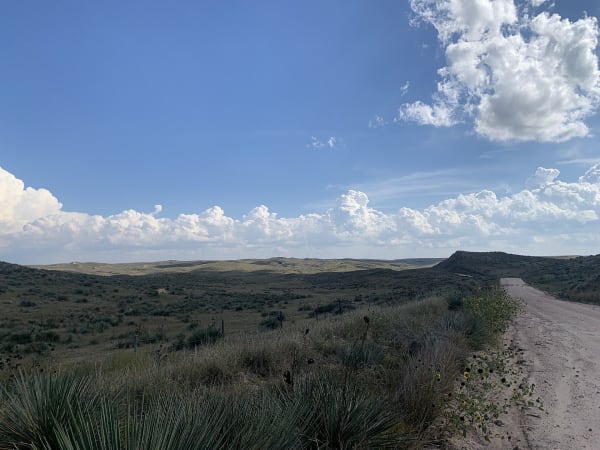
Historic Sites


Towns & Gateways
Roadside Stops
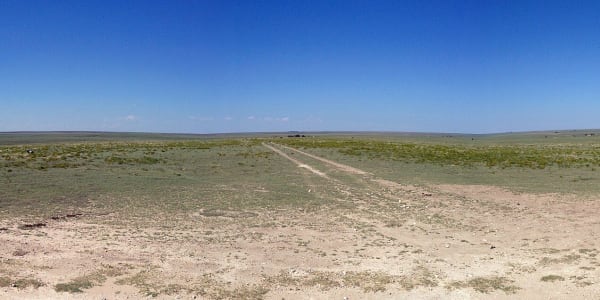
Scenic Drives through Monument Rocks & the High Plains
Monument Rocks & the High Plains rewards the unhurried. Pick a base, fan out, and let the country between the headline stops surprise you.
← Explore more of Open Road Guide