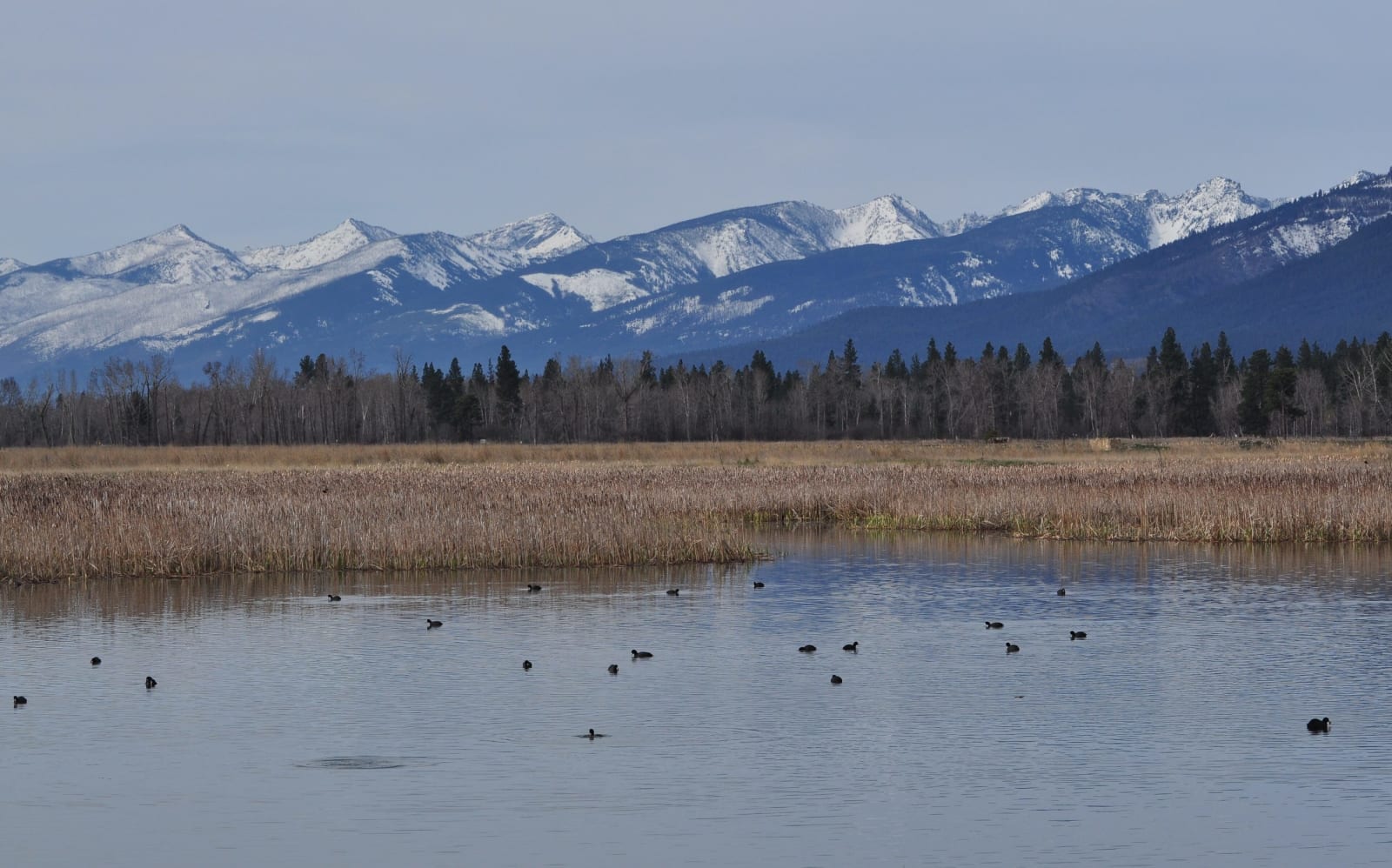
Snow-streaked peaks of the Bitterroot Range above a timbered valley floor, waterfowl on a wetland pond in the foreground
Roger Peterson, U.S. Forest Service / public domain via Wikimedia Commons
Montana · Region

Missoula & the Bitterroot

Séliš country: Charlo's long refusal to leave the Bitterroot, Lewis and Clark's proven camp at Travelers' Rest, the Nez Perce on the Lolo Trail, and Lake Missoula's shorelines.

10 places to explore

The Bitterroot Valley was Séliš country, and the Salish meant to keep it. At the Hellgate Treaty council in 1855 their chief Victor held out for the valley south of Lolo Creek. In 1872 James Garfield came west to move them north to the Flathead Reservation, and the agreement he published carried the mark of Victor's son Charlo, who had never signed it. Settlers poured in on the strength of that paper. Charlo stayed on with several hundred followers for nearly twenty more years, until October 1891, when, with his people going hungry, he led them north out of the valley.

Lolo was a crossroads long before it had the name. The Salish, Pend d'Oreille and Nez Perce camped at the foot of the trail over the Bitterroot Mountains, and so did Lewis and Clark, in September 1805 and again on the way home in the summer of 1806. In 2002 archaeologists at Travelers' Rest found the expedition's fire hearths, lead from gun repairs and a latrine laced with the mercury the men took as medicine, which makes it the only campsite on their route proven in the ground. In July 1877 the Nez Perce came down the same trail in flight from the Army, slipped past the log barricade volunteers had thrown across the canyon, soon mocked as Fort Fizzle, and traded their way up a valley Charlo still held.

Missoula sits where five valleys meet. On the grassy faces of Mount Sentinel and Mount Jumbo above the town, faint horizontal lines run like steps: the shorelines of glacial Lake Missoula, which stood about 950 feet deep here before its ice dam on the Clark Fork gave way and the water tore across Idaho and Washington.

What to See in Missoula & the Bitterroot

10 places across the region, grouped by what they are.

Natural Areas
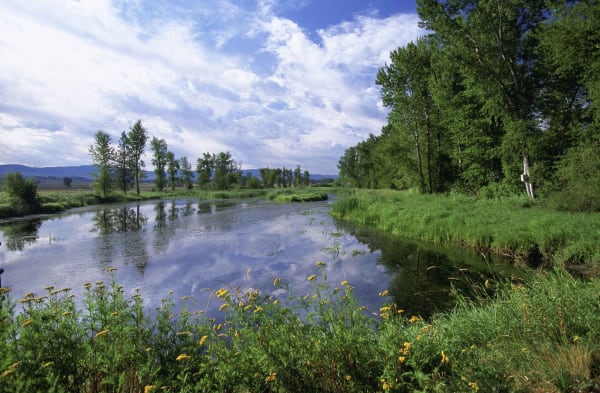
A still channel on the Lee Metcalf refuge reflecting cottonwoods and a summer sky, yellow wildflowers along the near bank

Lee Metcalf National Wildlife Refuge

Stevensville

Bitterroot wetlands bought with duck stamps and named for the senator who signed off on refuges across the country.

View details →

Historic Sites

The reconstructed log breastwork at Fort Fizzle among ponderosa pines, small interpretive plaques along it and a forested ridge behind

Fort Fizzle

Lolo

A log barricade built to stop the Nimiipuu in 1877. They climbed the ridge behind it and walked around.

View details →
A long white frame building with a gabled end at Fort Missoula, a small shed beside it and mountains on the horizon

Fort Missoula

Missoula

An 1877 Army post that held Italian seamen and Japanese immigrant men behind its fence in World War II.

View details →
The surviving adobe barracks at Fort Owen, a long low whitewashed building with a row of doors and windows, an interpretive sign in front

Fort Owen

Stevensville

A trader bought a failed mission for $250, walled it in adobe, and lost it all at a sheriff's sale.

View details →
Smokejumpers working at long packing tables in the parachute loft of the Missoula base, orange-and-white and blue canopies in the foreground

Missoula Smokejumper Visitor Center

Missoula

The base of the crews descended from the first two men ever to parachute onto a forest fire.

View details →
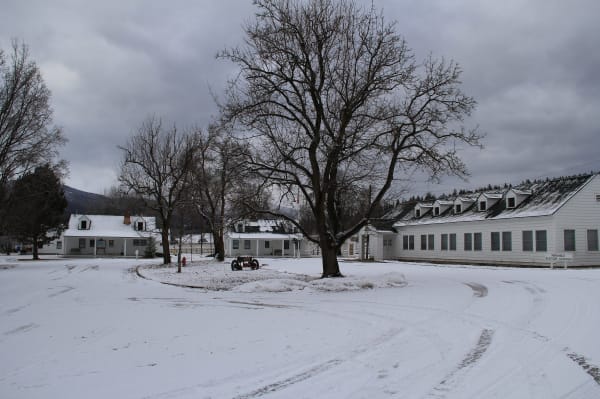
White Cape Cod-style buildings of the Ninemile Remount Depot around a snow-covered drive, bare trees against a grey sky

Ninemile Remount Depot

Huson

The Forest Service's mule ranch, built because the fires of 1929 ran out of packers.

View details →

Travelers' Rest State Park

Lolo

The one Lewis and Clark campsite with proof in the ground: hearths, gun lead and a latrine still laced with mercury.

View details →

Towns & Gateways

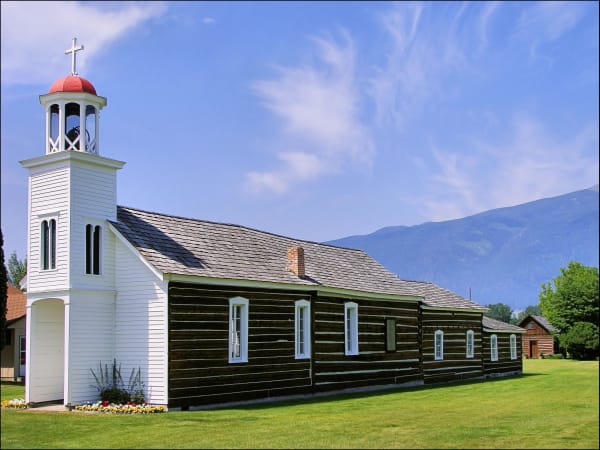
St. Mary's Mission chapel, dark squared logs under a shingle roof with a white clapboard bell tower topped by a cross, the Bitterroot Range beyond

Historic St. Mary's Mission

Stevensville

The mission the Salish asked for, abandoned, rebuilt, and closed again the year the Salish were made to leave.

View details →

Architecture

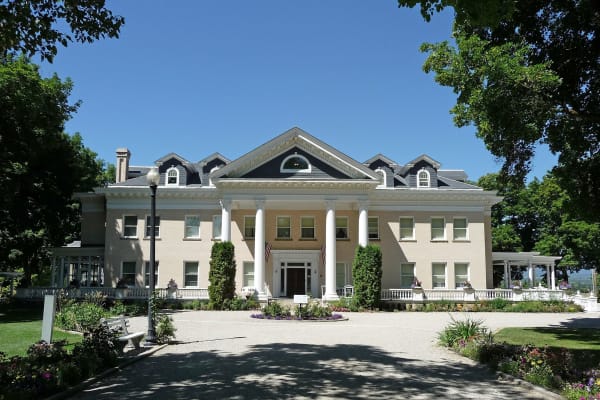
The Daly Mansion, a cream Georgian Revival house with a white-columned portico and dormered roof, behind a curved drive and summer gardens

Daly Mansion

Hamilton

A copper king's summer farm, finished by his widow after his death and boarded up for forty-six years after hers.

View details →

Attractions

A Carousel for Missoula

Missoula

A cabinetmaker's promise to the city council: give it a home, and he would carve the horses.

View details →

Scenic Drives through Missoula & the Bitterroot

Scenic Byway

US-12: Lolo Pass to Missoula

Down Lolo Creek from the Idaho line: the hot springs the Corps soaked in, the barricade the Nimiipuu walked around, and the only Lewis and Clark camp with proof in the ground.

44 mi · 1 hrs

Stories from Missoula & the Bitterroot

History

The Vote She Cast Twice

Jeannette Rankin of Missoula was the first woman elected to Congress, and the only member to vote against American entry into both world wars. Each vote ended a career; she cast both.

4 min read

Missoula & the Bitterroot rewards the unhurried. Pick a base, fan out, and let the country between the headline stops surprise you.

← Explore more of Open Road Guide