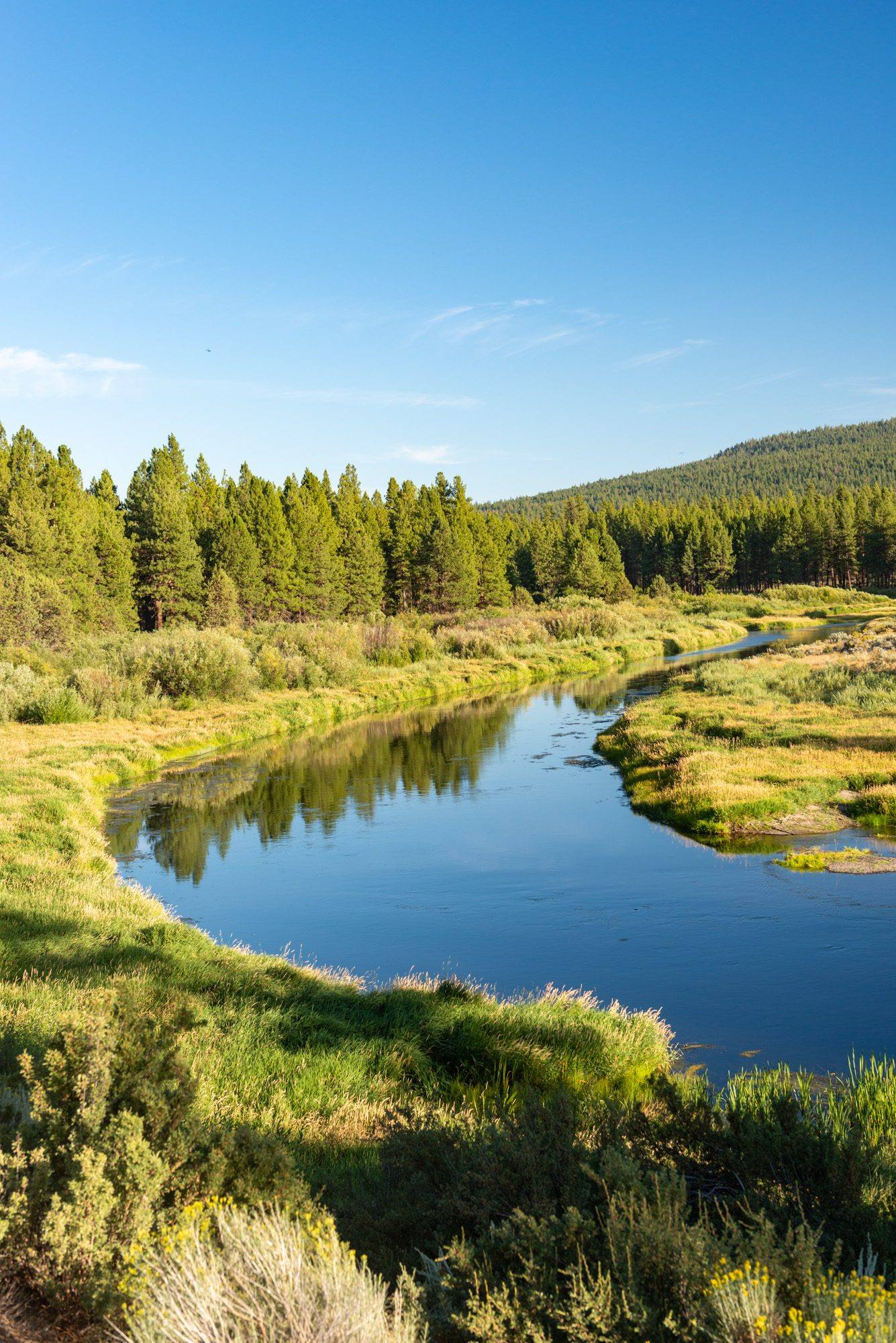
Up the Sprague River from the town of Chiloquin there is a stretch of pine and meadow where a fire once burned for more than five years. It was lit in 1974 by a decorated veteran of the Second World War who had been offered a quarter of a million dollars to go away, and would not take it.
The richest tribe
The 1864 treaty left the Klamath, the Modoc and the Yahooskin band of Northern Paiute a reservation of a little over a million acres, much of it ponderosa pine. By the middle of the twentieth century that forest was the tribes' fortune. Managed for a steady cut, it supplied about a quarter of Klamath County's timber and paid for tribal government and a per capita payment to every member, about $800 a year by 1954. The Klamath were counted among the wealthiest and most self-sufficient tribes in the country.
That made them a target for termination, the federal policy of the 1950s that set out to dissolve tribes, end the government's treaty obligations and turn tribal land into private property. The Secretary of the Interior was a former Oregon governor, Douglas McKay, closely tied to the timber and water interests of the West, and the reservation's pine was a powerful attraction. On August 13, 1954, Congress passed Public Law 587, terminating the Klamath Tribes.
The payout
The law gave each member a choice: withdraw from the tribe and take a cash share, or remain and keep an interest in whatever land was left. Delays pushed the final date to 1961. That year about 78 percent of the members, some sixteen hundred people, withdrew and received about $43,000 each. The money came from selling the forest. Most of the reservation passed to the federal government, and in July 1961 President Kennedy proclaimed it part of the new Winema National Forest; private timber companies bought other tracts. The 473 members who stayed had their share placed in trust with a Portland bank. In 1973 the bank ended the trust, and their land was sold too.
By many accounts the payments were a disaster for the Klamath. Federal health care and services ended with the tribe, and the land base was gone.
Pla'ikni
Edison Chiloquin was one of the 473. Born in 1923 and a grandson of the man the town of Chiloquin was named for, he had won the Silver Star in the Philippines and come home to live at his family's village, Pla'ikni, on the banks of the Sprague. In November 1974, when the last members were paid, his share came to about $273,000. He refused it. Taking it, he said, would be like selling a part of himself and of his ancestors; this was sacred land where his grandfather had lived.
Instead he lit a sacred fire at the village and tended it so that the smoke would carry prayers for the land, and he kept it burning while he took his case to Washington. In January 1980 President Jimmy Carter signed the Chiloquin Act, giving Edison Chiloquin and his descendants title to 580 acres around Pla'ikni, to be used for traditional cultural purposes. For years afterward he welcomed school groups, students and visitors from around the world to the village. People called him the conscience of the Klamath. He died there in 2003.
Restored, without the land
On August 27, 1986, Congress restored the Klamath Tribes to federal recognition. It did not return the reservation; nearly all of it remained national forest. The tribes govern today from Chiloquin and have spent the decades since asking for the forest back. Pla'ikni, the land one man would not sell, is one of the few pieces that came home.