 Gmbgall / CC BY-SA 4.0 via Wikimedia Commons
The Story
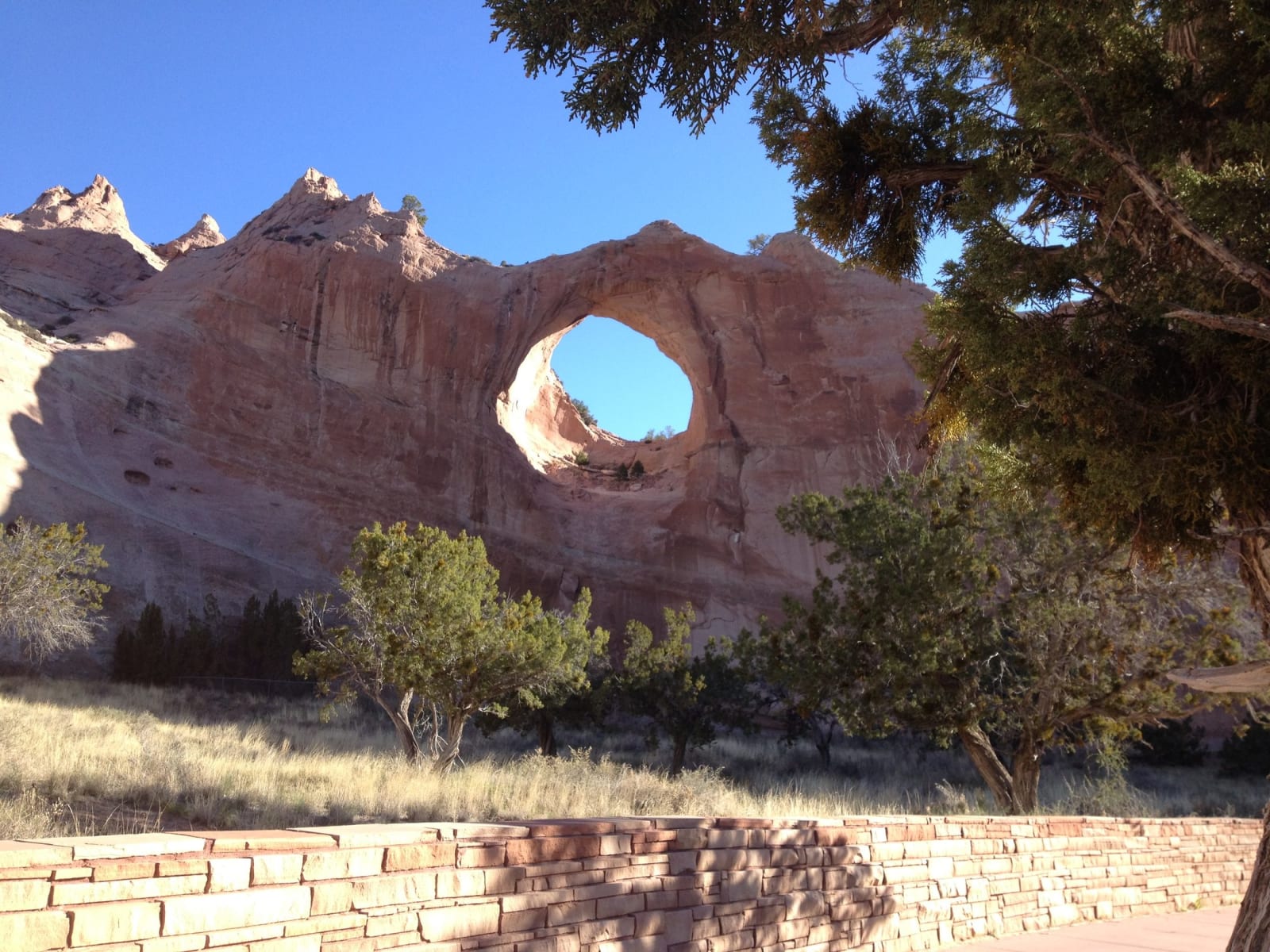
Window Rock takes its name and its meaning from a single sandstone arch — Tségháhoodzání, "the perforated rock," the rock with a hole worn through it. The arch is sacred: it is one of four places where Navajo medicine people gather water for the Water Way, the ceremony that calls the rain, and no one climbs it. In 1936 the Navajo laid out their government at its foot, and Window Rock became the capital of the Navajo Nation — the largest Native nation in the country by land and by membership, spread across three states with this small town at its center.
What sits below the arch is a working national government. The Navajo Nation runs its own three branches — a president and vice president, a twenty-four-member Council in a stone chamber, and a Supreme Court — the most fully developed government of any tribe in the United States, and many of its buildings carry the eight-sided shape of the hogan. This is the answer, in a way, to everything that came before: a century after the Long Walk broke the nation and scattered it east from Canyon de Chelly, the people not only returned but built a sovereign capital on their own ground.
At the base of the arch stands the Navajo Nation Veterans Memorial, and it is worth the time. A bronze Code Talker carries his field radio; a circular path runs the four sacred directions and their colors; sixteen steel pillars hold the names of Navajo who served. The Code Talkers used their own language — the language the government's boarding schools had tried to beat out of Navajo children — to build the one battlefield code of the Second World War the enemy never broke. Window Rock also keeps the Navajo Nation Museum and the tribal zoo, and each autumn fills for the Navajo Nation Fair. To the north, the nation's other great tribal park stands at Monument Valley.
Visitor Info
On the Map
A story featuring this place
Go deeper into the history and character of this stop
Nearby
The closest stops worth working into your route
Historical markers nearby
Roadside plaques and monuments within a short detour