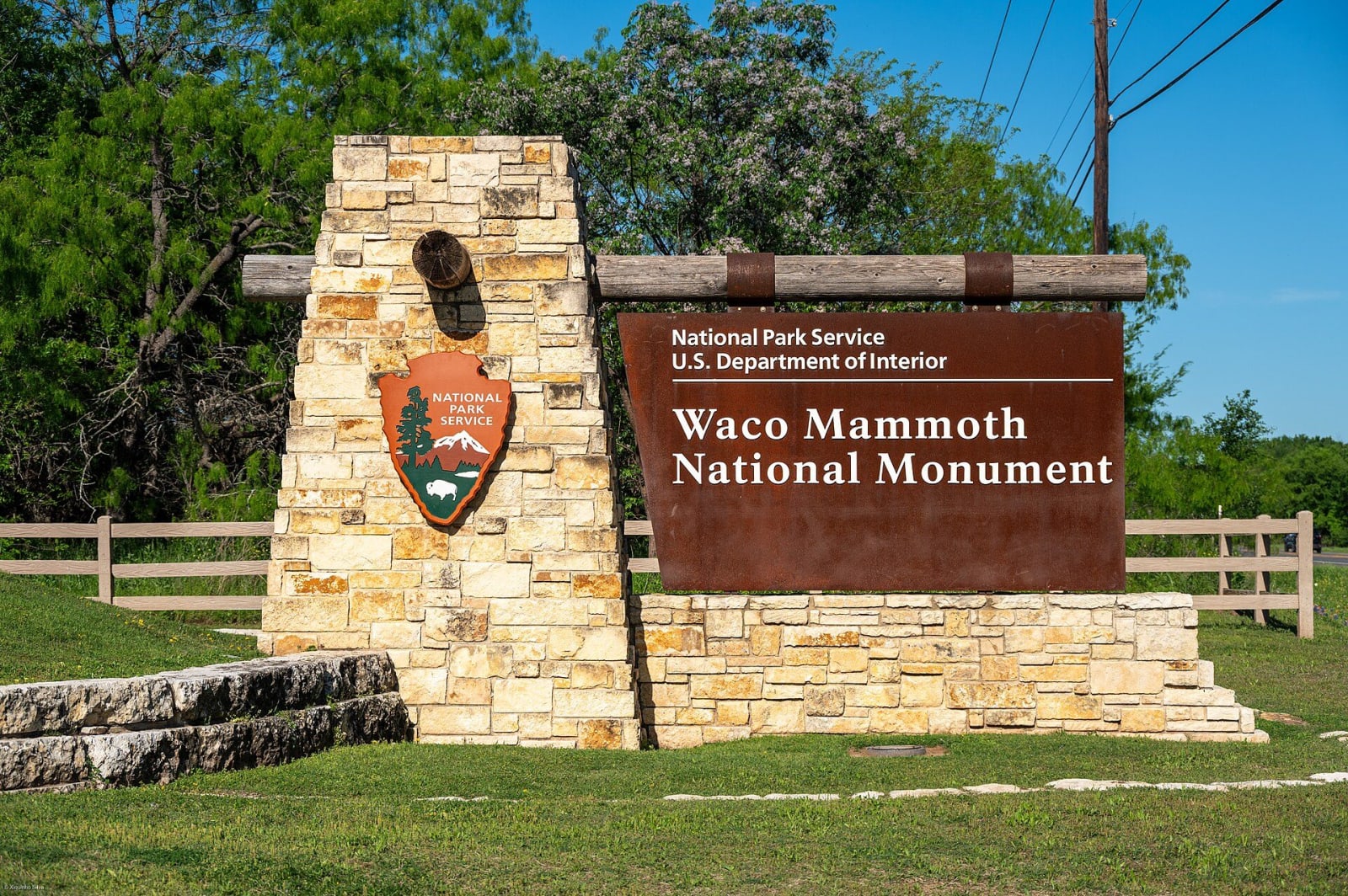
 Xiquinho Silva / CC BY 4.0 via Wikimedia Commons
The Story
In 1978 Paul Barron and Eddie Bufkin were searching for arrowheads and fossils near the Bosque River when they found a large bone eroding from a ravine. Baylor University's Strecker Museum identified it as the femur of a Columbian mammoth. Museum staff and volunteers dug with brushes and bamboo scrapers, and by 1990 they had recovered sixteen mammoths. Six more, including a large bull, came out between 1990 and 1997.
The National Park Service says the nursery herd, at least nineteen animals, was trapped and drowned when the Bosque flooded between 65,000 and 72,000 years ago, and that no evidence of human involvement has been found. Columbian mammoths could stand as tall as fourteen feet and weigh about 20,000 pounds. The dig also produced a western camel, a dwarf antelope, an American alligator, a giant tortoise and the tooth of a young saber-toothed cat. The monument calls the bone bed the nation's first and only recorded evidence of a nursery herd of Ice Age Columbian mammoths.
Bones excavated through 1990 are kept at Baylor's Mayborn Museum Complex. Most of the later finds remain where they lay, under a climate-controlled dig shelter, and visitors look down on them from an elevated walkway. Guided tours follow a 300-yard paved path from the welcome center, where tickets are sold. President Barack Obama made the site a unit of the National Park System on July 10, 2015.
Visitor Info
On the Map
Nearby
The closest stops worth working into your route
Historical markers nearby
Roadside plaques and monuments within a short detour