 Michael Barera / CC BY-SA 4.0 via Wikimedia Commons
The Story
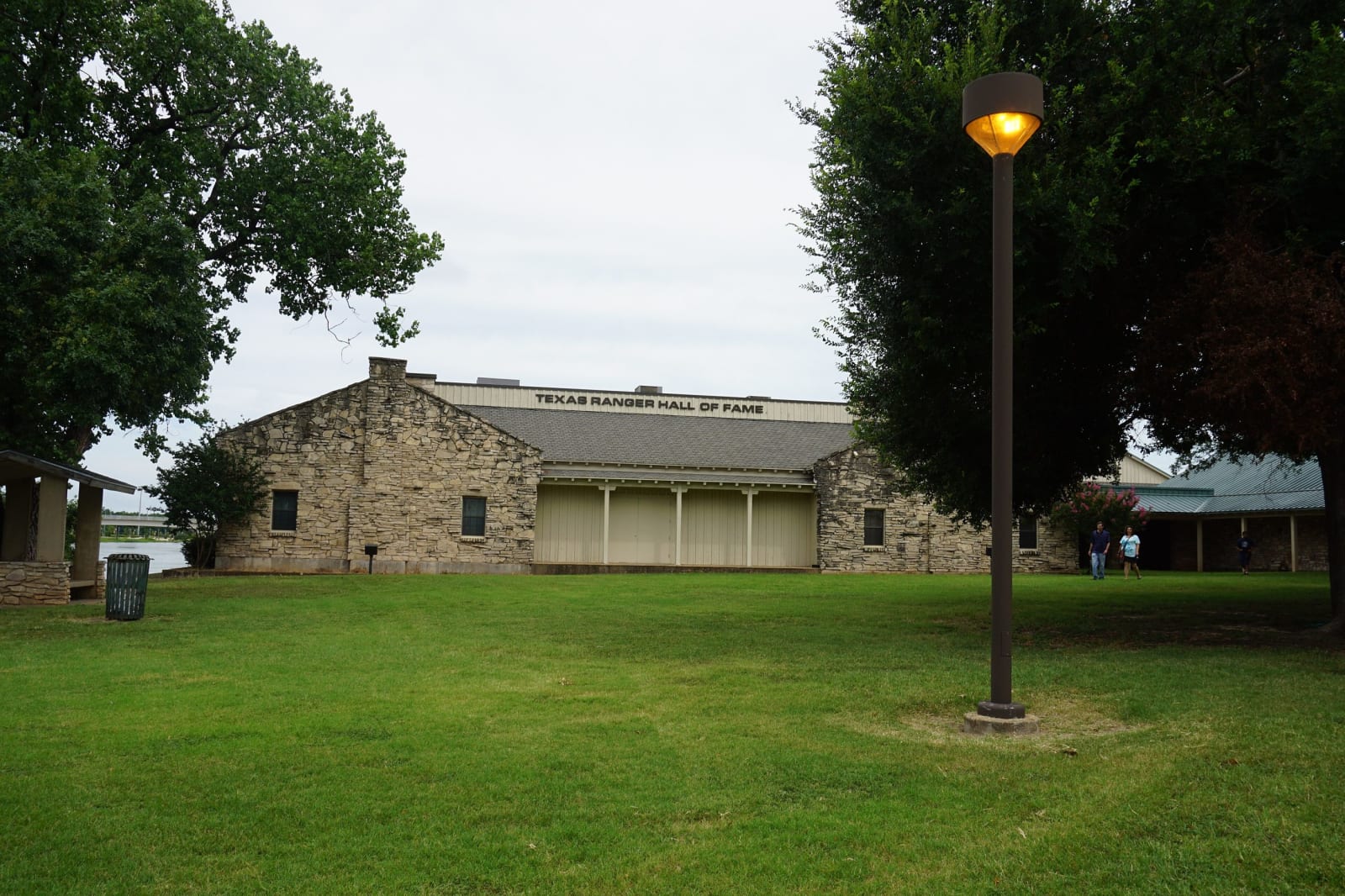
Fort Fisher was ordered built in February 1837 by William Fisher, secretary of war of the Republic of Texas, as a set of shelters on the Brazos for a small company of Rangers. They left within months because the place was thought too remote. Its site is unknown; the museum's account puts it near the springs of the Brazos, by a Waco Indian camp. The park that took its name was chosen for its nearness to the new I-35.
The Texas Public Safety Commission authorized a Ranger museum in 1964, Waco voters approved bonds in 1967, and it opened on October 25, 1968. The museum dates its Hall of Fame to 1971 legislation, and in 1997 the legislature named it the official state repository of Ranger memorabilia. The City of Waco runs it with the Department of Public Safety. A research center opened in 2012.
The history behind the badge includes violence. The Handbook of Texas says regular and special Rangers took part in killings along the Rio Grande from 1914 to 1919, and it puts the Hispanic dead at about 5,000. The best-documented case, the Porvenir massacre of January 1918, is told where it happened, in Presidio County. In 1919 Representative José T. Canales of Brownsville brought the Rangers' conduct before a legislative inquiry.
Visitor Info
On the Map
Nearby
The closest stops worth working into your route
Historical markers nearby
Roadside plaques and monuments within a short detour