 Dana Smith / CC BY 2.0 via Flickr
The Story
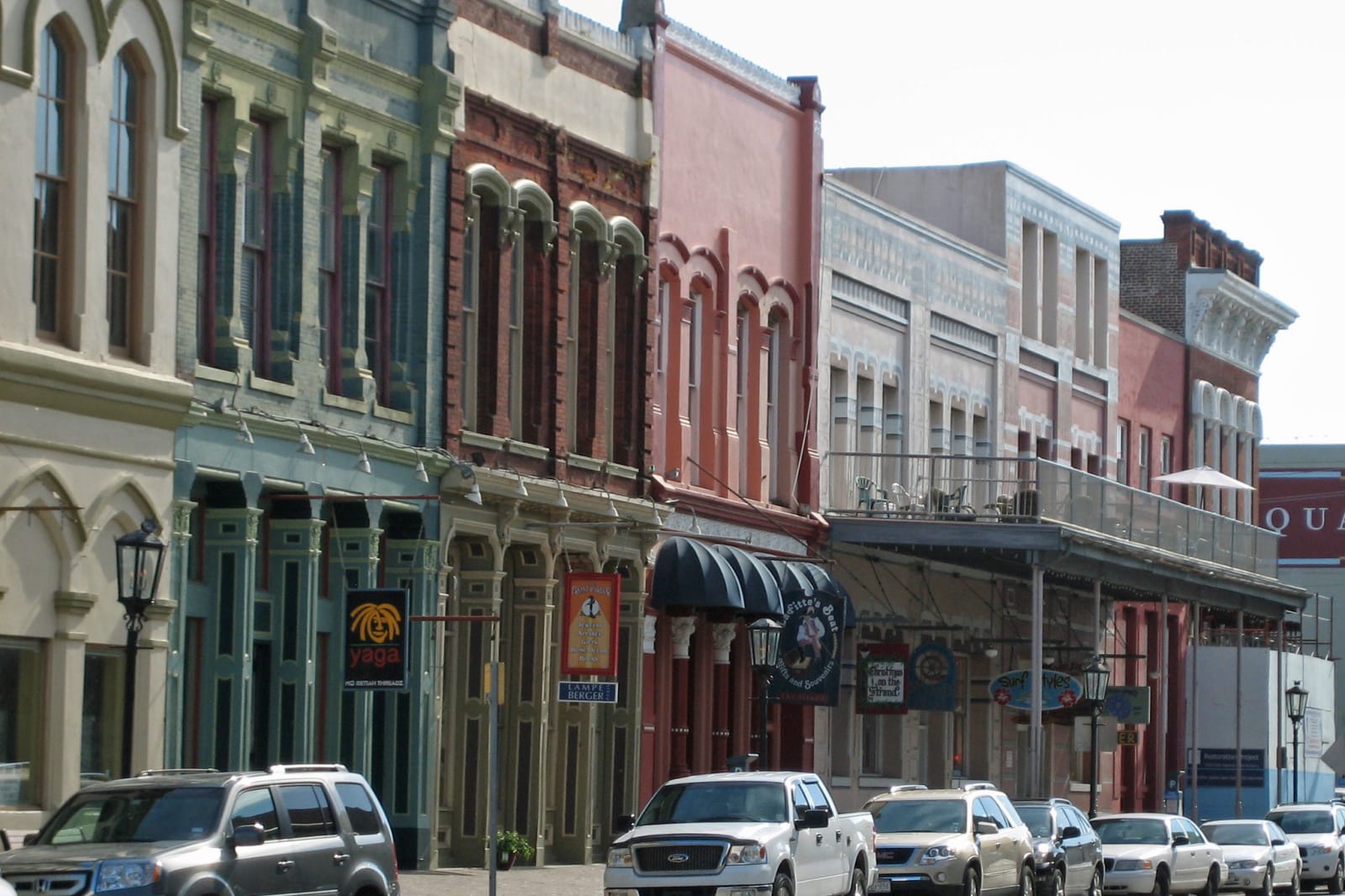
The Strand is Avenue B, laid out in the city's first plat in the late 1830s, and the name has long meant the five blocks between Twentieth and Twenty-fifth streets beside the harbor. For most of the nineteenth century most goods and people bound for Texas came through Galveston, and this district earned the name Wall Street of the Southwest. Galveston harbor saw 700 to 1,400 vessels a year in the late 1800s. The Strand held the shipping firm of McKinney and Williams, the state's five largest banks, cotton brokers, wholesalers, lawyers and, before the Civil War, slave auctioneers.
Fire and storm took the early wooden buildings, and owners replaced them with brick buildings behind cast-iron fronts. Two in Hendley Row date from 1855 and 1859, and the Berlocker Building from 1858. Nicholas J. Clayton designed fifteen commercial buildings here, and eight still stand. The 1900 storm tore the fourth floor off the W. L. Moody building, and afterward business moved away and the Strand became a warehouse district.
Revival began in the 1960s, when the Junior League restored two buildings. In 1973 Galveston Historical Foundation started the Strand Revolving Fund, which with private investors has restored much of the district. It is on the National Register, and it fills for Mardi Gras and Dickens on The Strand.
Visitor Info
On the Map
Nearby
The closest stops worth working into your route
Historical markers nearby
Roadside plaques and monuments within a short detour