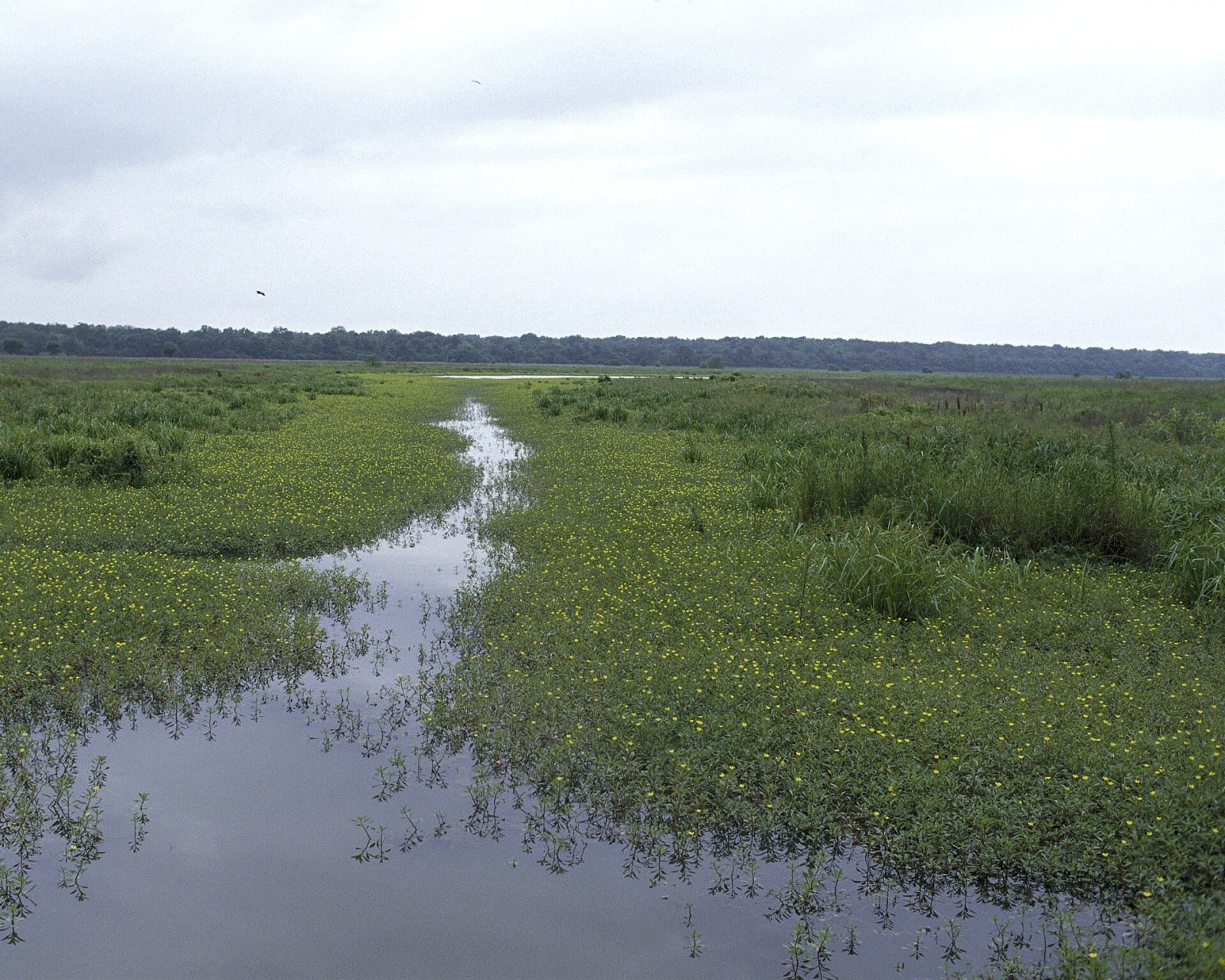
 U.S. Fish and Wildlife Service / public domain via Wikimedia Commons
The Story
Congress created the refuge on June 28, 1980, to protect one of the largest privately owned tracts of bottomland hardwood forest in the Mississippi Alluvial Valley. It now holds nearly 80,000 acres of forest and oxbow lakes in the Tensas River basin, in country that once held 25 million acres of this habitat. Tensas Parish takes its name from the Taensa people, who lived in the region when the French arrived, the LSU AgCenter notes.
The refuge has the state's largest population of Louisiana black bears. By 1992 as few as 150 remained in Louisiana, and the bear was listed as threatened; it came off the federal list in March 2016, with about 750 now across its range. Roosevelt's name is tied to the bear. In November 1902 in Mississippi, Holt Collier cornered a black bear and Roosevelt declined to shoot it, and a cartoon of the scene led to the teddy bear. Collier was born enslaved and became a celebrated hunter and guide; he guided Roosevelt again in October 1907, near the Tensas River in northeast Louisiana. The last recorded ivory-billed woodpecker sighting, in the 1940s, was next to the refuge.
The visitor center and headquarters are at 2312 Quebec Road, Tallulah. The refuge lists a four-mile auto tour through moist soil units, the Hollow Cypress Wildlife Trail with a raised tower, and the Rainey Lake Trail with a pier. The center's listed hours are Monday to Friday, 8 a.m. to 4 p.m., from an undated tearsheet, so call 318-574-2664. Never feed or approach a bear.
Visitor Info
On the Map
Nearby
The closest stops worth working into your route