 NPS / public domain
The Story
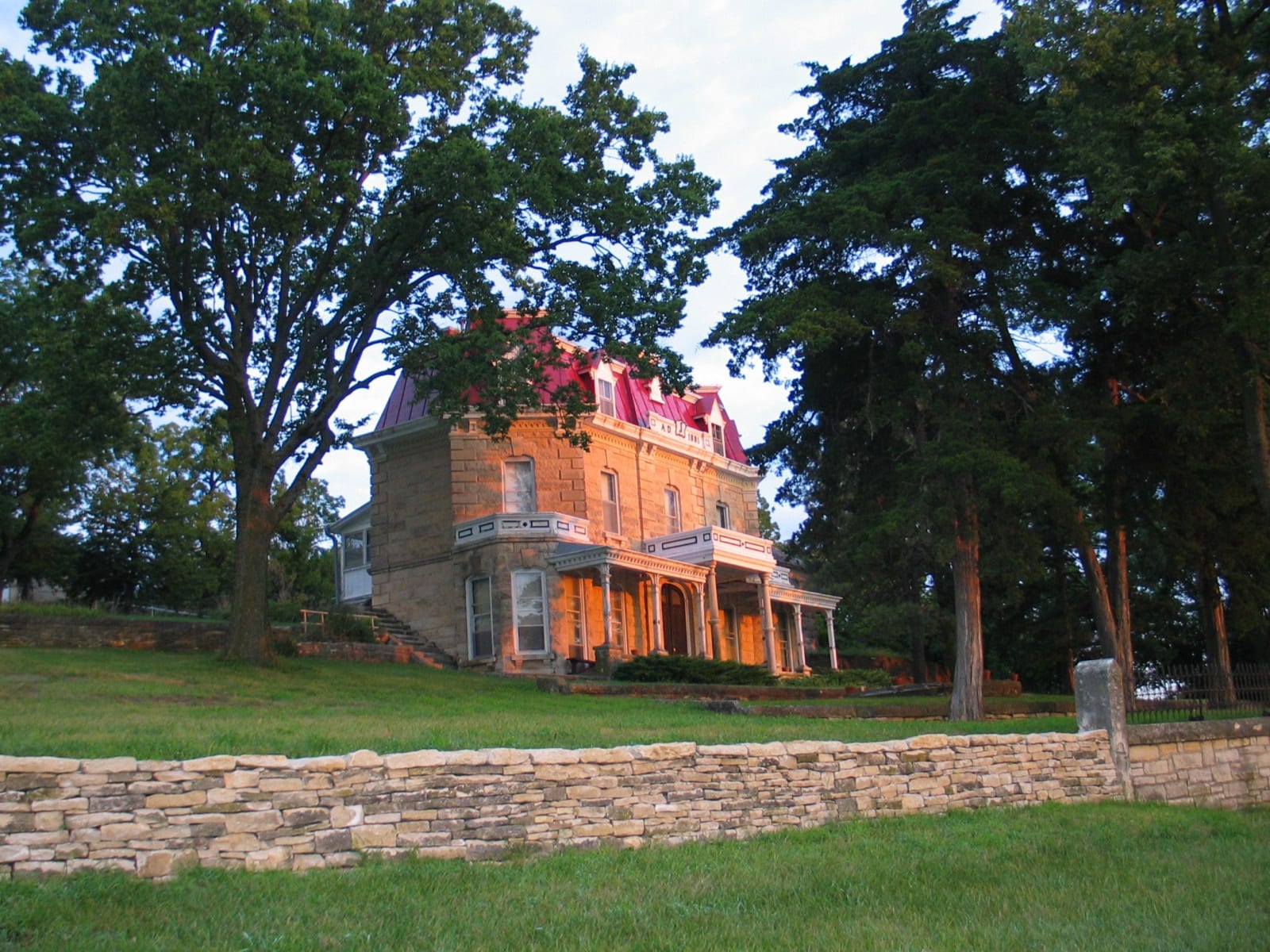
Stephen F. Jones, a Tennessee-born cattleman who had ranched in southeast Colorado, came to Strong City in August 1878 and began buying land along Fox Creek, 160 acres at first, then 1,409 acres from the Santa Fe railroad and more. He put together 7,000 acres and fenced them with 30 miles of five-foot stone wall. On a hill where springs came to the surface, David Rettiger built him a three-story house of Cottonwood limestone quarried two miles south, finished in 1881 at a cost of $25,000, and a barn 110 by 60 feet followed. In 1882 Jones gave two acres for the Lower Fox Creek School.
Look closely at the house walls. Cottonwood limestone is thick, nearly white and full of fusulinids, extinct single-celled animals that fossilized at the size and shape of wheat grains. Jones sold out after less than ten years, in 1888, to his neighbor Barney Lantry, a stone contractor who supplied railroads, and the ranch passed through the Pattens and the Benninghoven family before George Davis of Kansas City reassembled it in 1935 as part of 70,000 acres across Kansas.
The visitor center, house, barn and outbuildings are open daily; the schoolhouse is open May through December. The trails are open around the clock, and the Scenic Overlook Trail climbs 3.2 miles into the bison pasture, where the herd sometimes blocks the path. Calves arrive in April and May, and the bulls rut in August and September. Spring burns run from late February through April and can close trails with less than two hours' notice.
Visitor Info
On the Map
Nearby
The closest stops worth working into your route
Historical markers nearby
Roadside plaques and monuments within a short detour