 Ser Amantio di Nicolao / CC0 via Wikimedia Commons
The Story
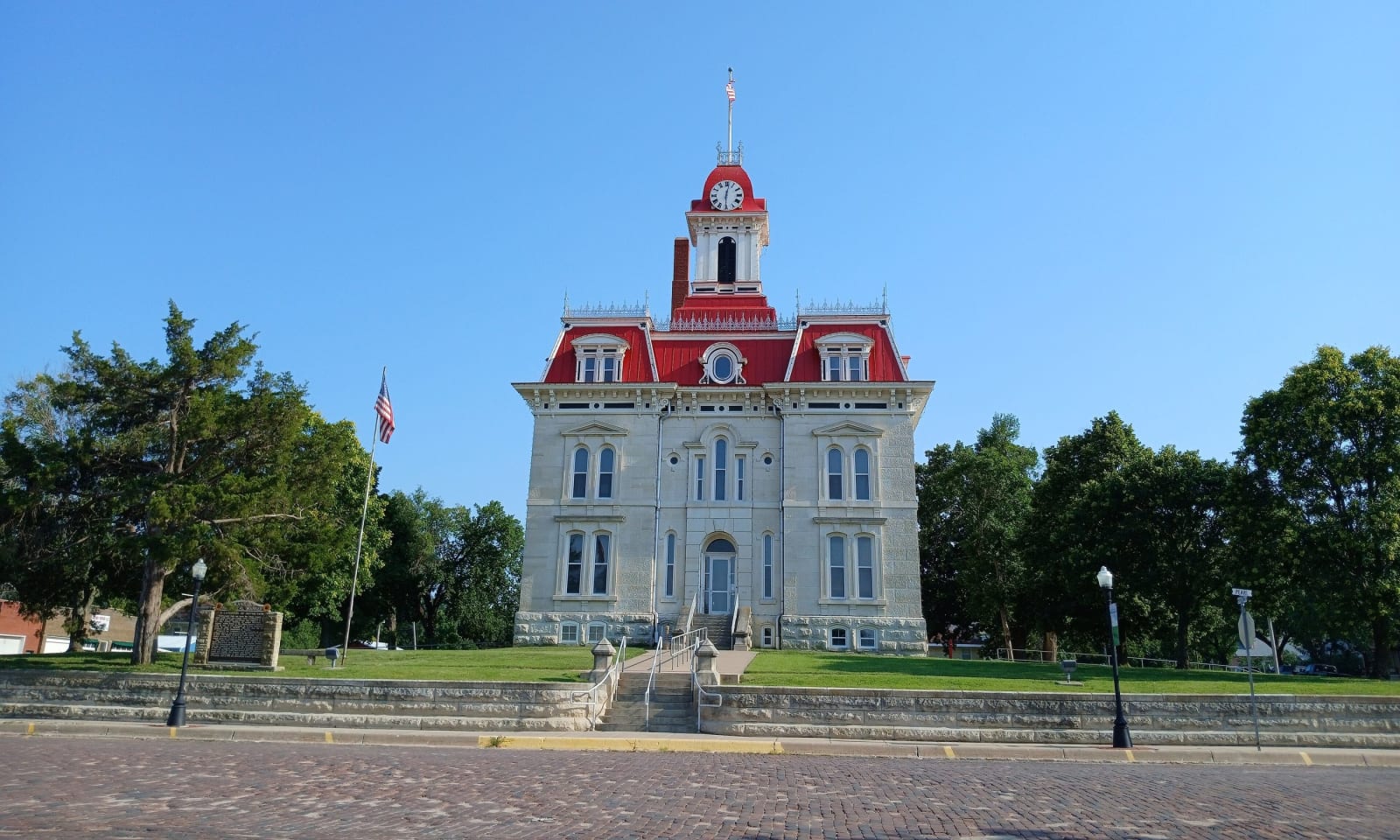
Chase County dates its beginning to February 11, 1859, and it was not much more than a dozen years old when it built this. John G. Haskell, one of the architects of the Kansas State Capitol, designed it in the French Second Empire manner, with a mansard roof and a clock tower, and masons raised it in 1872 and 1873 from Cottonwood limestone, the thick, even-textured, nearly white stone that lies in layers near the base of the hills. Inside, a three-story winding staircase was built of walnut from local trees.
Lumber was scarce on this prairie and good stone was everywhere, and the courthouse job drew stonemasons to the county. Many of them stayed and spent the next decades building in stone. John Shofe, a mason on the courthouse, built James Austin's two-story house on Mulberry Hill in 1874, dressing the sides that faced town in cut stone and leaving the back walls in rough fieldstone. Men from the courthouse crew also built Stephen Jones's ranch house north of Strong City in 1881, the house that is now the centerpiece of the national preserve, with a mansard roof and dormers that echo the courthouse.
The building was listed on the National Register of Historic Places in 1971, and it is still the county's working courthouse. It stands at the south end of Broadway, Cottonwood Falls's main street, and is open for business and self-guided tours from 8 a.m. to 5 p.m.; on Saturdays the Chase County Chamber of Commerce arranges tours.
Visitor Info
On the Map
Nearby
The closest stops worth working into your route
Historical markers nearby
Roadside plaques and monuments within a short detour