 U.S. Fish and Wildlife Service / public domain via Wikimedia Commons
The Story
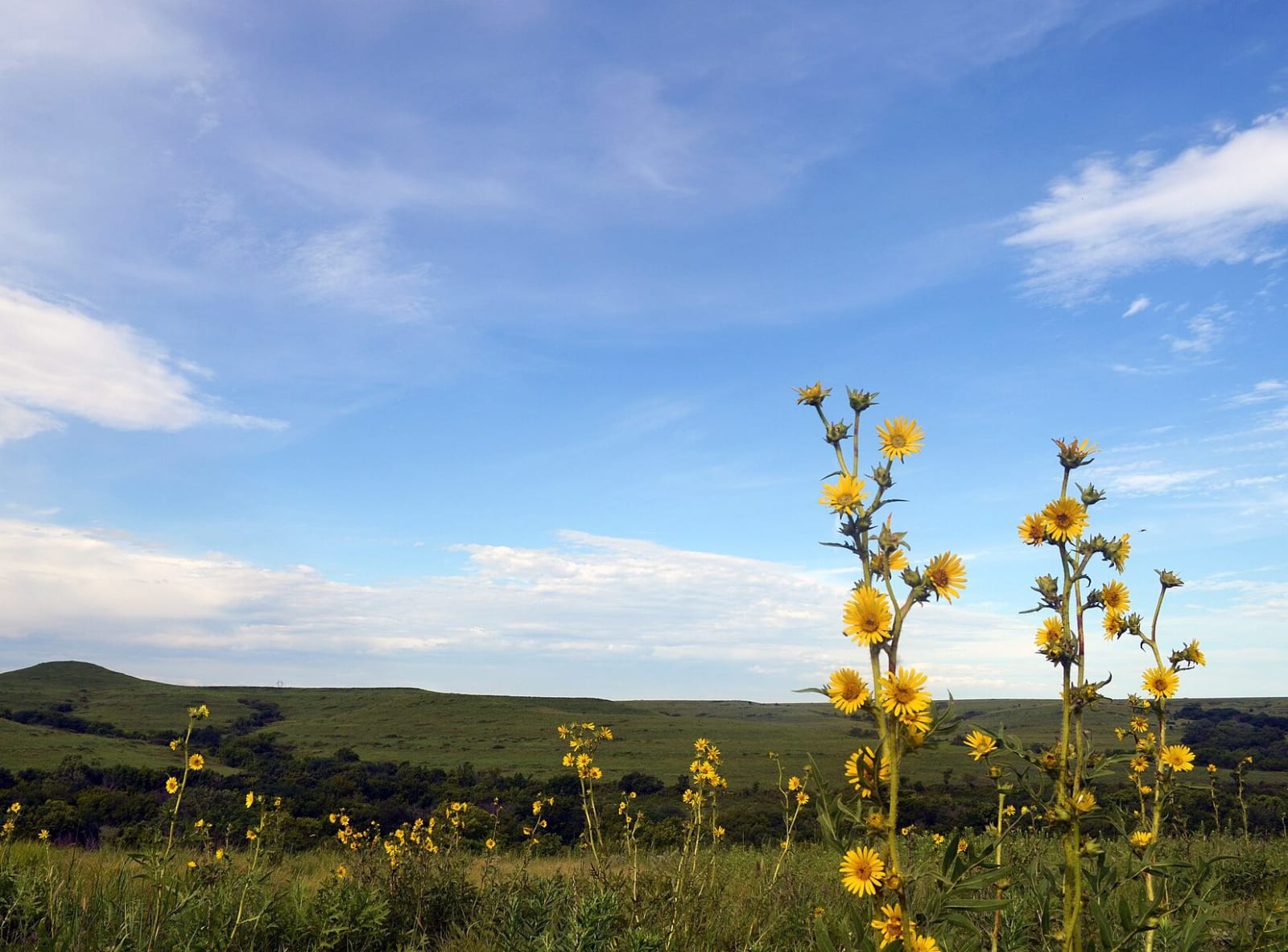
The station is named for the Kanza people, the Kaw Nation, who lived on and cared for this land until the United States forced them out between 1846 and 1872, as the station's own acknowledgment says. The university and The Nature Conservancy own its 3,487 hectares, about 8,600 acres, and almost none of it has ever been plowed.
Since 1971 it has been a field laboratory for the three things that keep tallgrass prairie alive: fire, grazing and a variable climate. The land is divided into watersheds, each burned on a fixed schedule, every spring, every two years, every four or every twenty, or in summer, autumn or winter. Between 3,000 and 5,000 acres burn in a year. Plant diversity runs highest with fire every two or three years, and bison seek out freshly burned ground in late spring and summer. Thirty bison donated by Fort Riley arrived in 1987; the herd now ranges about 2,400 fenced acres year-round without supplemental feed.
Most of Konza is closed to the public, but the nature trails off McDowell Creek Road are open every day from dawn to dusk. Three loops share one trailhead. The short loop, about two and a half miles, runs through gallery forest, crosses Kings Creek, passes the Hokanson Homestead and climbs limestone ledges to upland prairie with a view over the Kansas River valley. The longer loops take three and a half and four and a half hours. Dogs and bikes are not allowed, and the trails close for burns and flooding.
Visitor Info
On the Map
A story featuring this place
Go deeper into the history and character of this stop
Nearby
The closest stops worth working into your route
Historical markers nearby
Roadside plaques and monuments within a short detour