 Z28scrambler / CC BY-SA 3.0 via Wikimedia Commons
The Story
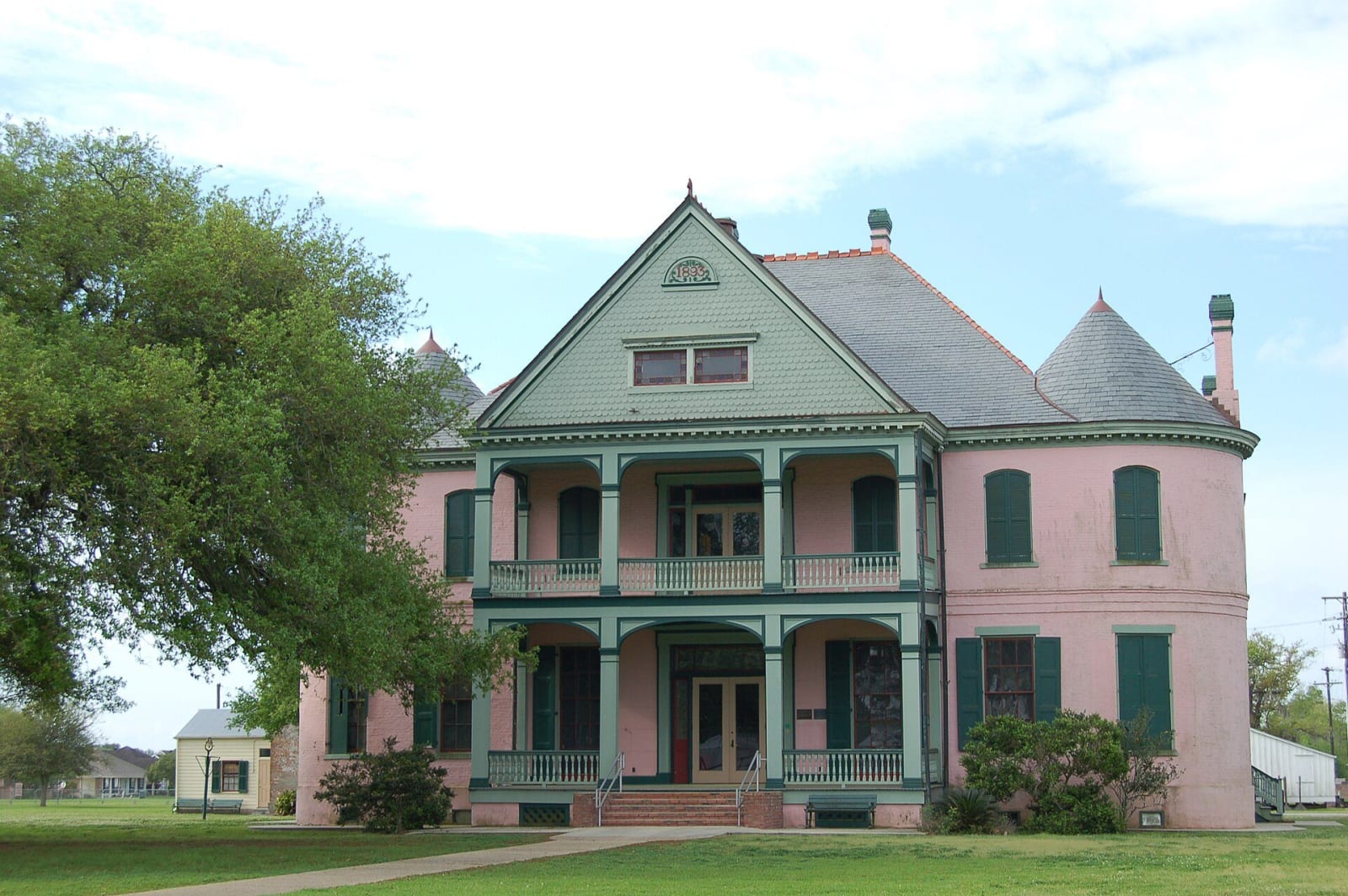
Southdown was a sugar plantation worked by enslaved people. William J. Minor and James Dinsmore bought about 1,020 acres in 1828, on land where the Bowie brothers had grown indigo, and sugarcane became the main crop in 1831. By 1852 the plantation held 233 enslaved people, Wikipedia reports, most of them living in family units. Minor became sole owner in 1847 and built the Greek Revival house in 1859. His son Henry added the second floor in 1893, along with Favrile glass panels showing palmetto leaves, magnolia branches and sugar cane.
Terrebonne Parish once had 86 sugar mills, and the Southdown mill beside the house was the last to run. It closed in 1979 and was shipped to Guatemala to operate again. In the 1920s the plantation helped propagate a cane resistant to mosaic disease. The Minor family left the house in 1936. The Terrebonne Historical & Cultural Society, formed in 1972, received the house in 1975 and opened it as a museum in 1982, and a cabin of about 1885 from Hollywood Plantation was moved to the grounds in 1999.
The museum is at 1208 Museum Drive in Houma. Tours are by reservation, Tuesday to Friday at 10 a.m., 1 p.m. and 5:30 p.m., and Saturday at 10 a.m. and 1 p.m. The museum is closed Sunday and Monday. Candlelight tours were listed at $30 in 2026, and day-tour prices are given when booking. Exhibits include the original Minor furnishings, Mardi Gras in Houma, and Southdown and the sugarcane industry.
Visitor Info
On the Map
Nearby
The closest stops worth working into your route
Historical markers nearby
Roadside plaques and monuments within a short detour