 Historic American Engineering Record, Library of Congress / Public domain via Wikimedia Commons
The Story
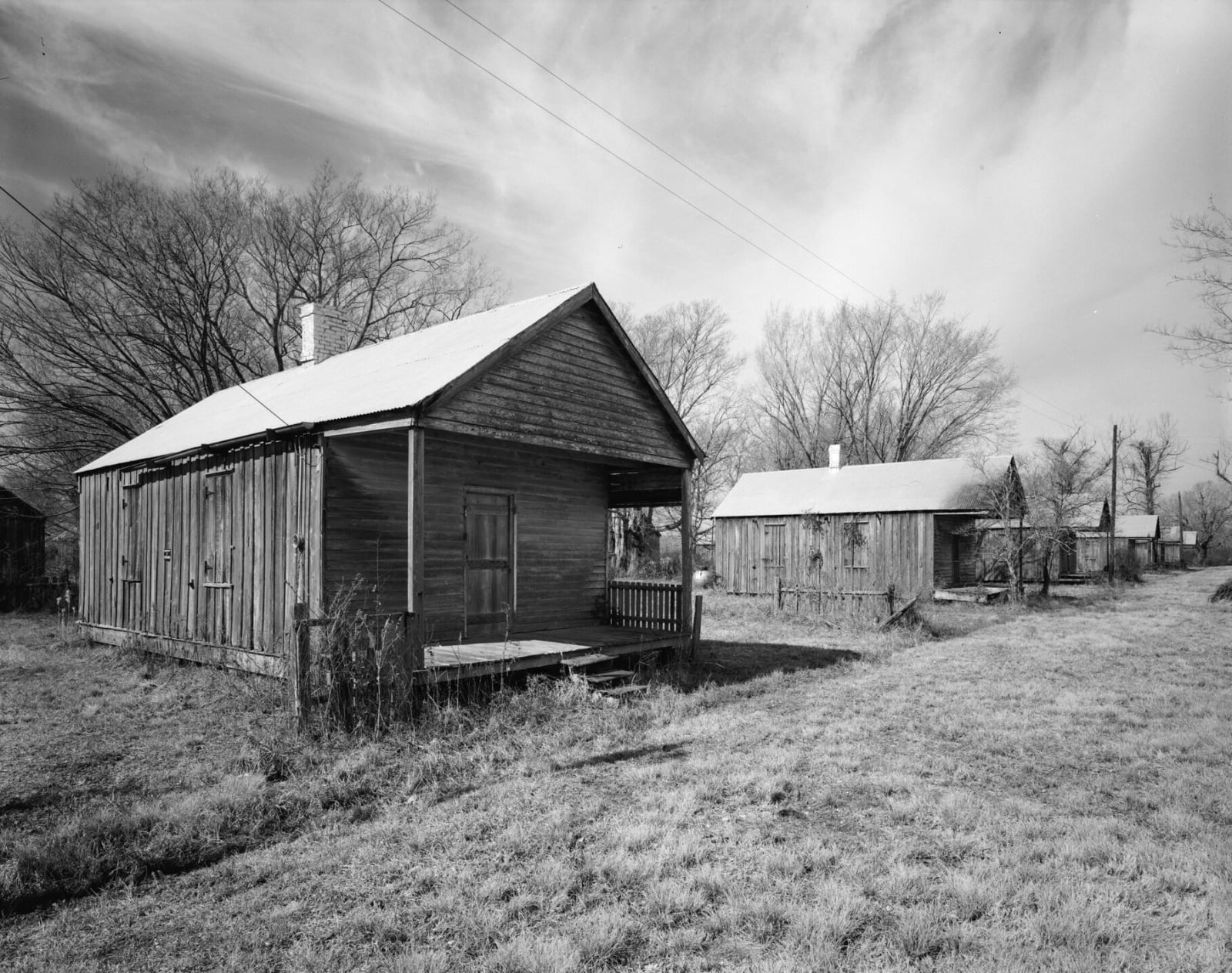
Laurel Valley began with Etienne Boudreaux, an Acadian who bought a Spanish land grant on Bayou Lafourche about two miles south of Thibodaux in 1785. Joseph W. Tucker bought the land and about 5,000 acres in 1832, and it became the largest sugar producer in Lafourche Parish. As many as 135 enslaved people lived and worked here before the Civil War, and Union soldiers burned Tucker's main house. What stands is the village: Creole cabins from about 1845, shotgun houses from about 1895, a store, a church and a cemetery. The site's foundation says the village housed enslaved people, free people of color, Acadians, Creoles, and Irish, Italian and Chinese workers.
Cane workers in this parish struck in the fall of 1887. The Knights of Labor had organized mostly Black workers in Lafourche and Terrebonne who wanted higher pay and an end to scrip, and the state militia evicted strikers from plantation housing. On November 21 a barroom attack in Thibodaux killed William Watson, 23. Under martial law, white vigilantes then killed Black residents on November 22 and 23. Named among the dead are Willis Wilson, Felix Pierre, Archy Jones, Frank Patterson, Grant Conrad, Marcellin Weldon, Riley Anderson and Mahala Washington. Estimates run from 35 to 60 killed, and no one was punished.
Tours leave from the Laurel Valley Store and Museum, 595 Highway 308, at 10 a.m. and 2 p.m. daily, from $17; book 48 hours ahead. The village is about 1.7 miles down Laurel Valley Road. Hurricane Ida in 2021 destroyed more than a dozen buildings.
Visitor Info
On the Map
Nearby
The closest stops worth working into your route
Historical markers nearby
Roadside plaques and monuments within a short detour