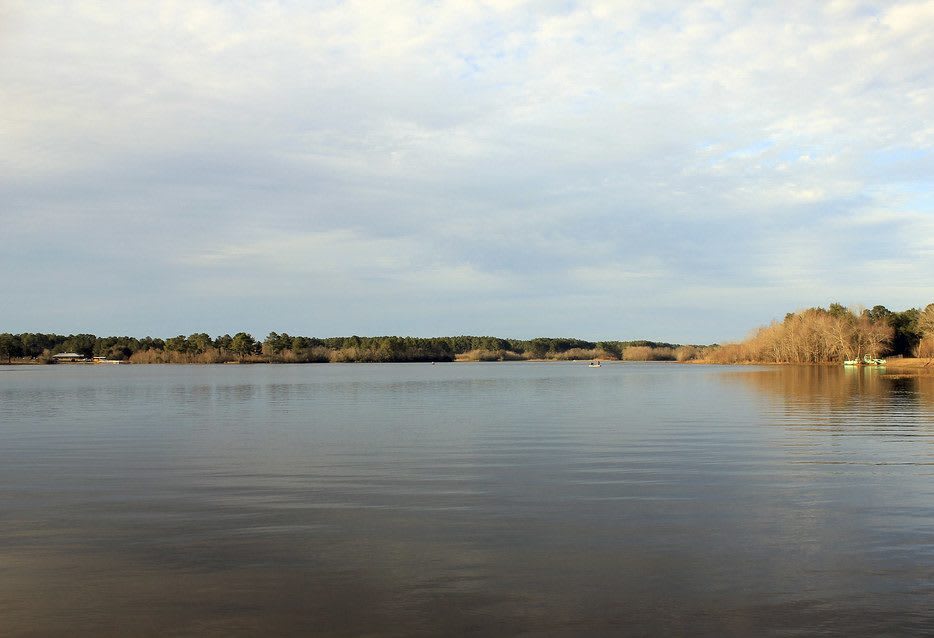
 Archbob / CC BY 2.0 via Flickr
The Story
Colquitt and Cook counties were cut from land the Muscogee (Creek) and the Seminoles gave up between 1814 and 1818. Early maps called this country the Pine Barrens or the Piney Wastes, miles of sandy soil under longleaf pine that served as a buffer between the two peoples. Settlers came slowly, and when they did they ran cattle and hogs in the open woods, then tapped the pines for turpentine and cut them for lumber when the railroads arrived late in the century.
The park is named for Amos Reed Bingham, who worked to have it established, and it straddles the two counties around a 375-acre lake lined with water lilies and tupelo. The Coastal Plains Nature Trail runs three and a half miles through a baldcypress swamp, a pitcher plant bog and dry sandhill, and the park says close to 80 percent of the Coastal Plain's plant community grows along it. Gopher tortoises dig their burrows in the sand, volunteers help with a tortoise project, and indigo snakes live here too. Alligators sun at the lake's edge and bald eagles nest in winter.
In winter thousands of black and turkey vultures roost in the trees and wheel over the water. The lake is open to boating and skiing, with fishing for bass, crappie, catfish and bream, and canoes and kayaks for rent. The park lies less than six miles from Interstate 75, an easy break on the drive to Florida.
Visitor Info
On the Map
Nearby
The closest stops worth working into your route
Historical markers nearby
Roadside plaques and monuments within a short detour