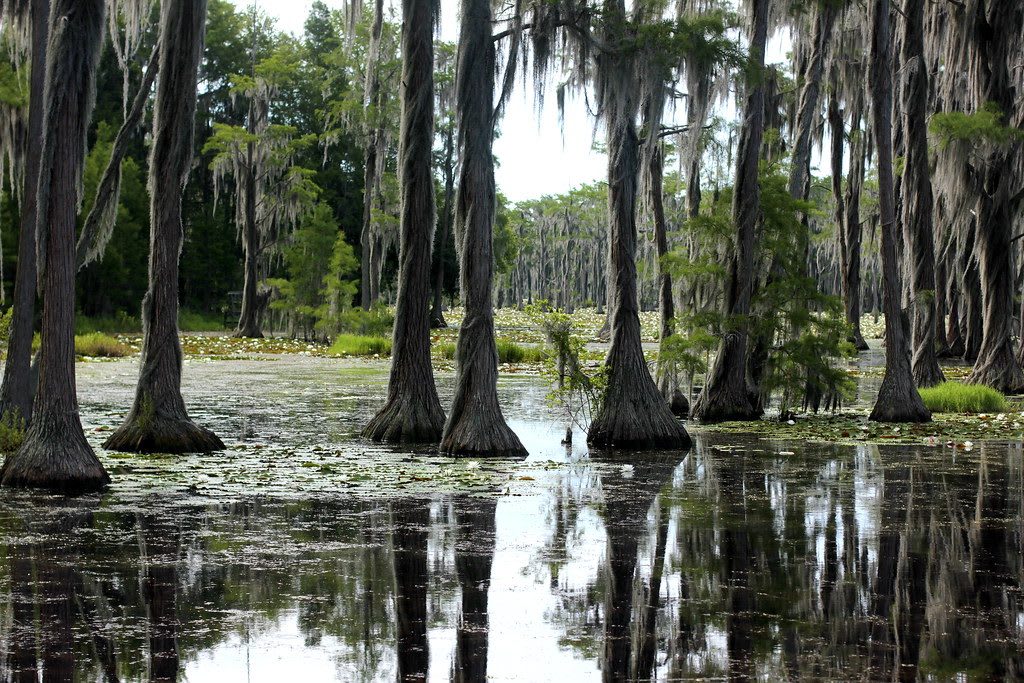
 My Photo Journeys / CC BY 2.0 via Flickr
The Story
Banks Lake began as a Carolina bay, one of the shallow oval basins scattered across the coastal plain. In the nineteenth century the settler Joshua Lee dammed its drainage creek to run a three-story gristmill, and the village that grew around the mill on the stagecoach road between Thomasville and Waycross was called Alapaha, then Milltown from 1832, and Lakeland after 1925. The land here had been Muscogee (Creek) country before the cessions.
In the 1920s the family of E. D. Rivers, a Lakeland man who served as governor from 1937 to 1941, tried to develop the lake for electric power and lots, and in the 1970s the Rivers estate threatened to drain it and sell the lightered stumps and cypress. The Nature Conservancy bought the land in March 1980, leased it to the U.S. Fish and Wildlife Service, and sold it to the agency in February 1985 as a refuge. Of its 4,049 acres, about 1,000 are open water, and the rest is marsh, cypress swamp and upland. It belongs to the Grand Bay and Banks Lake wetland system, the second largest in Georgia after the Okefenokee, which also takes in the Grand Bay Wildlife Management Area to the west, with its own boardwalk, tower and education center.
Come at dawn or dusk. A short trail, boardwalk and pier start at the lot on GA 122, a concession rents canoes and kayaks, and anglers work the lily pads for bass, bream and chain pickerel.
Visitor Info
On the Map
Nearby
The closest stops worth working into your route
Historical markers nearby
Roadside plaques and monuments within a short detour