Home / Oklahoma / The Cherokee Outlet & the Osage Hills / Osage Nation Museum
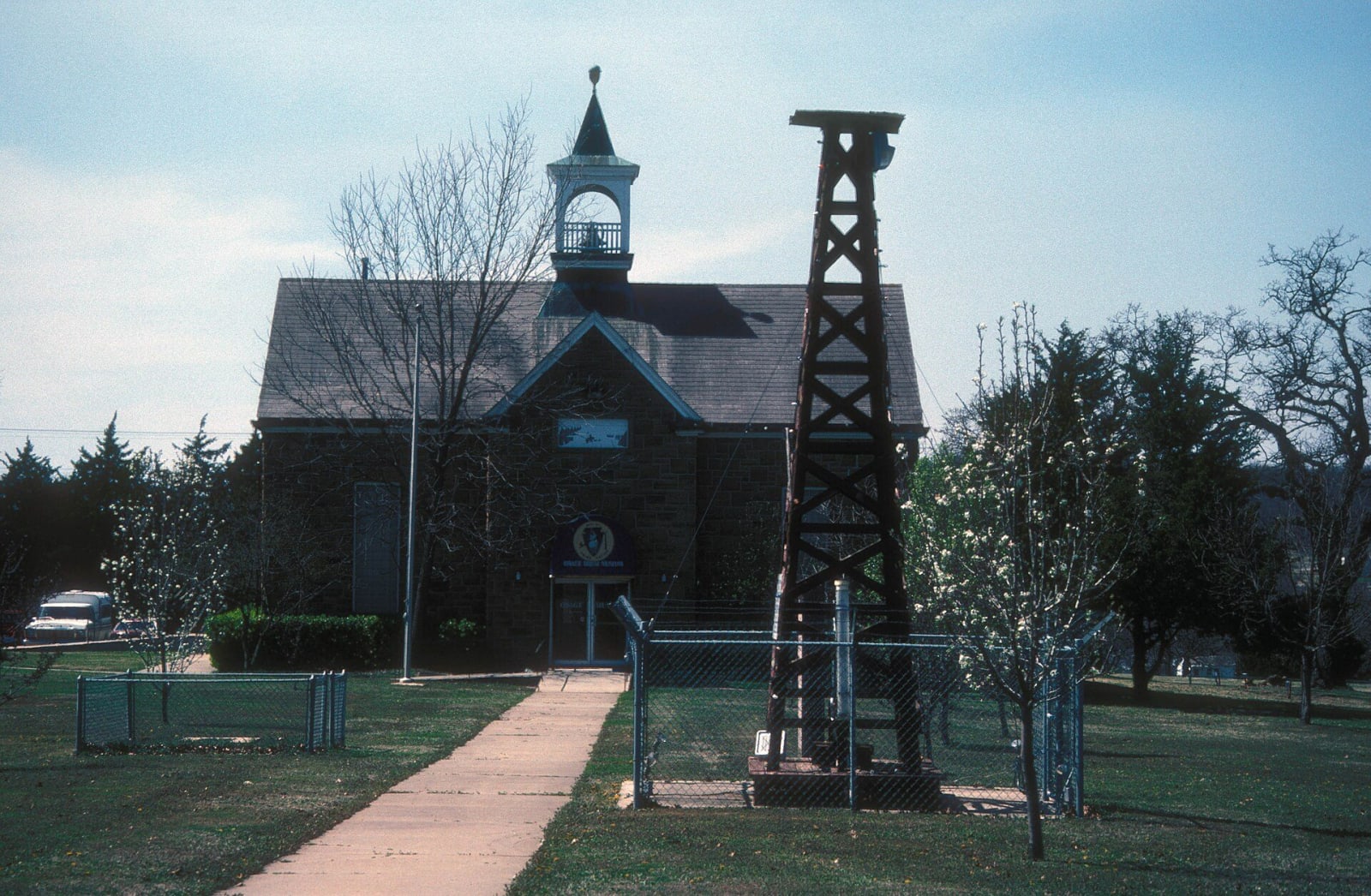
The stone Osage Nation Museum building in Pawhuska with an oil derrick beside the walk.Jerrye and Roy Klotz MD / CC BY-SA 3.0 via Wikimedia Commons
๐ŸŽญCultural

Osage Nation Museum

Part ofThe Cherokee Outlet & the Osage Hills

The Osage Nation's own museum on the Pawhuska agency campus since May 1938, built around a trader's collection the council bought back and the faces of the 2,229 original allottees.

โฑ
Duration
About an hour.
๐ŸŽŸ
Admission
Free admission and parking; donations accepted.
๐Ÿ“…
Best Season
Year-round. Open Tuesday through Saturday, 10 a.m. to 5 p.m.; closed Sundays, Mondays and federal holidays.

The Story

In the 1930s John Joseph Mathews, an Osage tribal councilman and writer, set out to give the Osage a place to keep their own art, objects and records. The removals that carried the people from the Ohio Valley to this reservation had scattered much of it, the Nation writes. Mathews worked with the Tribal Council and Chief Fred Lookout, and in May 1938 Osages gathered on the campus in Pawhuska for a two-day celebration of the opening. His sister Lillian was the first curator. The museum describes itself as the oldest tribally governed museum in the United States.

The collection had started more than a decade earlier. In 1927 the Osage Council bought the collection of John L. Bird, a trader who had been gathering Osage material since about 1883, and the Bird Collection is still the core of the museum's holdings. Exhibitions change through the year and run from the oldest surviving work of Osage ancestors to new work by artists such as the textile designer Wendy Ponca.

The museum's best-known project is 2229, named for the 2,229 Osages on the final roll under the Allotment Act of 1906. Kathryn Red Corn, a former director, gathered more than 900 of their photographs in the early 2000s, and the museum is still collecting portraits and biographies from descendants. In the Nation's words, when oil production soared in the 1920s, outsiders who wanted Osage land and wealth would do anything to get it, including murder. The Osage call this time the Reign of Terror.

Visitor Info

โฑ
Time Needed
About an hour.
๐ŸŽŸ
Admission
Free admission and parking; donations accepted.
๐Ÿ“…
Best Season
Year-round. Open Tuesday through Saturday, 10 a.m. to 5 p.m.; closed Sundays, Mondays and federal holidays.
๐Ÿ›ฃ๏ธ
Highway
US-60

On the Map

Stories

A story featuring this place

Go deeper into the history and character of this stop

History
Proof of Competency
Open Road Guide ยท 3 min read

Nearby

The closest stops worth working into your route

natural13 mi away
Joseph H. Williams Tallgrass Prairie Preserve
Nearly 40,000 acres of unplowed Osage County prairie north of Pawhuska, worked with fire and some 2,500 free-roaming bison, with the cabin where John Joseph Mathews wrote his books.
architectural21 mi away
Frank Phillips Home
The 26-room Neo-Classical house in Bartlesville that the founder of Phillips Petroleum built in 1909, kept almost as the family left it, furniture and all.
cultural30 mi away
Kanza Museum
The Kaw Nation's museum at its Kaw City headquarters, telling in the Nation's own voice the century after the Kanza left Kansas: allotment, legal erasure, a drowned reservation and the return.
cultural34 mi away
Pawnee Nation Museum
The Pawnee Nation's own museum in Pawnee, keeping the Nation's objects and the record of a military tradition it traces from the Pawnee Scouts of 1864 to the code talkers of World War II.
architectural40 mi away
Marland Mansion
E. W. Marland's 55-room Palace on the Prairie, built in Ponca City from 1925 to 1928 on oil first struck on a Ponca allotment, and lived in for only about three years.
historical40 mi away
Greenwood Rising
The history center at Greenwood and Archer that tells how Tulsa's Black Wall Street was built, how white mobs burned it in 1921, and how its people rebuilt it.

Historical markers nearby

Roadside plaques and monuments within a short detour

Marker0 mi away
Oil in the Osage Indian Nation and the "Million Dollar Elm"
Marker26 mi away
Battle of Chustenahlah
Marker26 mi away
Cleveland, Oklahoma's Pioneer Oil City