 Ammodramus / public domain via Wikimedia Commons
The Story
The Kitkahahki band of the Pawnee lived here from about 1770 until about 1802, in a village of at least forty earth lodges and a thousand people or more. Digs across half of it found 22 lodges, more than 40 storage pits and a fortification wall; depressions still show along the nature trail. Pawnee women built the lodges and owned them. A lodge began as a round floor dug about a foot down and twenty to sixty feet across, with four or more forked center posts, a ring of shorter posts, rafters, grass thatch and a heavy layer of sod, a smoke hole open to the stars and a covered entry facing east. As many as forty people from two families slept on raised beds around the wall.
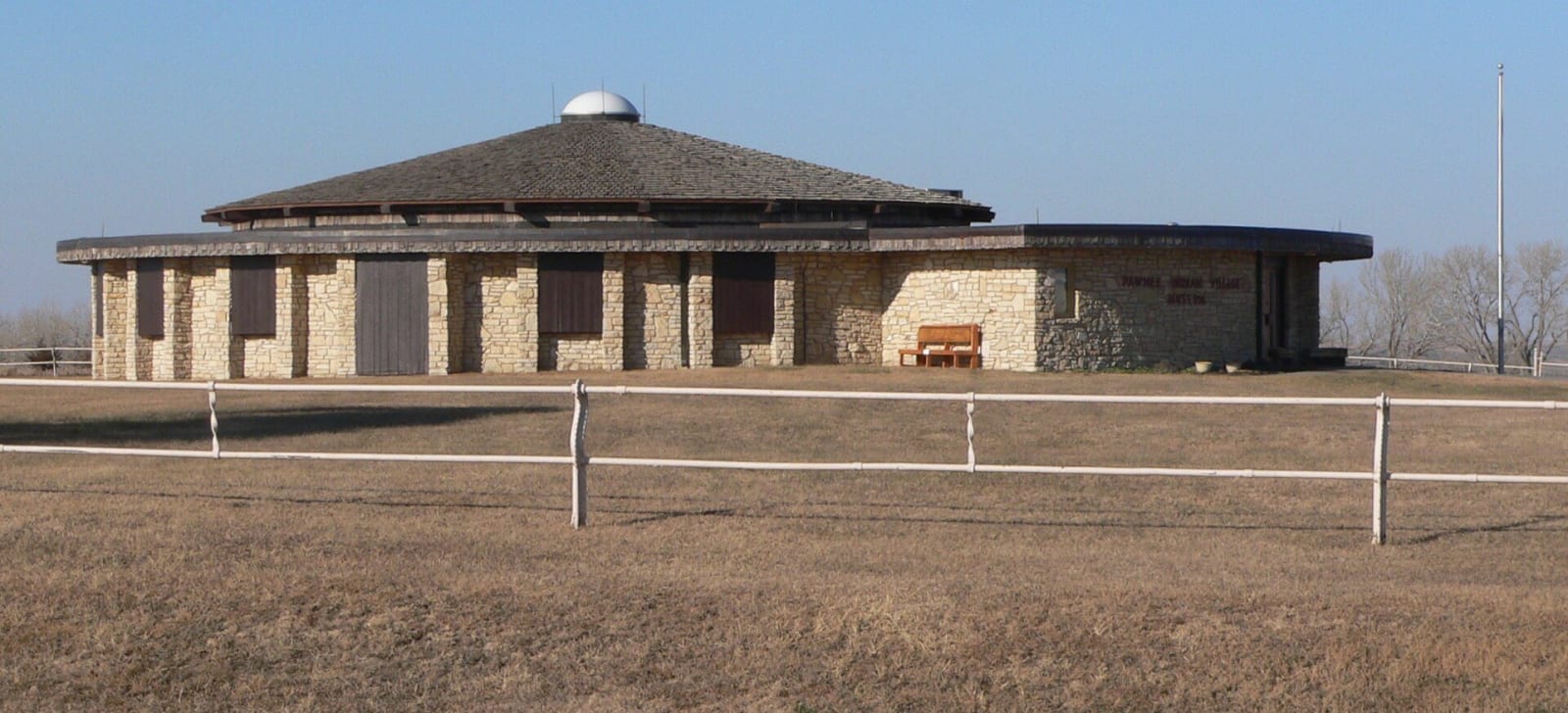
The museum is built over one of the largest, and holds a deeply personal object. In August 1873, when Lakota warriors attacked a Pawnee hunting party at Massacre Canyon in Nebraska, a father tied his five-year-old daughter, Sadie, to his horse with the family's sacred bundle on her back and sent her off. She lived; her parents did not. The bundle passed to her daughter Dolly in Oklahoma, where the Pawnee had been removed in the 1870s. Dolly visited this site and wanted the bundle kept here, and in 1987 her daughter Elizabeth gave it to the Kansas Historical Society. It hangs above the lodge altar. The museum also shows a star chart painted on buckskin.
The site closed for the season on October 4, 2026, and reopens in April 2027.
Visitor Info
On the Map
Nearby
The closest stops worth working into your route
Historical markers nearby
Roadside plaques and monuments within a short detour