 Larry D. Moore / CC BY 4.0 via Wikimedia Commons
The Story
The families came from Upper Silesia, then under Prussia, in the fall of 1854: by train to Bremen, by ship to Galveston, and on foot and in rented Mexican oxcarts to San Antonio and then to this plateau near where Cibolo Creek meets the San Antonio River. Estimates of their number run from 150 to 800. Some died at sea and more on the way, and some stopped in other towns, one group settling at Bandera. Those who arrived held a Christmas Mass under a live oak in the tall grass, and the place became Panna Maria, Virgin Mary.
The land belonged to John Twohig, who sold it to them dear. They built a church, consecrated in September 1856, began to replace thatched huts with stone houses, and started St. Joseph's School in a barn. Snakes, malaria, grasshoppers, drought and flood followed, and after the Civil War Southerners terrorized the Poles for their Union sympathies. The railroad passed them by, Polish priests and teaching sisters arrived, and the village kept its language and its church.
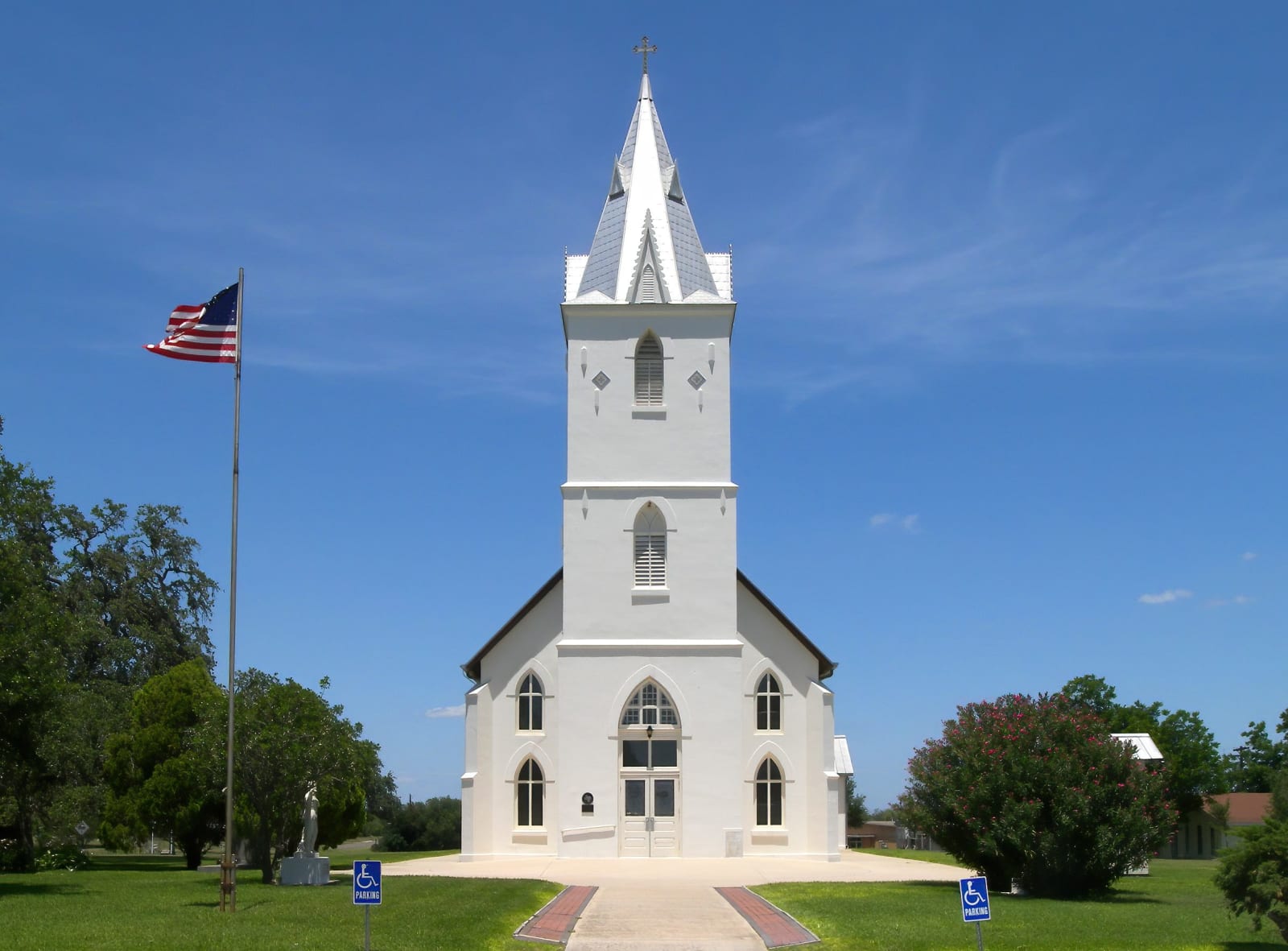
The present church, Immaculate Conception, was finished in 1878. In a 1937 renovation its ceiling was covered with tiles; when they came off in 2000, a painted ceiling of eight Christian symbols by an unknown artist was underneath, and a Polish priest-painter, Father Antoni Polaniak, came to restore it and added his own work, including the ship of the first colonists. The 12,000-piece mosaic of the Virgin of Częstochowa was Lyndon Johnson's gift for the 1966 millennium Mass, when 10,000 people came.
Visitor Info
On the Map
Nearby
The closest stops worth working into your route
Historical markers nearby
Roadside plaques and monuments within a short detour