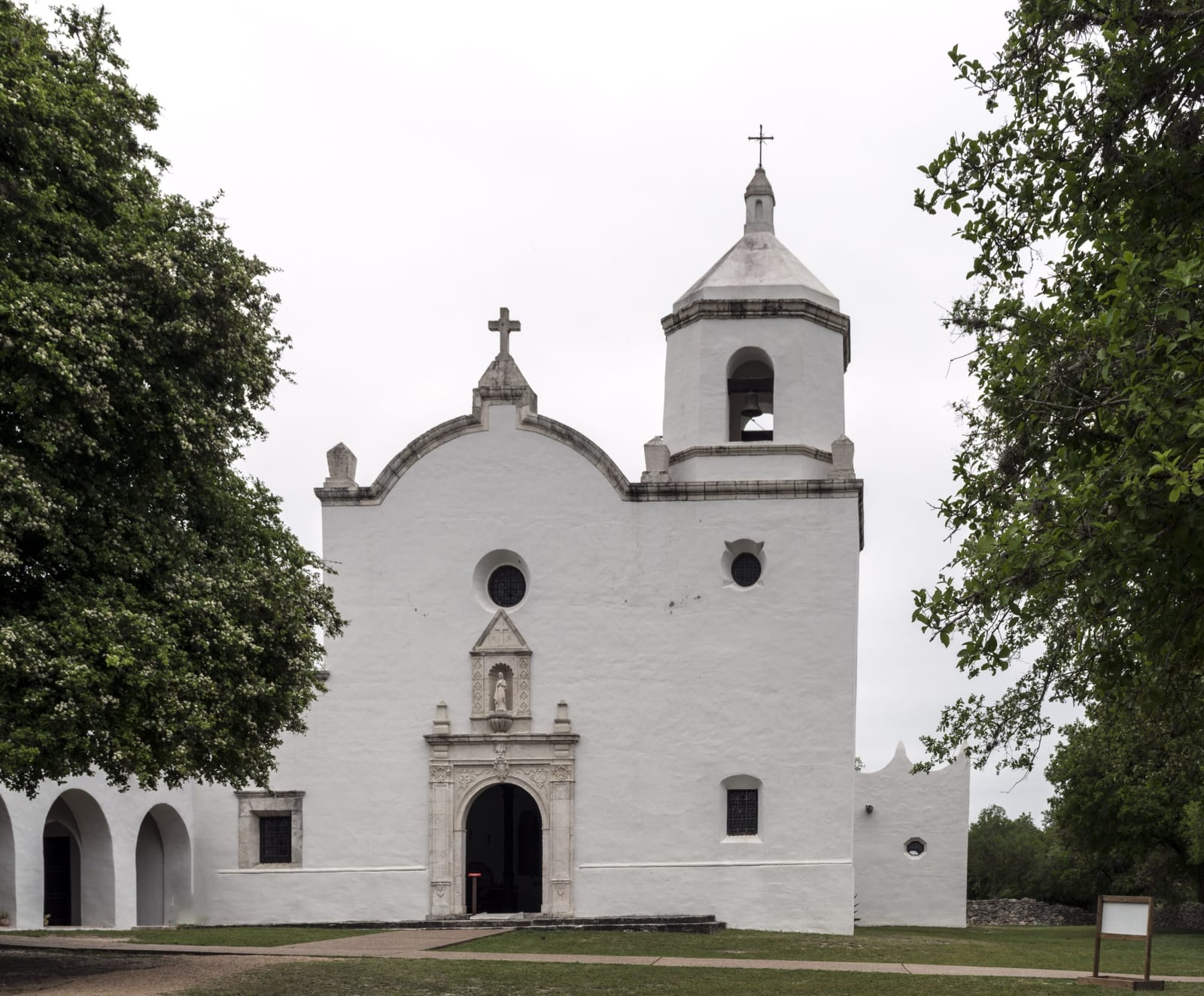
 Carol M. Highsmith / public domain via Wikimedia Commons
The Story
Mission Nuestra Señora del Espíritu Santo de Zúñiga was founded in 1722 on Garcitas Creek, beside the presidio built over La Salle's ruined settlement, to serve Karankawa bands, the Cocos, Copanes and Cujanes. The Karankawas would not stay, and in 1726 mission and presidio moved inland to the Guadalupe among the Aranama and Tamique. In the fall of 1749 they moved again, to this bend of the San Antonio River, where the mission was rebuilt in stone and mortar by 1758.
Espíritu Santo is traditionally counted the first great cattle ranch in Texas. Indigenous cowhands drove its herds to other missions, to East Texas and to Louisiana, and the mission and the settlers of La Bahía may have run 40,000 cattle and horses between them; more than 15,000 were branded in 1778. In 1768 Gaspar José de Solís counted some 300 Aranama, Tamique, Piguique and Manos de Perro people, 623 baptisms and 278 burials. Raids, short garrisons and the wars of Mexican independence wore it down, and it was secularized in February 1830, among the last missions in Texas to be.
Goliad took the ruins over and let residents carry off loose rock; two colleges used the grounds. The site went to the state in 1931, and Civilian Conservation Corps crews, with the National Park Service and the University of Texas, rebuilt the mission. Visitors can ring the church bell. The ruins of Mission Rosario lie a short drive west, and the park is the take-out for the 6.6-mile Goliad Paddling Trail on the San Antonio River.
Visitor Info
On the Map
Nearby
The closest stops worth working into your route
Historical markers nearby
Roadside plaques and monuments within a short detour