 Ken Lund / CC BY-SA 2.0 via Wikimedia Commons
The Story
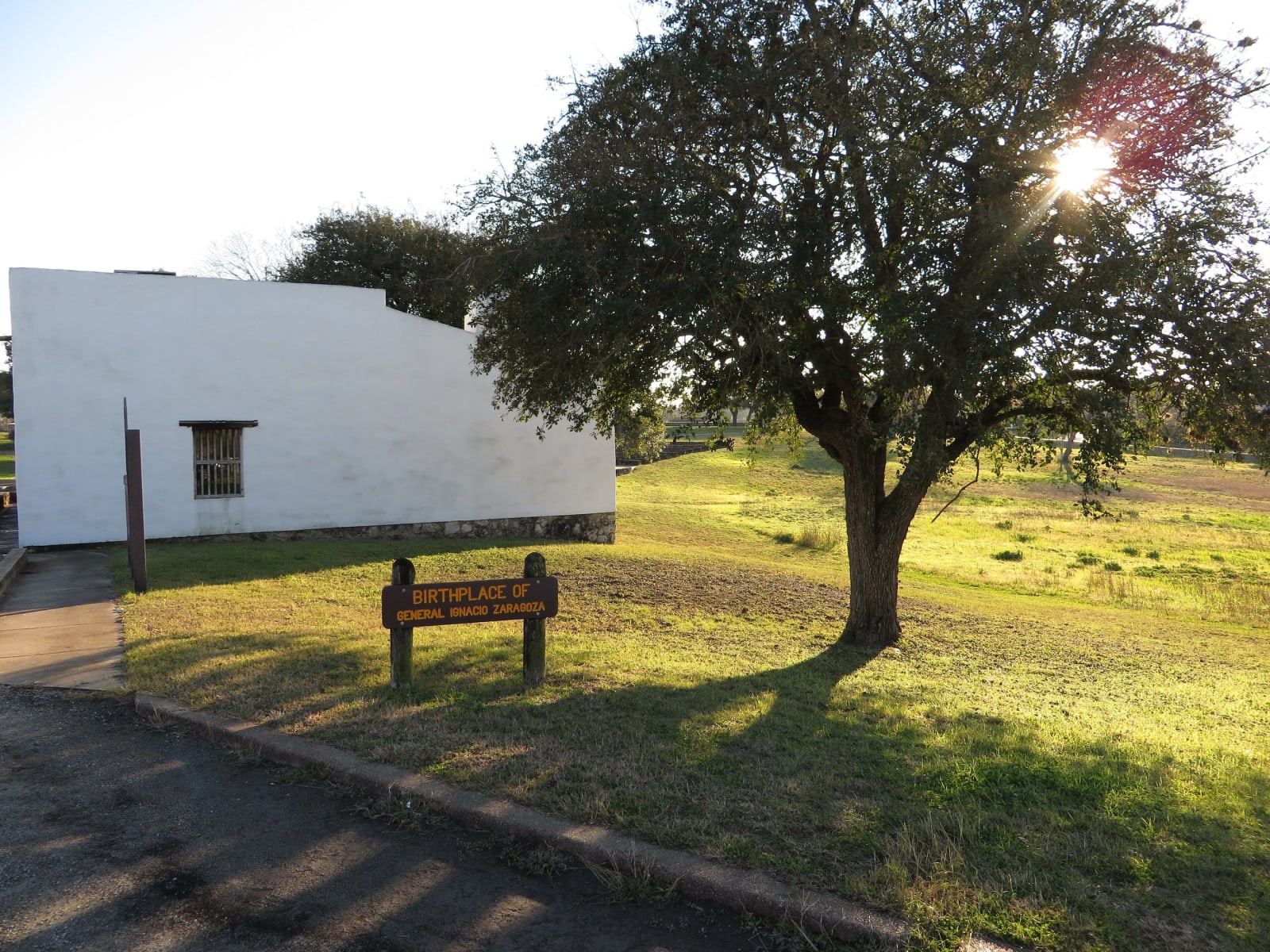
Ignacio Seguín Zaragoza was born at La Bahía del Espíritu Santo on March 24, 1829, the second son of Miguel G. Zaragoza, an infantryman from Veracruz, and María de Jesús Seguín of Bexar, kin of Erasmo Seguín. The town had been renamed Goliad only weeks before. After the Texas Revolution the family left for Matamoros and then Monterrey, where Ignacio tried the seminary, was turned away as a cadet when the United States invaded, and joined the Nuevo León militia as a sergeant in 1853.
He fought for the Liberals of the Plan de Ayutla and the War of the Reform, and in April 1861 Benito Juárez made him minister of war. When Juárez suspended payments on Mexico's European debts, Spain, France and England seized Veracruz, and as the French pressed inland Zaragoza took command of the Army of the East and fortified Puebla. On May 5, 1862, his troops drove the French back after a day-long battle. He died of typhoid in September, at thirty-three, and Juárez renamed the city Puebla de Zaragoza and made Cinco de Mayo a national holiday. The Friends of the Texas Historical Commission note that the day is now celebrated more widely in the United States than in most of Mexico, carried by Mexican American communities and renewed by the Chicano Movement.
Goliad County gave the land in 1961. After digs in 1969 and 1972, the house was rebuilt on the old foundation to Raiford Stripling's plans and opened on May 5, 1976; the bronze statue outside was Puebla's gift in 1980.
Visitor Info
On the Map
Nearby
The closest stops worth working into your route
Historical markers nearby
Roadside plaques and monuments within a short detour