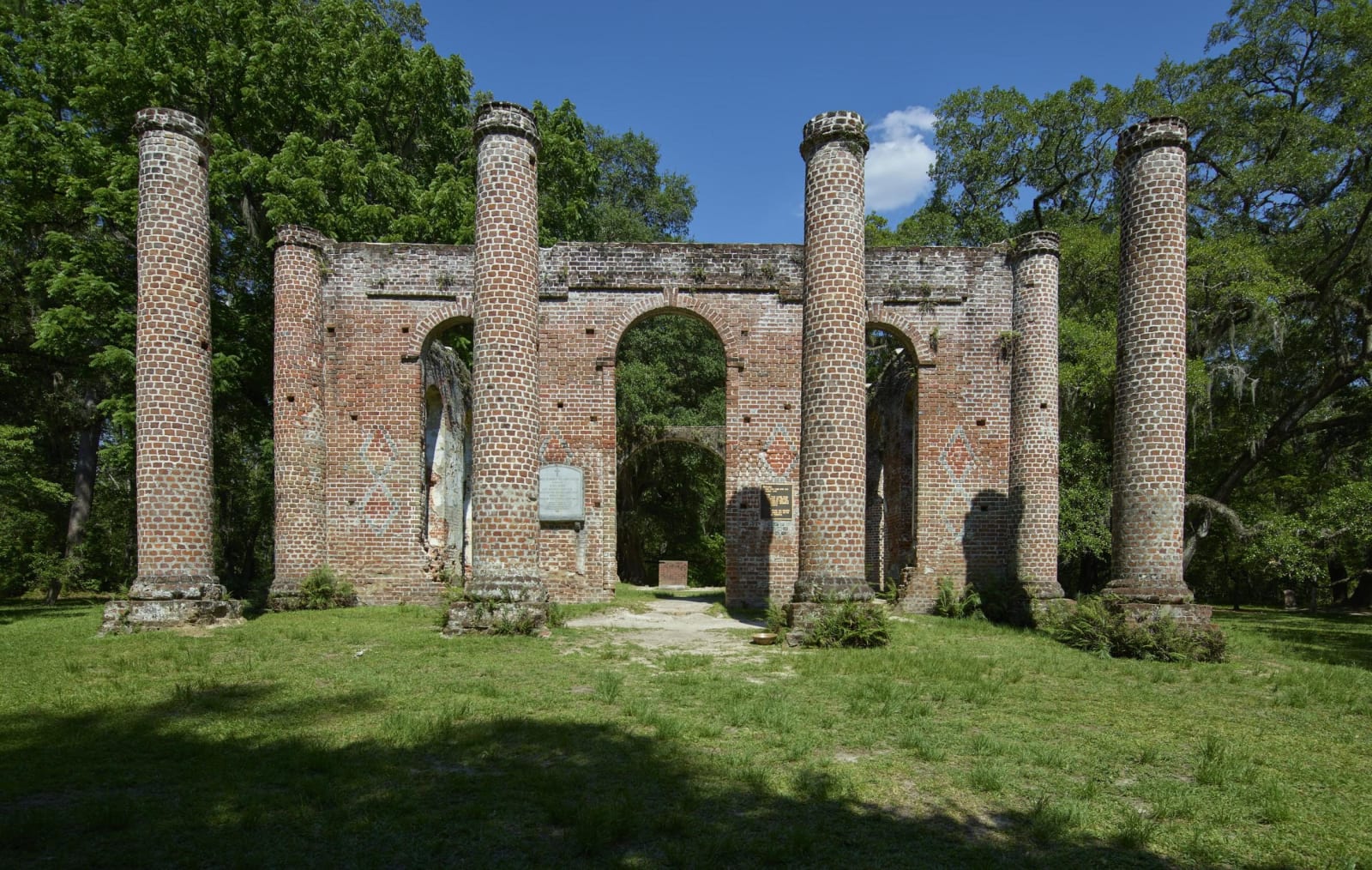
 Carol M. Highsmith / public domain via Library of Congress
The Story
This country was the Yamasee's until 1715. They had been Carolina's partners in the deerskin trade and the Indian slave trade, raiding Florida towns for captives sold to Carolina merchants, until debt and settlers on their land drove them to war. On Good Friday, April 15, 1715, at their town of Pocotaligo, not far from here, they killed the colony's agents and struck the plantations around Port Royal. The war nearly destroyed South Carolina. When it was over the Yamasee had been driven south of the Savannah River, and in the 1730s planters moved onto the former Indian lands with the people they enslaved.
In 1745 the assembly created Prince William's Parish, and this church, paid for largely by the Bulls of neighboring Sheldon Plantation, was finished in the 1750s, among the first temple-form buildings in the English-speaking world. Loyalists burned it in 1779, during the British campaign out of Savannah. It was roofed again and reconsecrated in 1826, and in 1865 it was ruined a second time. The long-told story blames Sherman's army, but a letter of February 1866 says it was not burned, only torn up inside, its materials apparently reused to rebuild homes Sherman's army had burned.
What stands is the brick shell, its columns and arched windows open to the sky, under live oaks among the graves of planter families. Clergy from the Parish Church of St. Helena in Beaufort have held a service here each year since 1925, on the second Sunday after Easter, and the ruins have not been available for weddings since 2015. Keep off the graves.
Visitor Info
On the Map
Nearby
The closest stops worth working into your route
Historical markers nearby
Roadside plaques and monuments within a short detour