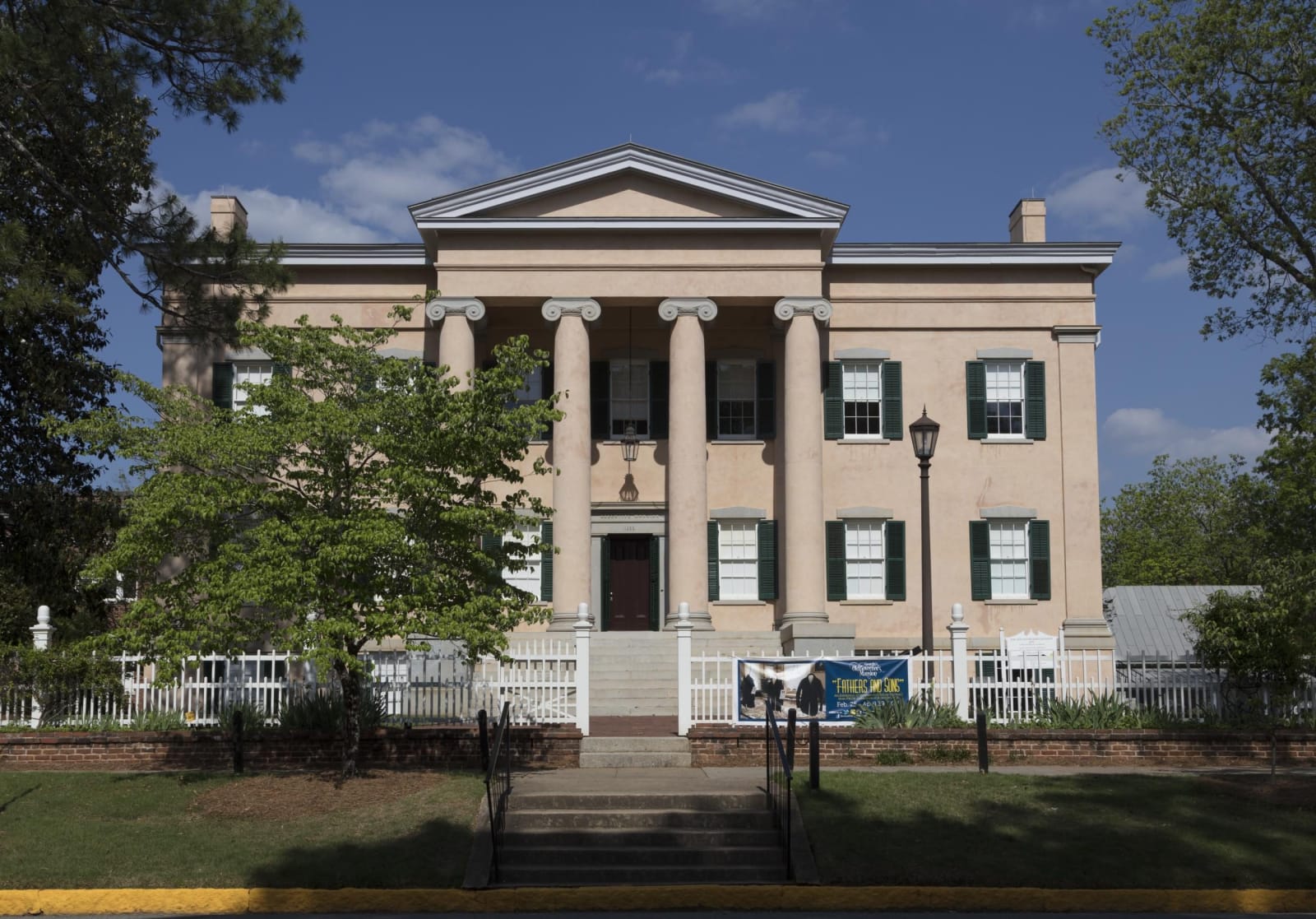
 Carol M. Highsmith / public domain via Library of Congress
The Story
Milledgeville was laid out after the Muscogee (Creek), pressed by debts to white traders, ceded the land west of the Oconee River at the Treaty of Fort Wilkinson in 1802, and it served as Georgia's capital from 1807 to 1868. In 1835 the legislature voted to build the governor an official residence. Charles B. Cluskey, an Irish architect, designed it in the Greek Revival style: three stories of stucco over brick around a central rotunda, behind a massive Ionic portico. It was finished in 1838 or 1839, and Georgia's governors and their families lived here until 1868, among them Howell Cobb and Joseph E. Brown, who stayed longest.
Enslaved people did the work of the house, and the docent tours speak of its occupants both free and enslaved. In 1828 the town counted 783 enslaved people among its 1,599 residents, and slave auctions were held at the town market on the capitol square. The mansion was the seat of power during the removal of the Cherokees in the 1830s, and on January 19, 1861, delegates at the statehouse passed Georgia's ordinance of secession. Sherman's troops reached Milledgeville in November 1864, and he made the mansion his base.
After the capital moved to Atlanta the house became a barracks and then, from 1891 to 1987, the home of college presidents. A $9.5 million restoration finished in 2005 returned it to its 1851 appearance. Student docents lead tours on the hour, and a specialty tour, Labor Behind the Veil, centers the enslaved and free workers.
Visitor Info
On the Map
Nearby
The closest stops worth working into your route
Historical markers nearby
Roadside plaques and monuments within a short detour