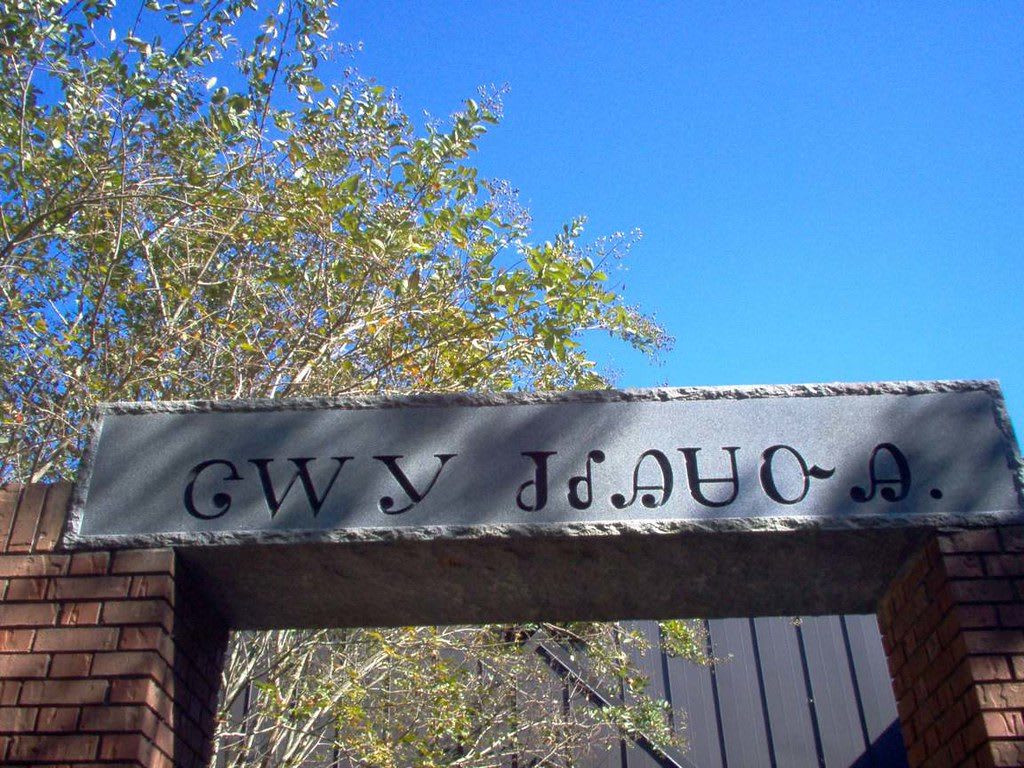
 BY-YOUR-⌘ / CC BY 2.0 via Flickr
The Story
In November 1825 the Cherokee National Council made its capital at Gansagi, where the Coosawattee and Conasauga rivers form the Oostanaula, and named it New Echota after Chota, the old Overhill town. The Cherokee adopted a written constitution in 1827, built a council house and a supreme court, and on February 21, 1828, printed the first issue of the Cherokee Phoenix, in English and in Sequoyah's syllabary, with Elias Boudinot as editor. The council had already made the sale of national land a crime punishable by death.
None of it held Georgia off. The state claimed the Nation's territory, voided its laws and laid its land out for lotteries, and the Supreme Court's 1832 ruling in Worcester v. Georgia, the case of the missionary whose house still stands here, went unenforced. The Georgia Guard seized the Phoenix press in 1835. That December a small Treaty Party with no authority from the Nation signed away all Cherokee land east of the Mississippi at Boudinot's house, over the protest of Principal Chief John Ross and most Cherokee people. In 1838 soldiers gathered Cherokee families here for the forced march west.
The town emptied and its site was lost until research in 1953 found it in a cornfield, Worcester's 1827 house and mission school still standing on a knoll. Excavations from 1954 located the other buildings. Twelve original and reconstructed buildings stand now, including the council house, the court house, the print shop and an 1805 store, with a visitor center film and a trail to New Town Creek, where families camped while the council sat.
Visitor Info
On the Map
Nearby
The closest stops worth working into your route
Historical markers nearby
Roadside plaques and monuments within a short detour