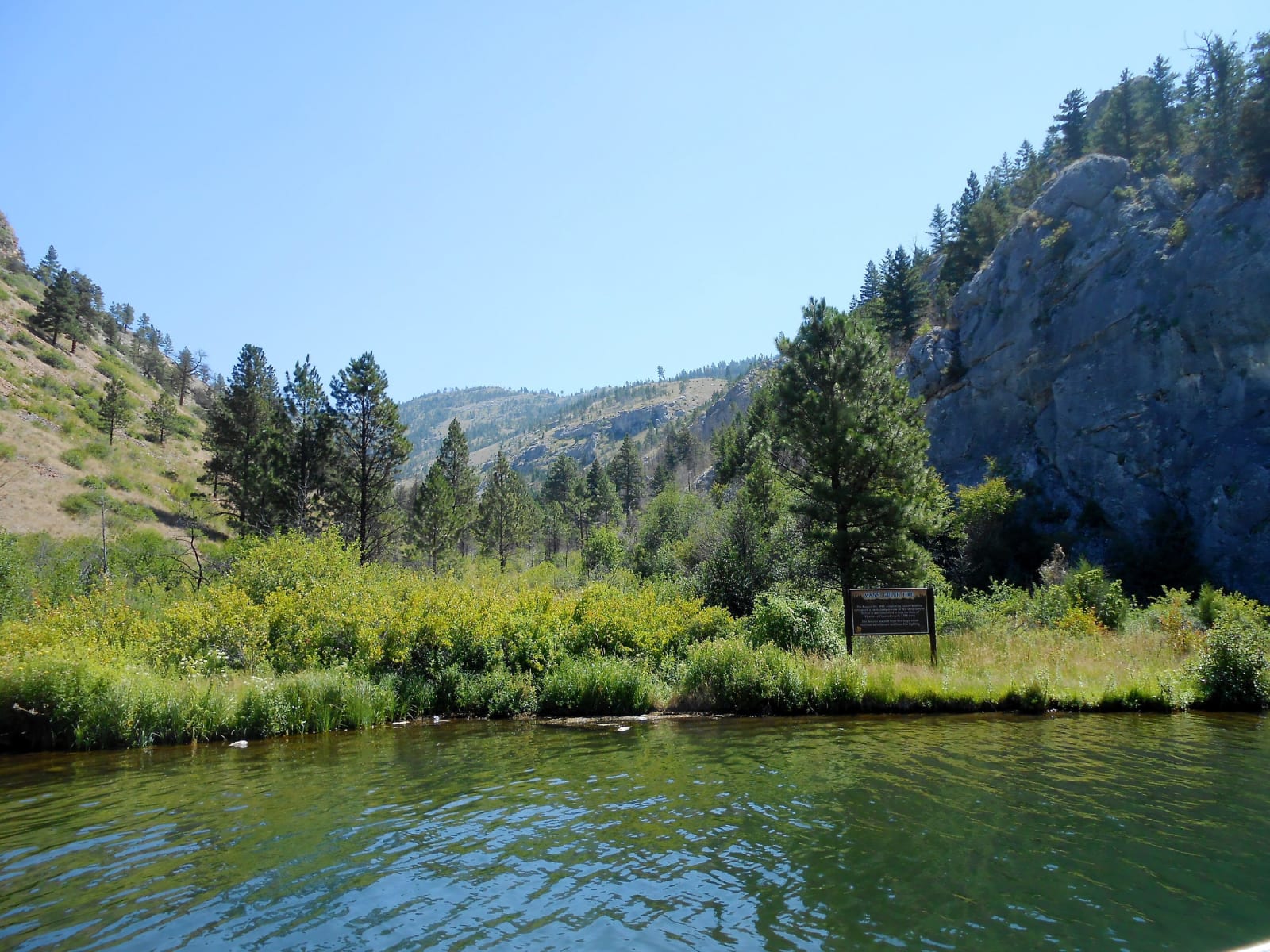
 Montanabw / CC BY-SA 3.0 via Wikimedia Commons
The Story
After two weeks of heat in the nineties, lightning came through the Big Belt Mountains in early August 1949, and on August 5 a fire was burning on the ridge between Meriwether Canyon and Mann Gulch. Jim Harrison, the Forest Service guard stationed at Meriwether on the river, a former smokejumper, climbed up to fight it alone. That afternoon a plane from Missoula dropped fifteen jumpers under their foreman, Wagner Dodge, into the head of Mann Gulch. They met Harrison and started down the gulch toward the river, then saw that the fire had jumped below them and was coming up the grass.
Dodge, seeing they could not outrun it, struck a match and burned a patch of grass ahead of the flames, lay down in the ashes and called the others to join him. Nobody had been taught such a thing, and no one did. Bob Sallee and Walter Rumsey found a crevice in the rimrock and got over the ridge into Rescue Gulch. Dodge survived inside his own fire. Thirteen men died, Harrison among them. The escape fire became the root of the safety zone every wildland firefighter is now taught, and Norman Maclean spent his last years on the story; his Young Men and Fire was published in 1992, after his death.
In 1950 smokejumpers set white concrete crosses on the slope where each man fell, and granite markers were later placed beside them. Most visitors come by water. The Gates of the Mountains tour boat, from the marina off I-15 north of Helena, passes the mouth of the gulch and stops at Meriwether picnic area, where a steep trail climbs over the ridge to the markers; it is wilderness walking, so carry what you need. Meriwether Lewis named this canyon the gates of the Rocky Mountains in July 1805.
Visitor Info
On the Map
Nearby
The closest stops worth working into your route