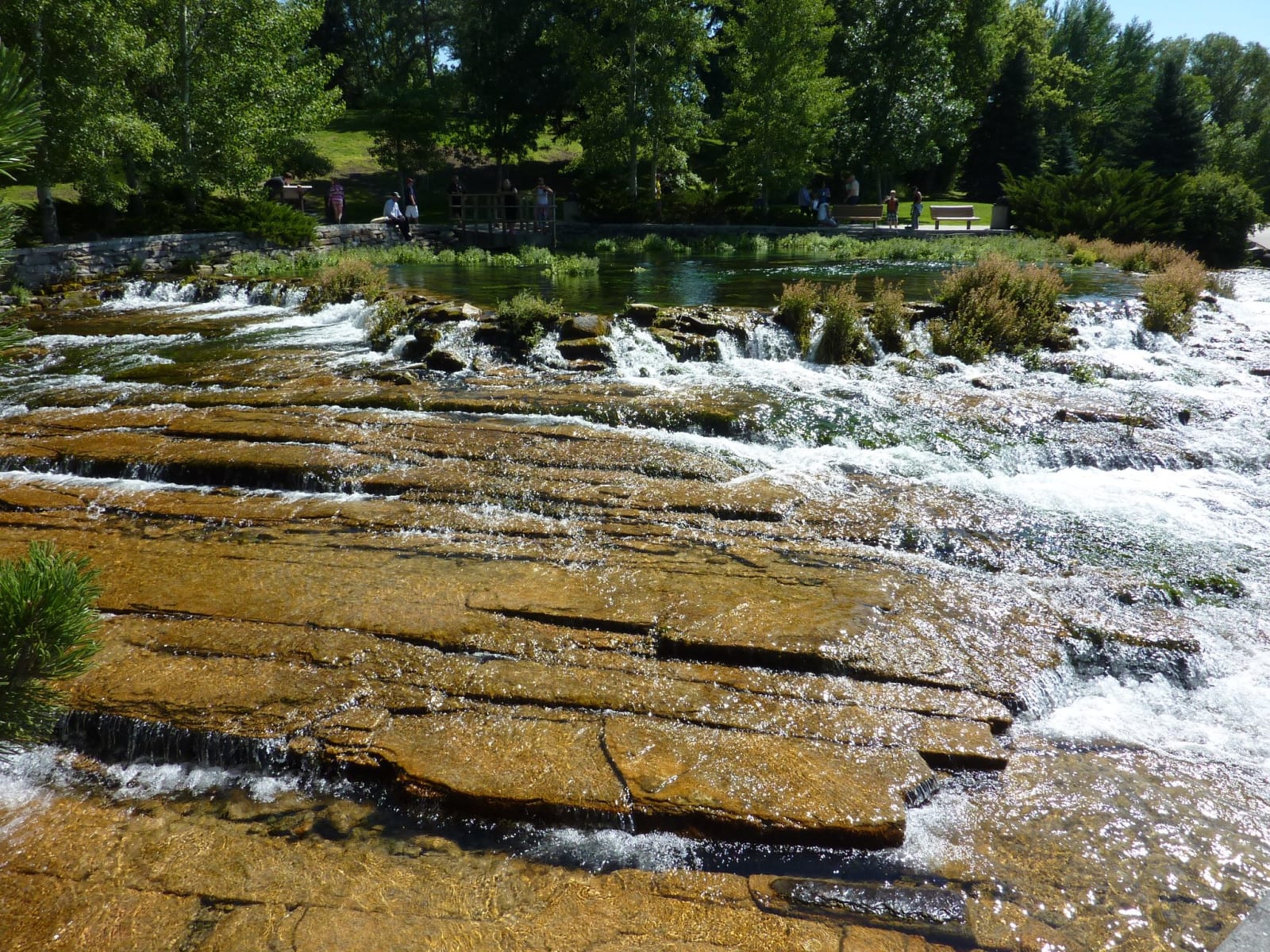
 Chris06 / CC BY-SA 4.0 via Wikimedia Commons
The Story
On June 18, 1805, a week into the portage around the Great Falls, William Clark walked up the Missouri and found what he called the largest fountain or spring he had ever seen, boiling up from under the rocks at the river's edge, so clear and blue that its water held its color in the Missouri for half a mile. It still runs: about 156 million gallons a day, always near 54 degrees, rising from the Madison limestone aquifer that is fed by rain and snow in the Little Belt Mountains to the southeast. Native people knew it long before Clark did; bison hunters wintered nearby.
The spring reaches the Missouri two ways, partly straight over the bank and partly by a channel that a fifth-grade class from Lincoln School in Great Falls named the Roe River, for the fish eggs at the state hatchery next door. In 1988 the students got Guinness to list it as the world's shortest river, at 201 feet. Oregon's D River, a few hundred feet long depending on the tide, was pressed as a rival, and Guinness eventually dropped the category altogether.
The city handed the park to the state in 1970. Footbridges cross the spring pool, the River's Edge Trail follows the Missouri past the hatchery and Rainbow Falls overlook, and the Forest Service's Lewis and Clark Interpretive Center stands on the bluff above.
Visitor Info
On the Map
Nearby
The closest stops worth working into your route