 Pimlico27 / CC BY-SA 4.0 via Wikimedia Commons
The Story
In the 1920s prospectors found fine gold in the sand at the foot of the Sangre de Cristos. A company set up a separator on Medano Creek to pull magnetite and gold from the dunes, and there was talk of a concrete plant using the sand. In the San Luis Valley the women of the local P.E.O. chapters, a philanthropic educational sisterhood, decided the dunes needed federal protection. They wrote letters to everyone from the county to Congress, and on March 17, 1932, President Herbert Hoover proclaimed Great Sand Dunes National Monument.
The second threat was water. The dunes depend on the aquifer beneath the valley and the creeks that run around them, and the huge Baca Ranch to the north sat on the deep groundwater of the Closed Basin. In the late 1980s a company called American Water Development Inc. planned to pump that water and sell it to the Front Range; valley farmers and ranchers fought it in water court and won in 1991, and when a new owner revived the idea, they went looking for a permanent answer. In 2000 Congress passed an act to turn the monument into a national park if the Baca could be bought. The Nature Conservancy bought it, and in September 2004 the park and preserve were established, nearly four times the monument's size.
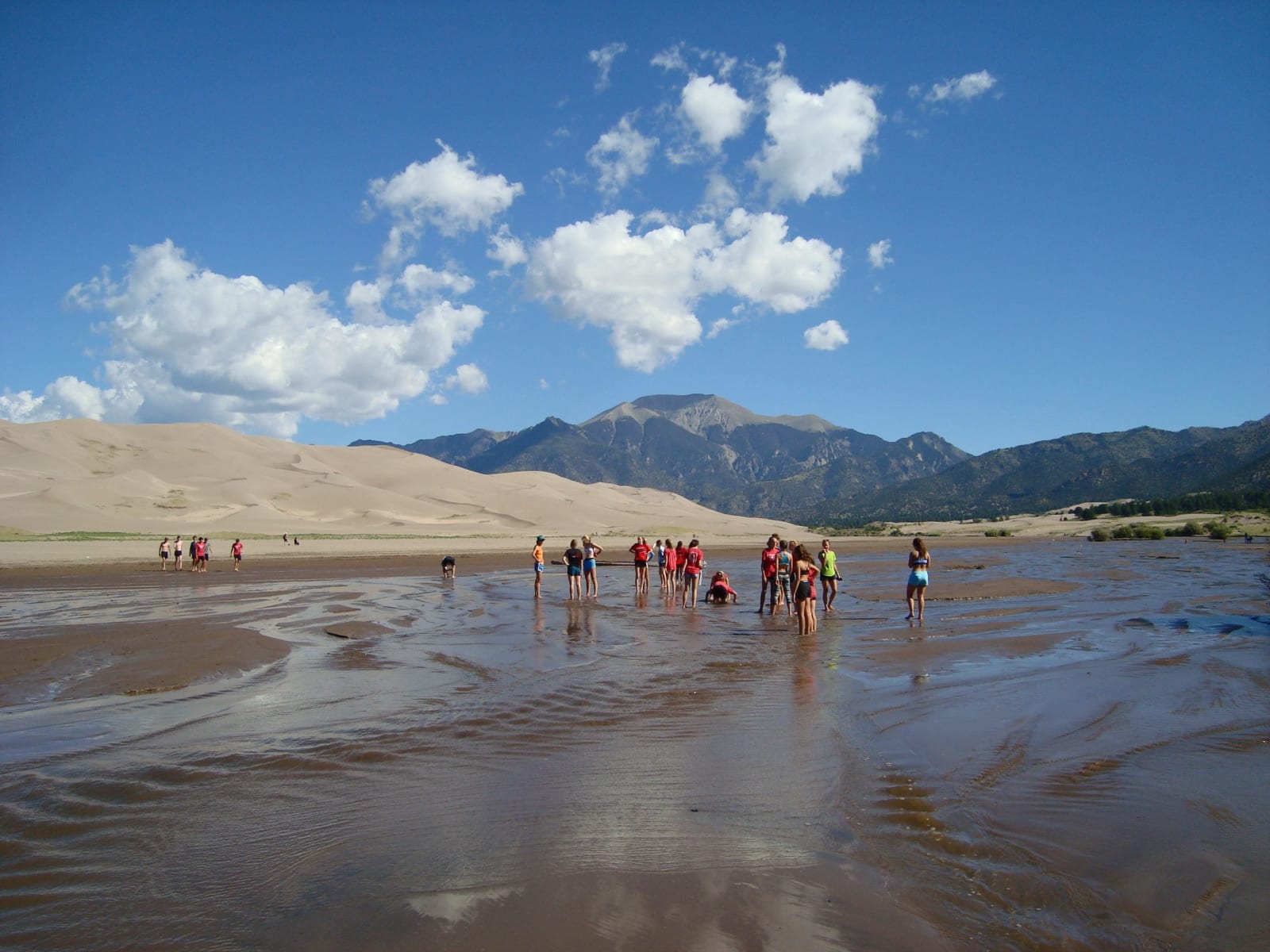
The tallest dunes rise about 740 feet from base to crest, Star Dune and Hidden Dune effectively tied, each a long hike from the parking lot. In late spring Medano Creek runs in pulses across the sand at the dunes' foot, and above them the preserve climbs to tundra on the Sangre de Cristo crest.
Visitor Info
On the Map
Nearby
The closest stops worth working into your route