 Markttnc / CC BY-SA 3.0 via Wikimedia Commons
The Story
On April 10, 1933, the legislature appropriated $90,000 to buy land in Carter and Love counties, once Chickasaw Nation land, for a park named for Governor William H. 'Alfalfa Bill' Murray. The National Park Service planned it as a Recreational Demonstration Area, and New Deal agencies, among them the Civilian Conservation Corps and the Works Progress Administration, built it in the rustic style of the national parks: stone cabins, hidden trash bins and drinking fountains that come out of rocks. The 5,728-acre lake opened in 1938.
It was built for a segregated state. Besides two main group camps, the park had a camp for Black youth, and the Oklahoma Historical Society notes that it was the only state park the National Park Service built with permanent camping facilities for African American young people. In 2001 it became the first Oklahoma state park on the National Register, as the largest and most intact of the state's demonstration areas.
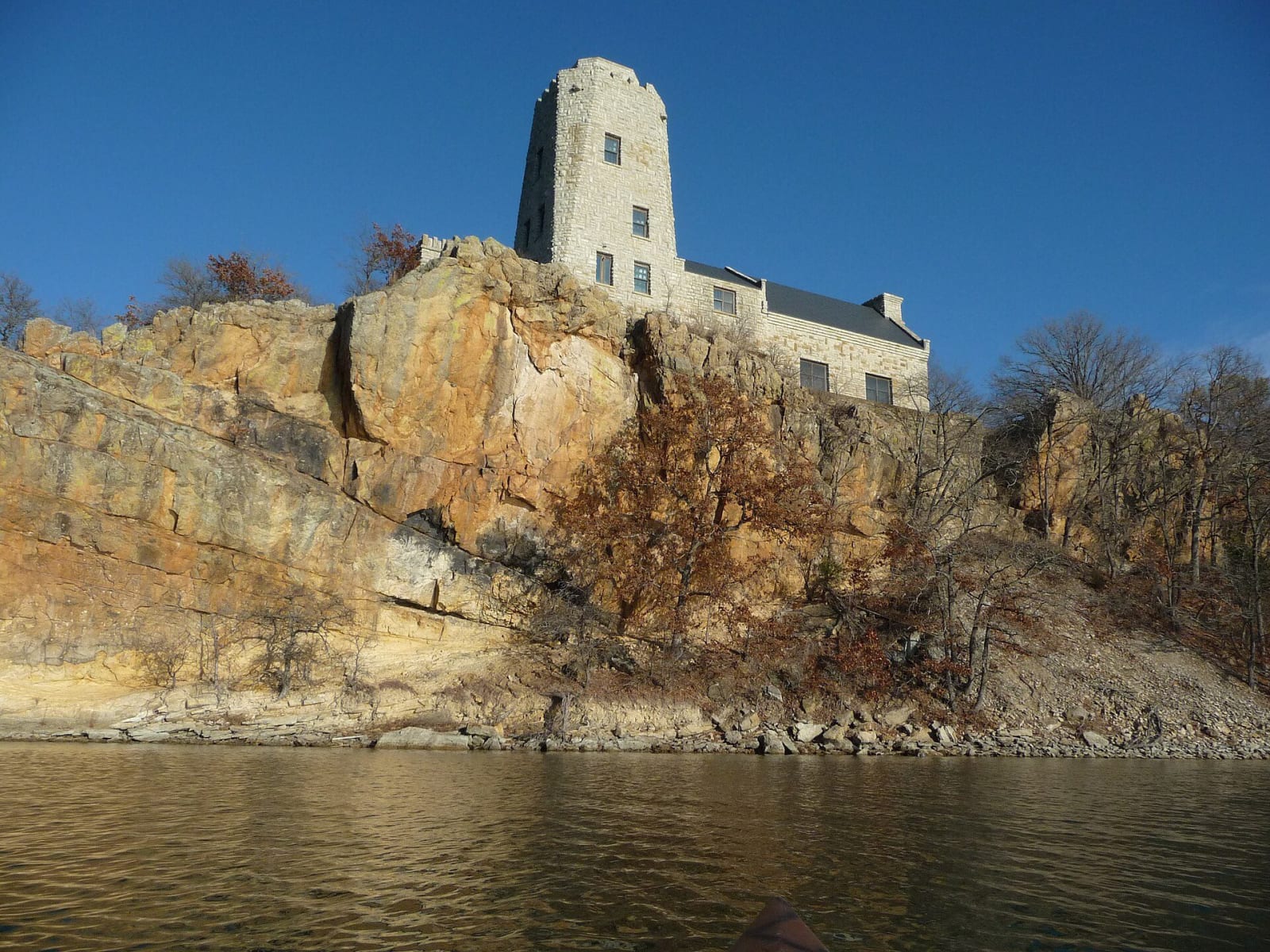
Tucker Tower, of limestone quarried in the park, was meant as a summer home for the governors. It is named for State Senator Fred Tucker, who based it on photographs of a European castle he took in World War I. Work stopped in 1935 with the inside unfinished, and no governor ever stayed there. It opened in 1954 as a geology museum built around a meteorite found in the park and now serves as the park's nature center. Trails, a lodge, cabins and a golf course fill the rest of the 12,500 acres.
Visitor Info
On the Map
Nearby
The closest stops worth working into your route
Historical markers nearby
Roadside plaques and monuments within a short detour