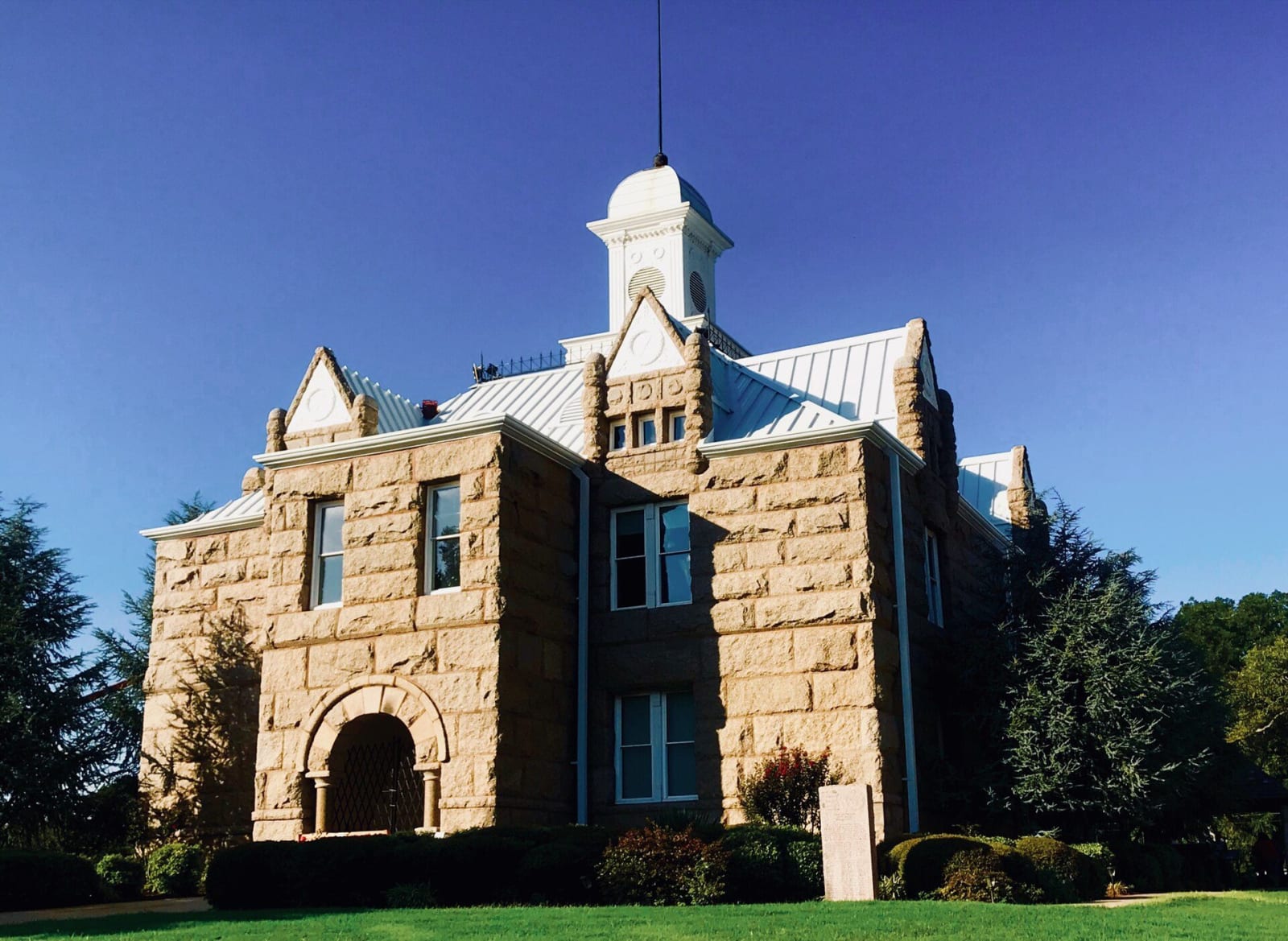
 Interim81 / CC BY-SA 4.0 via Wikimedia Commons
The Story
The Chickasaw Nation wrote its constitution of 1856 at large gatherings at Good Spring on Pennington Creek, and the camp there became Tishomingo, named for a Chickasaw leader who died on the removal in 1838. It was the Nation's capital until statehood. Its government met first in a log council house and from 1858 in a two-story brick capitol, which was judged unsafe by 1894 and torn down beginning in 1897.
The replacement went up in seven months under Governor Robert M. Harris, of red granite quarried on Harris's own allotment, and was finished in November 1898. Douglas H. Johnston was the first governor to hold office in it. It had three offices on each floor for the governor, the national treasurer and the national secretary, the national vault, the legislature downstairs and the courtroom upstairs, and the Dawes Commission kept an office there. At statehood in 1907, in the Nation's words, the Chickasaw Nation was forced to leave its building, and it became the Johnston County courthouse.
Johnston went on as the Nation's governor, appointed by the president, from 1906 until his death in 1939, and Chickasaw citizens did not elect a governor again until 1971. Governor Overton James began negotiating for the capitol in the 1960s, and Governor Bill Anoatubby reclaimed it for the Nation in 1992. Restored in 2004, it is now a museum of the Nation's government from 1856 to 1907, with Johnston's office and the national vault re-created. The Chickasaw Council House Museum, which shelters the log council house, stands beside it.
Visitor Info
On the Map
Nearby
The closest stops worth working into your route
Historical markers nearby
Roadside plaques and monuments within a short detour