 Phoebe / CC BY-SA 3.0 via Wikimedia Commons
The Story
The Chickasaw Nation calls this the cultural home of the Chickasaw people, and it tells the Nation's history in the Nation's own phrase for itself, unconquered and unconquerable. The center took decades to come about. In 2000 the Nation surveyed more than 1,200 of its citizens about what it should be, a land exchange among the Nation, the City of Sulphur and the National Park Service was approved in 2004 to give it ground beside the old Platt National Park, and it opened in 2010 after six years of building.
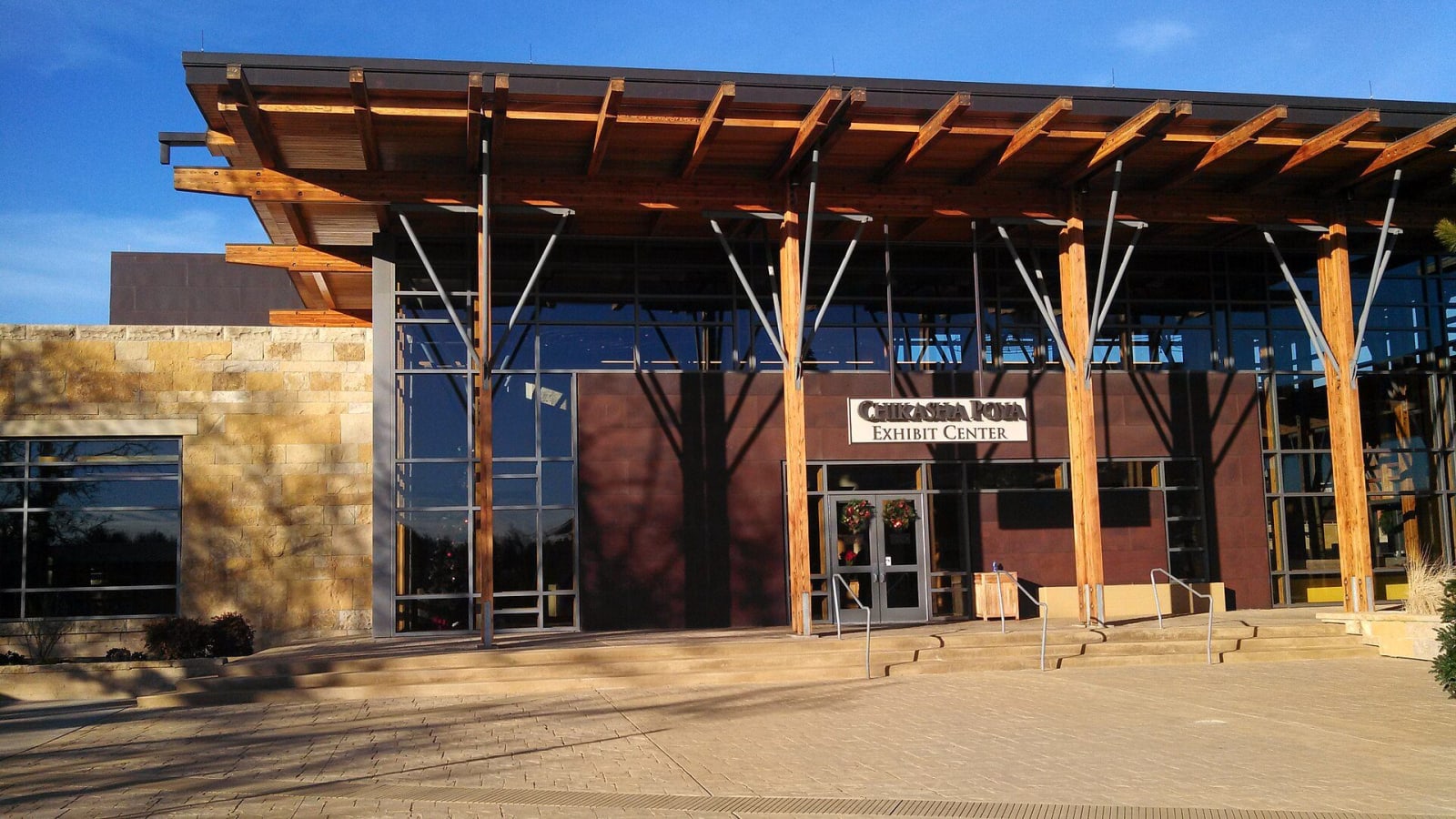
Start in the Chikasha Poya Exhibit Center, whose name means We are Chickasaw. It runs from first European contact and the early trade through removal, the hard journey that followed the Indian Removal Act of 1830, told in artwork, sound and stories, and on to Chickasaw soldiers and the Nation today. A council house orientation theater stands for the building that was the hub of every Chickasaw town.
Outside, past the 40-foot Aba' Aanowa' Sky Bridge, the Chikasha Inchokka' Traditional Village recreates a Chickasaw town of the 1700s: a council house, summer and winter houses, a corn crib, a replica mound, a stickball field and a stockade fence. Stomp dance is performed daily, and demonstrators show cooking, art, storytelling and language. The Aaholiitobli' Honor Garden remembers the Nation's leaders, elders and warriors, and Holisso, a 20,000-square-foot library, is given to the study of the Chickasaw and other Southeastern nations. The Inkana Bridge leads across into Chickasaw National Recreation Area.
Visitor Info
On the Map
Nearby
The closest stops worth working into your route
Historical markers nearby
Roadside plaques and monuments within a short detour