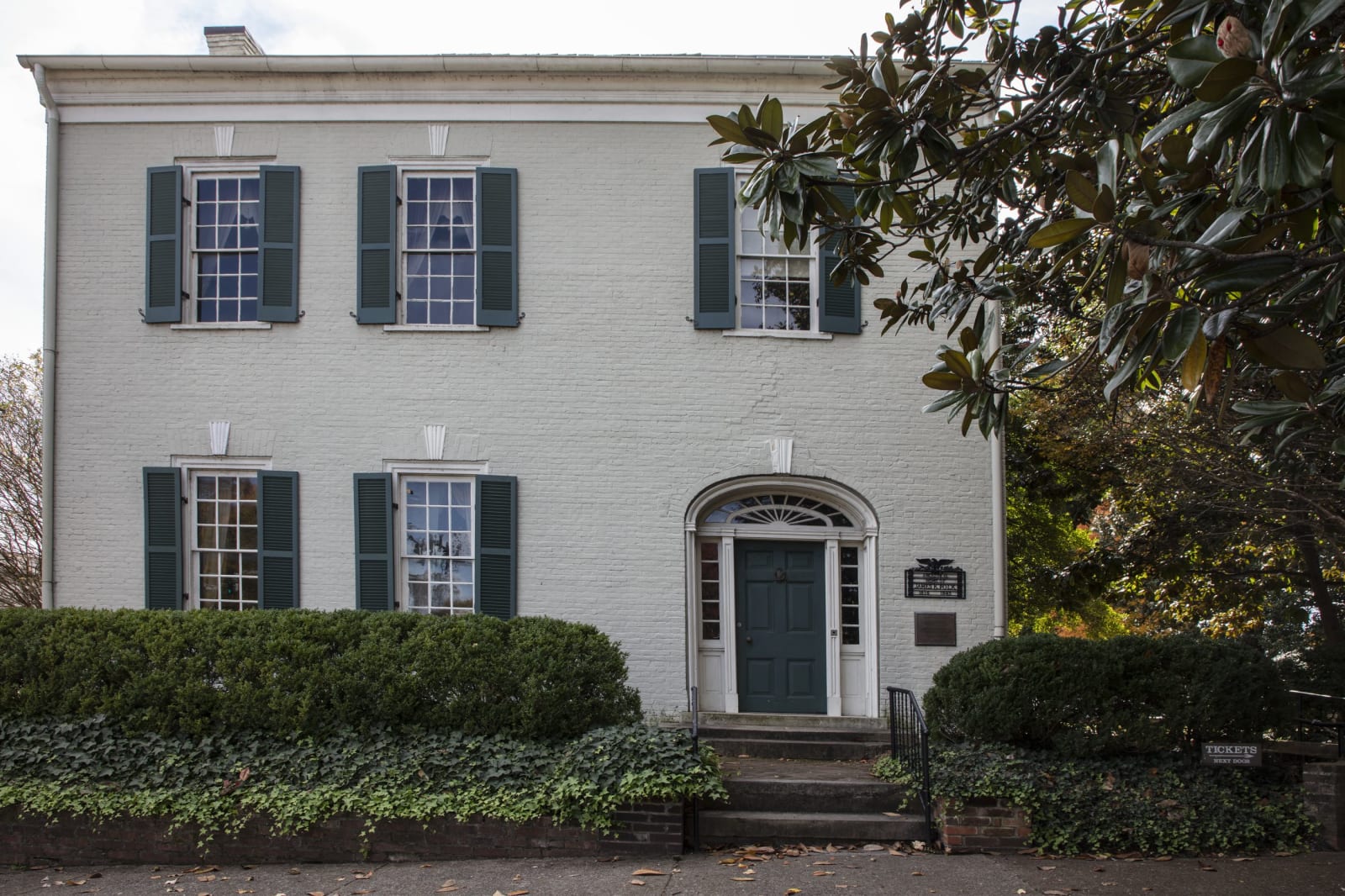
 Carol M. Highsmith / public domain via Library of Congress
The Story
Samuel Polk built this two-story Federal brick house in 1816, and it is the only surviving residence of James K. Polk's other than the White House. Polk lived here as a young lawyer until he married Sarah Childress in 1824, and he was a frequent guest afterward. His mother, Jane, lived here until her death in 1852. It became a state-owned historic site in 1929, run by the Polk Memorial Association, and the detached kitchen is a reconstruction.
The family's wealth rested on enslaved labor. North Carolina's historic sites staff trace the line back to 1794, when Jane's father willed two enslaved girls, Violet and Lucy, to her. When Samuel and Jane moved to Columbia in 1806 they brought Violet, Lucy, a newborn named Elias and two other enslaved people whose names were never recorded. Samuel's 1826 will left Lucy and her family to his son Franklin and Violet to Jane. After Franklin died, Lucy, her husband Charles and their children were sent to James K. Polk's plantation in Somerville, Tennessee, where two of her children died, and later to his land in Mississippi. The museum also tells of Matilda, the household's enslaved cook, who died in the same cholera outbreak that killed Polk in 1849.
Collections include books from Polk's library, campaign memorabilia and a daguerreotype of his cabinet, the earliest known photograph of the White House interior.
Visitor Info
On the Map
Nearby
The closest stops worth working into your route
Historical markers nearby
Roadside plaques and monuments within a short detour