Tennessee · Region

The Natchez Trace & South-Central Tennessee

Natchez Trace country in south-central Tennessee, where Chickasaw and Cherokee homelands meet Polk's Columbia, Pulaski, Old Stone Fort, Lynchburg and Sewanee.

12 places to explore

Chickasaw hunters and Tsalagi (Cherokee) families knew this country long before Tennessee had a name, and the Woodland people who raised the earthen walls at Old Stone Fort 2,000 years ago left the oldest page of the story. The Duck and Elk rivers carried travelers through it. At Gordon House, a Chickasaw partner helped run the ferry on the Natchez Trace, a road the Muscogee (Creek), Chickasaw and Cherokee nations paid for in land.

Settlers who followed built a farm economy on enslaved labor, and the houses and courthouse squares still show it. The James K. Polk Home in Columbia is best read alongside the people Polk held, and Sewanee was founded to serve the slaveholding South. Pulaski is where the Ku Klux Klan began, a fact to learn there and not to celebrate. Columbia's Mink Slide recalls the 1946 riot, when two Black men died in custody. Shelbyville's 1934 courthouse burning belongs to the same record.

Then there is the quieter country. Tims Ford and Henry Horton hold the rivers in parks, David Crockett State Park remembers a man who broke with Andrew Jackson over Indian removal, and Lawrenceburg preserves the shape-note songbooks that filled rural churches. In Lynchburg, Nearest Green taught Jack Daniel to distill, a debt the distillery now names. Drive slowly, and let the small roads do the telling.

What to See in The Natchez Trace & South-Central Tennessee

12 places across the region, grouped by what they are.

Natural Areas

Henry Horton State Park

Chapel Hill

A Duck River park on Governor Henry Horton's former farm in Marshall County, with a mill ruin from 1845, kayak floats and the grave of a governor the House declined to impeach.

View details →

Tims Ford State Park

Winchester

A lake park on the Elk River below the Cumberland Plateau, made by a 1970 TVA dam on land the Cherokee and Chickasaw ceded by treaty in the early 1800s.

View details →

Historic Sites

David Crockett State Park

Lawrenceburg

A Lawrenceburg park on Shoal Creek where Davy Crockett ran a gristmill, a powder mill and a distillery from 1817, and later broke with Andrew Jackson over Indian removal.

View details →

Gordon House and Ferry Site

Williamsport

A brick house of 1818 beside the Duck River at milepost 407.7 of the Natchez Trace Parkway, where a Chickasaw partner and a Tennessee captain ran a ferry and an inn.

View details →
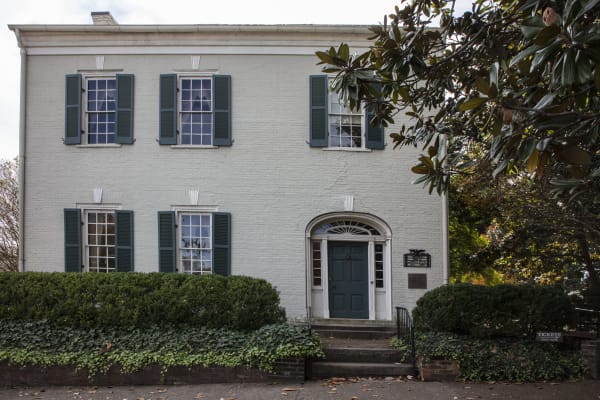
A white two-story Federal brick house with green shutters and an arched doorway, seen from the sidewalk beneath a magnolia branch.

James K. Polk Home and Museum

Columbia

The 1816 brick house in Columbia where Polk practiced law and campaigned for the legislature, now a museum that also tells of the people the Polk family enslaved.

View details →

Old Stone Fort State Archaeological Park

Manchester

A 2,000-year-old enclosure of piled stone and earth on the bluffs above the forks of the Duck River, built by Native people between about 80 and 550 A.D., with a museum and waterfall trails.

View details →

Pulaski Public Square and the Giles County Courthouse

Pulaski

The 1909 courthouse and nineteenth-century storefronts on Pulaski's square, in the town where the Ku Klux Klan was founded and where the architect Moses McKissack III was born.

View details →

Sewanee: The University of the South

Sewanee

The Episcopal university on the Cumberland Plateau, founded in 1857 as a school for the slaveholding South and now examining that history through its own Roberson Project.

View details →

The Mink Slide and East 8th Street

Columbia

Columbia's Black business and church district south of the courthouse square, where on the night of February 25, 1946 a white mob gathered and Black veterans stood guard.

View details →

Towns & Gateways

James D. Vaughan Southern Gospel Music Museum

Lawrenceburg

A museum on the third floor of the Vaughan Municipal Building on the Lawrenceburg square, honoring the shape-note publisher who built a songbook, quartet and radio empire here from 1903.

View details →

Tennessee Walking Horse National Celebration

Shelbyville

The Shelbyville show grounds where the Tennessee Walking Horse has been crowned world grand champion each late summer since 1939, and where the practice of soring is part of the story.

View details →

Industry & Mining

Jack Daniel Distillery

Lynchburg

The oldest registered distillery in the United States, in a limestone hollow outside Lynchburg, where the tour now names Nathan Nearest Green, an enslaved man, as the first master distiller.

View details →

Scenic Drives through The Natchez Trace & South-Central Tennessee

Scenic Byway

The Natchez Trace Parkway in Tennessee: The Alabama Line to Nashville

About 102 miles of the Natchez Trace Parkway in Tennessee, from the Alabama line past Meriwether Lewis's death site and the Gordon House to the northern terminus near Nashville.

102 mi · 2.5 hrs

The Natchez Trace & South-Central Tennessee rewards the unhurried. Pick a base, fan out, and let the country between the headline stops surprise you.

← Explore more of Open Road Guide