Home / Kansas / Kansas City & the Northeast / Brown v. Board of Education National Historical Park
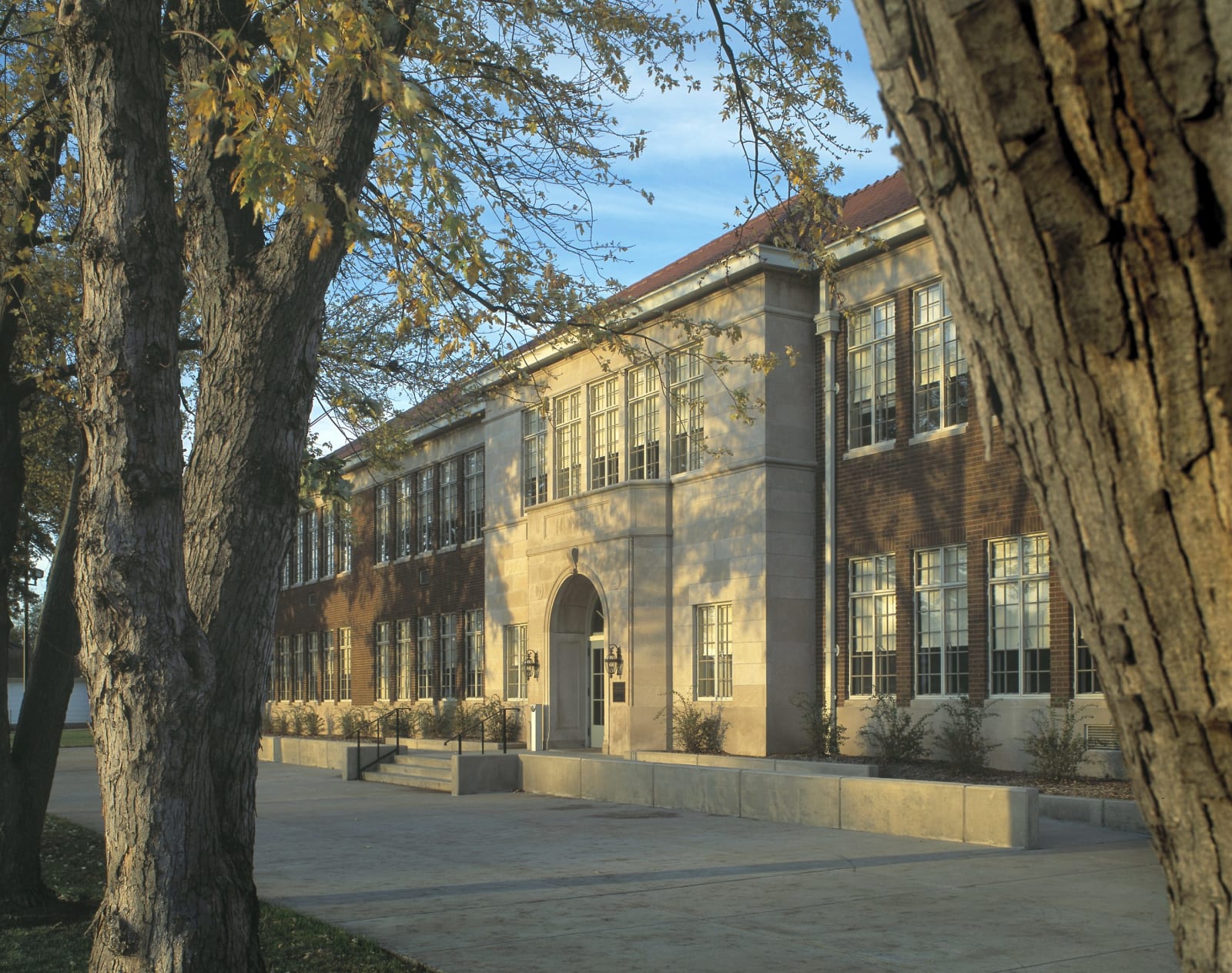
Monroe Elementary School in Topeka, a two-story brick and limestone building, seen past tree trunks in late-afternoon light.NPS / public domain
๐Ÿ›๏ธHistorical

Brown v. Board of Education National Historical Park

Part ofKansas City & the Northeast

Monroe Elementary in Topeka, one of four grade schools the city kept for Black children, now the museum of the case that thirteen Topeka families brought and the Supreme Court decided in 1954.

โฑ
Duration
One to two hours.
๐ŸŽŸ
Admission
Free; no entrance pass required.
๐Ÿ“…
Best Season
Year-round; the visitor center is open Tuesday through Saturday, 9 a.m. to 5 p.m.

The Story

At the time of the case Topeka ran 22 elementary schools, 18 for white children and four for Black children, under an 1879 state law that let Kansas cities of 15,000 or more segregate their grade schools. Monroe, built in 1926 to designs by the Topeka architect Thomas W. Williamson, was the newest of the four and the school Linda Brown attended. Parents had been challenging the law since 1881, and by 1950 eleven cases had reached the Kansas Supreme Court without success.

The Topeka case began with Lucinda Todd, a former teacher and secretary of the local NAACP, who saw a citywide concert advertised for all 18 Topeka elementary schools, leaving out the four Black ones. She proposed a lawsuit, and she and the chapter recruited 13 families, her own first, to try to enroll their children in white neighborhood schools and be turned away. Oliver Brown became the lead plaintiff. The suit was filed in February 1951, and that August the district court ruled that segregation might be harmful but was not illegal. On appeal it was joined with cases from Delaware, South Carolina, Virginia and Washington, D.C., and on May 17, 1954, a unanimous court held that separate educational facilities are inherently unequal.

Monroe closed in 1975. When the empty building was advertised for auction, the Brown Foundation and other supporters worked to save it, Congress made it a national historic site in 1992, and it opened on May 17, 2004, the fiftieth anniversary of the decision. Exhibits fill two floors.

Visitor Info

โฑ
Time Needed
One to two hours.
๐ŸŽŸ
Admission
Free; no entrance pass required.
๐Ÿ“…
Best Season
Year-round; the visitor center is open Tuesday through Saturday, 9 a.m. to 5 p.m.
๐Ÿ›ฃ๏ธ
Highway
I-70

On the Map

Nearby

The closest stops worth working into your route

cultural21 mi away
Prairie Peoples Park (Prairie Band Potawatomi Nation)
The Prairie Band Potawatomi Nation's powwow grounds west of Mayetta, on the reservation the band held when most Potawatomi in Kansas took allotments and the promise of citizenship.
historical24 mi away
Watkins Museum of History
Douglas County's free museum in J. B. Watkins's 1888 bank and mortgage building on Massachusetts Street, a red-brick fortune built on Kansas farm loans and given to the city by his widow.
cultural25 mi away
Haskell Cultural Center and Museum
Haskell Indian Nations University's own museum in Lawrence, built of cypress logs in 2002 to tell the truth about the federal boarding school the university grew out of.
attraction45 mi away
Amelia Earhart Hangar Museum
A hangar at Atchison's airport built around Muriel, a 1935 Lockheed Electra 10-E of the model Earhart vanished in, saved from scrap, restored over three decades and brought to her birthplace in 2016.
cultural48 mi away
Flint Hills Discovery Center
Manhattan's city-run museum of the tallgrass prairie, opened in 2012 at the edge of downtown, and the place to have the Flint Hills explained before driving into them.
cultural49 mi away
Allegawaho Memorial Heritage Park
The Kaw Nation's own land south of Council Grove, site of the last Kanza villages in Kansas, with stone house ruins, a dance arbor, and since 2024 the sacred red boulder Iโฟ'zhรบje'waxรณbe.

Historical markers nearby

Roadside plaques and monuments within a short detour

Marker0.7 mi away
Capital City of Kansas
Marker5.4 mi away
Fool Chief's Village
Marker16 mi away
Lecompton Capital of Kansas Territory
Marker18 mi away
Kansa Indians
Marker23 mi away
St. Marys
Marker24 mi away
Historical Kansas