 KimonBerlin / CC BY-SA 2.0 via Wikimedia Commons
The Story
On April 9, 1876, Moses and Fred Manuel staked a quartz ledge in a gulch above Deadwood and called it the Homestake. The next year George Hearst, Lloyd Tevis and James Ben Ali Haggin bought the claim for $70,000, hauled machinery in by wagon from the railhead at Sidney, Nebraska, and set about buying, suing and absorbing the claims around it until the ledge belonged to one company. Lead grew up as that company's town, and Phoebe Apperson Hearst, George's widow, gave it a free library and, in 1914, an opera house.
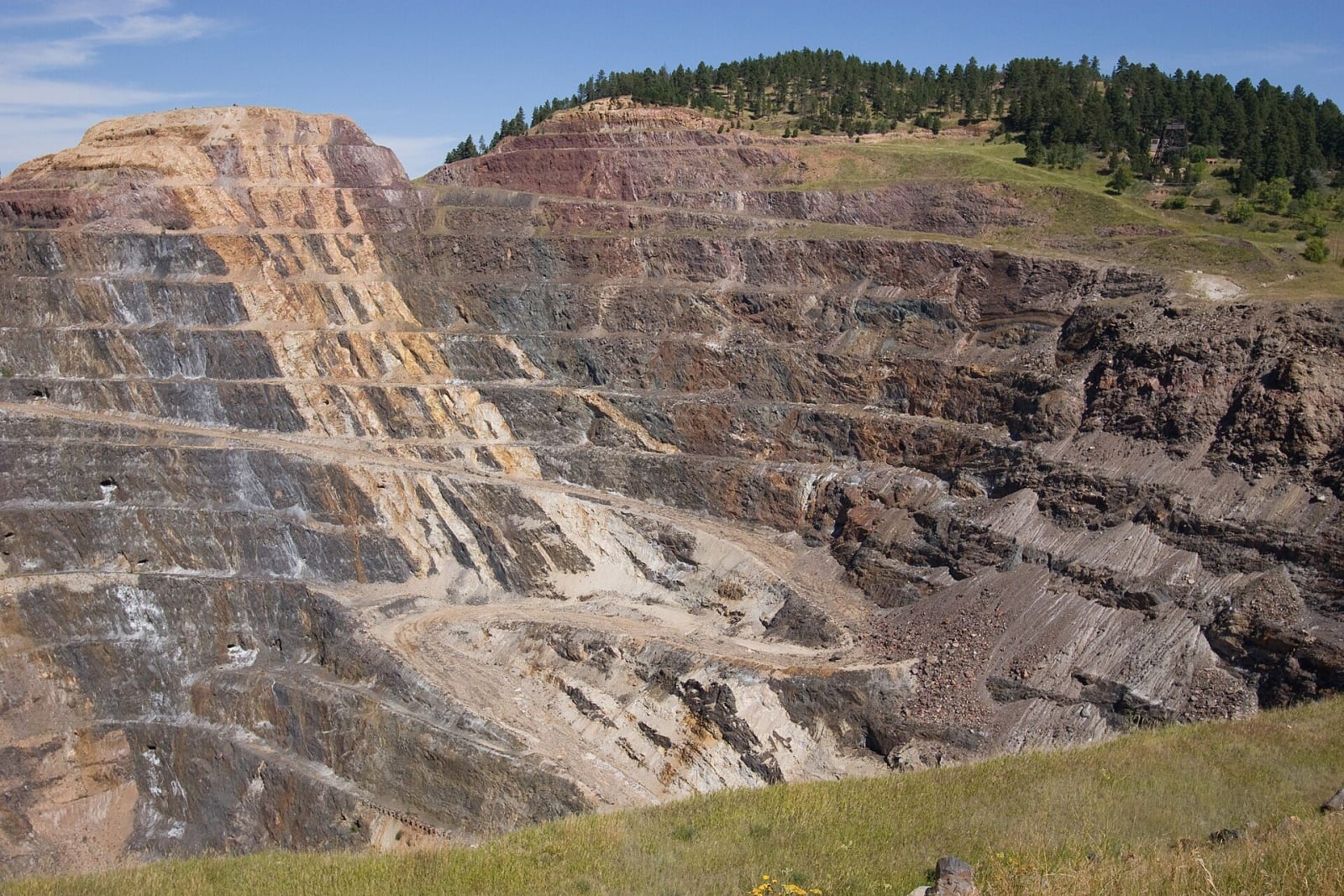
For 125 years the mine followed one folded body of ore downward, until its shafts and drifts ran some 370 miles and its deepest levels reached 8,000 feet, the deepest gold workings in North America. The company also worked the ground from the surface, and the Open Cut, the pit beside the visitor center on Main Street, is 1,250 feet deep. Its walls show the twisted rock the gold came from and, here and there, the black mouths of tunnels cut a century earlier. The mine closed at the end of 2001.
The visitor center tells two stories, the mine's and that of the laboratory that took over its tunnels. Exhibits include a model of the underground workings and the mining gear that dug them, and the levels nearly a mile down now hold experiments hunting dark matter and neutrinos. Admission is free, and the deck looks straight down into the cut.
Visitor Info
On the Map
Nearby
The closest stops worth working into your route
Historical markers nearby
Roadside plaques and monuments within a short detour